
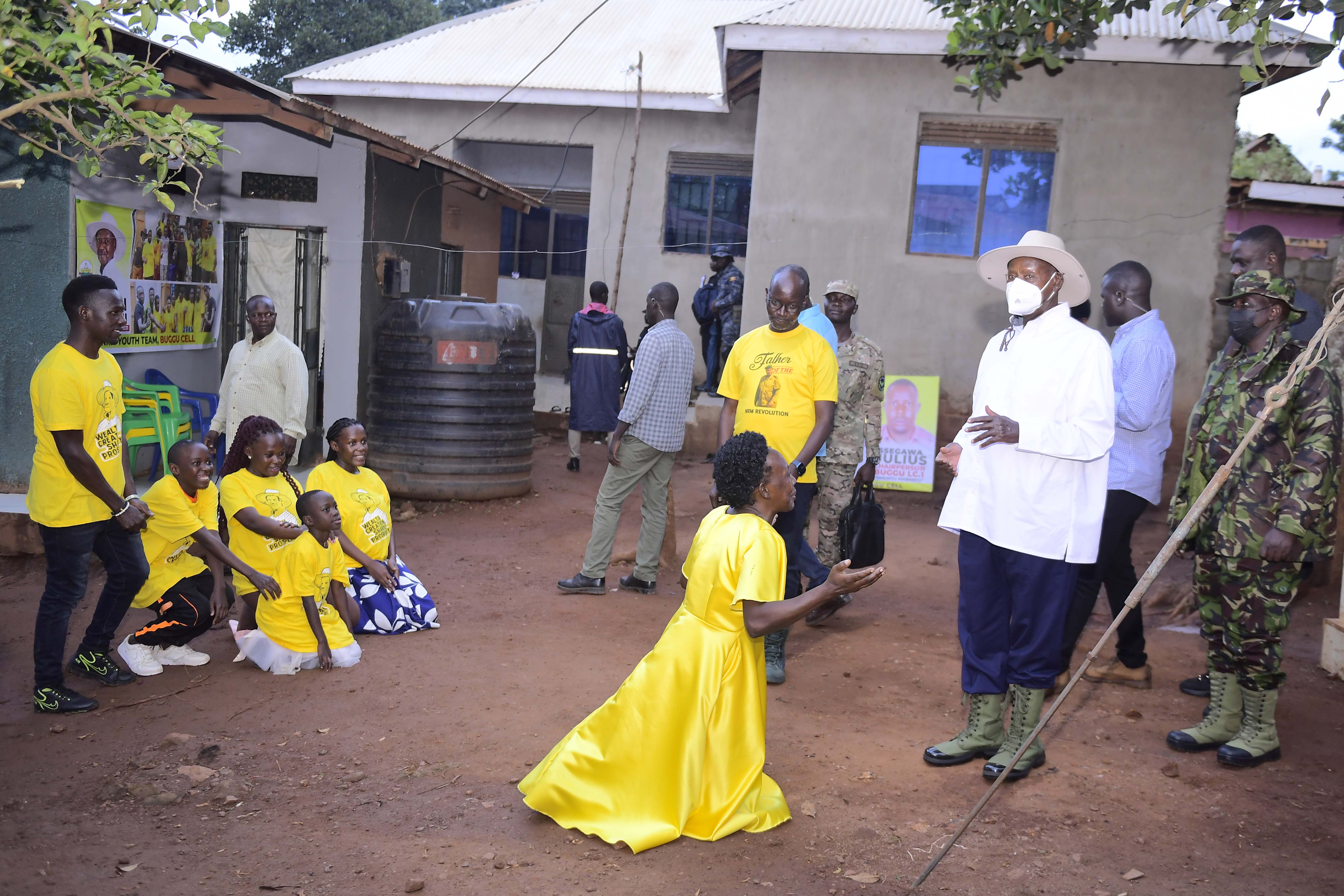
Despite decades of government programs aimed at boosting rural livelihoods, President Museveni has acknowledged that millions of Ugandans remain in subsistence-level farming, or what he described as “working for the stomach.”
The comments came in a post-election statement where he highlighted the progress of social and economic initiatives while pointing to remaining gaps in poverty reduction.
Museveni cited key programs such as the Parish Development Model (PDM), Operation Wealth Creation (OWC), the National Agricultural Advisory Services (NAADS), Universal Primary Education (UPE), Entandikwa, the Youth Fund, and Emyooga as central to transforming Uganda’s rural economy.
“Where it has been done well, the people are very happy. Stories of ‘sikwatanga ku kakadde’ (I have never held a million shillings in my hands) are everywhere,” Museveni said, describing beneficiaries of the PDM, which empowers parish-level communities to form savings cooperatives and prioritize local development needs.
Using data to underscore government progress, the President said Uganda’s agricultural output has expanded significantly over the past four decades: coffee production increased from 3 million bags in 1986 to 9 million bags today; milk output grew from 200 million litres to 5.3 billion litres; maize production rose from 500,000 tonnes to 5 million tonnes; and cattle numbers jumped from 3 million to 16 million.
Banana yields doubled from 6 million to 12 million tonnes, cassava production increased from 1.9 million to 5 million tonnes, and egg production reached nearly 50 million trays.
However, Museveni conceded that these gains have not reached all households. According to his statement, approximately 39 percent of Ugandan households still practice subsistence farming, meaning their income is insufficient to engage fully in the cash economy.
He referred to this group as “Abakolera ekidda kyoonka—those who work only for the stomach”—noting that in 2013, they represented 68 percent of rural households.
The President argued that the shift from subsistence to cash economy has been gradual and uneven. E
arly programs like Entandikwa, which provided interest-free capital at sub-county levels, and UPE, which offered free education in government schools, laid the groundwork for broader participation in the economy.
Yet, he noted, inconsistent implementation and limited supervision by local authorities have slowed their impact.
Museveni emphasized that the PDM is designed to address these gaps by giving communities direct control over development initiatives.
Unlike previous programs where state agents—LC3 chairpersons, agricultural officers, or army personnel—controlled distribution of benefits, PDM allows adults in the parish to elect committees to manage priorities themselves.
“If the people in the Parish could form a mass SACCO of all the adults… it would be much better,” he said.
Observers note that while government programs have contributed to measurable growth, persistent challenges remain.
Rural infrastructure deficits, corruption, land disputes, and limited access to quality healthcare and education continue to affect many communities.
The President acknowledged some of these shortcomings, stressing the need for ongoing vigilance and adaptation of programs.
Analysts say the recognition of persistent subsistence households provides insight into Uganda’s complex development landscape.
While national production statistics show dramatic increases in key commodities, the uneven distribution of wealth and access to services has left a significant portion of the population vulnerable.
Museveni framed the combination of progress and ongoing poverty as central to NRM’s electoral narrative. By emphasizing the successes of development initiatives while admitting gaps, he sought to reinforce the party’s claim to popular legitimacy in rural areas, which remain critical for national election outcomes.
“The Abakolera ekidda kyoonka still constitute 39 percent of homesteads,” he said. “Our programs have done well, but there is still work to be done.”
