
Child rights experts are warning that Uganda is facing escalating threats to children’s safety, including internet-driven sexual exploitation, persistent poverty, high school dropout rates, and rising mental health challenges—issues that require evidence-based solutions.
The concerns were highlighted at the 3rd Child-Focused Research Symposium organized by the AfriChild Centre and the Ministry of Gender, Labour and Social Development at Golf Course Hotel, which brought together government officials, academics, civil society actors, and international partners.
Prof. Jennie Noll, a child-protection researcher from the University of Rochester in New York, said the digital age has created new avenues for predators to target children.
“Growing up with unfettered access to the internet, we don’t yet understand the full impact,” Noll said.
“Predators are learning how to spot vulnerable children and using AI to lure them to dangerous websites or offline into sexual exploitation.”
She cautioned that children are increasingly exposed to harm through mobile phones and social media, while parents and institutions often lack digital literacy.
“Parents need to understand that giving kids access to the internet also requires teaching them to recognize exploitation and seek help,” Noll said.
She urged policymakers to impose stronger regulations on tech companies, implement parental controls, and enforce consequences when children are harmed through online platforms.
Fred Ngabirano, Commissioner for Youth and Children Affairs at the Ministry of Gender, said child poverty in Uganda remains alarmingly high, even as household incomes rise. He cited recent national analyses showing widespread deprivation.
“Many children still lack access to safe water, adequate care, protection, and essential services,” Ngabirano said.
“Income alone does not determine a child’s well-being.” He also noted a rise in internet-facilitated abuses against children and stressed the need for research to guide policy.
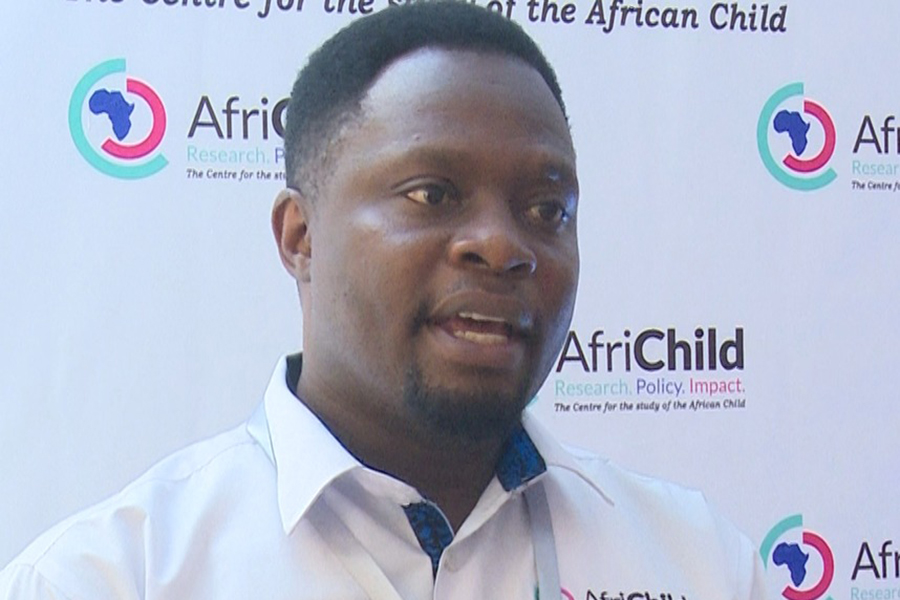
Timothy Opobo, executive director of the AfriChild Centre, said Uganda is not making meaningful progress on key indicators of child well-being.
“Our goal is to share research on issues affecting children—abuse, exploitation, education, and mental health,” Opobo said. “The challenges children face are not changing, and the statistics remain stagnant.”
Uganda’s primary school dropout rate is among the highest in the region, with only three or four children completing school out of every ten who start. Teenage pregnancy and child marriage affect nearly 45% of girls, he added.
“Children now have access to mobile phones and social media, which exposes them to new risks,” Opobo said. He also warned of rising mental health problems, including depression and suicide.
The symposium brought together policymakers, UN agencies, civil society, and researchers from Uganda, Ethiopia, and the United States to share findings and propose solutions to persistent violations against children.
Experts emphasized that child protection must now integrate digital safety, poverty alleviation, mental health support, and strengthened community-based systems.
“With Uganda’s young population, safeguarding children online and offline must become a top priority,” Prof. Noll said.
