
The Ministry of Energy and Mineral Development (MEMD) is leveraging artisanal mining reforms and rural electrification to stimulate economic growth and industrial development in Busia District.
Recent stakeholder engagements underscore the government’s commitment to transforming the district into a strategic economic hub, boosting cross-border trade and local livelihoods.
At a district workshop on rural electrification and energy access, officials highlighted that Uganda’s national electricity access rate has reached 60%, with Busia playing a pivotal role in supporting border electrification and rural industrialisation.
The district’s infrastructure investments are designed not only to improve household energy access but also to provide reliable power for small industries, agro-processing plants, and local enterprises, enhancing the business environment.
Planned initiatives in Busia include the installation of over 51 km of medium-voltage lines, 211 km of low-voltage lines, and 36 transformers, funded through Exim Bank.
Through the Electricity Access Scale-Up Project (EASP), more than 9,000 households have already benefited from free electricity connections.
MEMD is also extending power to all non-electrified sub-county headquarters, ensuring at least one transformer per parish, while digitising electricity applications to accelerate service delivery and reduce administrative delays.
By providing reliable power and formalising the mining sector, MEMD aims to unlock investment opportunities in Busia.
Access to energy is expected to catalyse local industrial growth, encourage entrepreneurship, and support cross-border commerce with neighbouring Kenya.
At the same time, the formalisation of artisanal and small-scale mining ensures that mineral resources contribute more effectively to government revenue, employment creation, and community development.
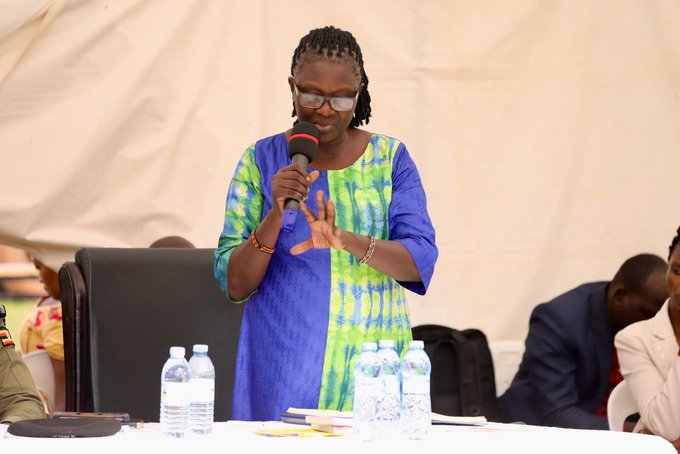
During the workshop, Agnes Alaba, Commissioner of Mining at MEMD, highlighted the newly developed Artisanal Mining Regulations, 2025, which differentiate artisanal from small-scale mining and introduce dedicated Artisanal Mining Licenses (AMLs).
Key updates include the gazetting of 139 artisanal mining zones across Uganda, including gold-rich Busia, and clear licensing procedures through the Mining Cadastre and Registry System (MCRS) to enhance transparency and reduce bottlenecks.
The regulations also provide incentives such as tax exemptions on equipment, access to credit, and government-supported mineral markets.
Provisions for environmental protection, occupational safety, and community development ensure that artisanal mining contributes to sustainable livelihoods while safeguarding communities and natural resources.
Despite these reforms, local residents raised concerns over electricity supply challenges, including frequent blackouts without notification, unregistered meters, and high tariffs.
William Wandera, a Busia resident, questioned why electricity is cheaper in neighbouring Kenya, noting that even grass-thatched homes there have reliable connections.
“Do your electricity rates differ from Kenya’s?” he asked, highlighting cross-border disparities.
Responding, Eng. Abdon Atwine, Commissioner of Rural Electrification at MEMD, clarified that electricity costs in Uganda are not higher than in Kenya, explaining that pricing reflects operational and infrastructure expenses.
Awuzu Tom, Area Manager for UEDCL-Busia, added that outages occur when the network is stressed or transformers are outdated, and confirmed that additional transformers are planned to enhance reliability.
He also noted that both planned and unplanned outages occur, with unplanned events reported to the Electricity Regulatory Authority (ERA) within 48 hours.
The MEMD engagements in Busia demonstrate the government’s dual focus on formalising artisanal mining as a regulated economic activity and expanding electricity access to support rural industrialisation and cross-border trade.
Through structured policies, targeted infrastructure investments, and community-centered reforms, Busia is poised to become a model district for sustainable mining and rural electrification, strengthening Uganda’s broader economic development agenda.
