
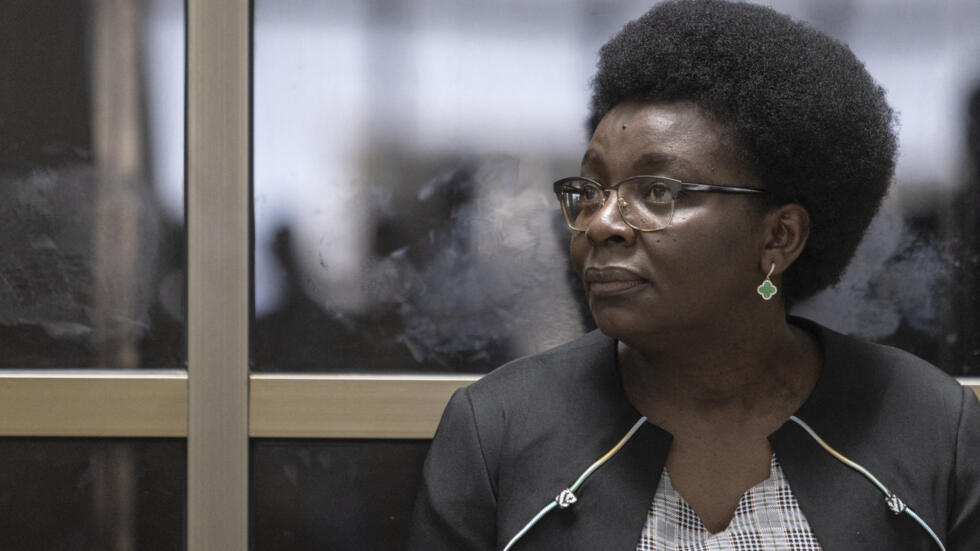
Rwanda’s Parliament has strongly condemned a European Parliament resolution calling for the release of opposition leader Victoire Ingabire and other political figures, accusing the European legislature of interfering in the country’s sovereign judicial process.
The European Parliament, in its September 11, 2025 resolution (2025/2861(RSP)), called for the “immediate and unconditional release” of Ingabire, president of the DALFA-Umurinzi party, who was arrested on June 19, 2025, on charges of forming a criminal group and planning to incite public disorder.
The resolution expressed concern over what it described as a “broader crackdown against political opposition figures” in Rwanda, citing previous arrests of party members and journalists linked to non-violent training sessions on political resistance.
The European Parliament urged Rwanda to comply with African Court on Human and Peoples’ Rights (AfCHPR) orders and international human rights mechanisms, guarantee press freedom, and allow space for political debate ahead of upcoming elections.
In a parallel resolution adopted on September 15, 2025, Rwanda’s Parliament strongly rejected the European call, emphasizing that the European legislature had no legitimacy to intervene in the country’s judicial affairs.
The resolution reaffirmed Rwanda’s status as a sovereign, independent, and democratic state governed by the rule of law and stressed the independence of the judiciary.
“Rwanda condemns in the strongest terms the European Parliament resolutions intending to interfere in the functioning of the judiciary, which constitutes an affront to the shared principles of judicial independence and democracy,” the parliamentary statement read.
It further described the European resolution as “based on partial, subjective, and legally unfounded information, influenced by political figures hostile to Rwanda and its leadership,” aimed at undermining the nation’s independence, democratic institutions, and international standing.
Ingabire, a Hutu political leader, first returned from exile in the Netherlands in 2010 to contest Rwanda’s presidential election.
She was arrested a day afterward following her first public statement at the Kigali Genocide Memorial Centre calling for national recognition of moderate Hutu who died protecting Tutsi during the 1994 genocide.
In Rwanda, ethnicity was outlawed and replaced with the Ndimunyarwanda slogan that affirms every citizen as a Rwandan rather than on ethnic lines.
Ingabire was sentenced to 15 years for threatening state security, genocide denial, and forming an armed group—charges she has consistently denied.
She served eight years in prison, five of which she reports were in solitary confinement, before being released in September 2018 through a presidential pardon.
She remains under travel restrictions, preventing her from attending personal family events abroad.
Her current legal situation stems from alleged involvement in the ongoing prosecution of her party members and journalist Théoneste Nsengimana, arrested in 2021.
Ingabire has denied any role in the activities cited by authorities and maintains that her unregistered party, DALFA-Umurinzi, could not have formally undertaken political mobilisation.
The European Parliament resolution expressed serious concern over “serious irregularities” in Ingabire’s ongoing trial and called on EU member states to monitor judicial proceedings, support human rights, and condition cooperation with Rwanda on adherence to fair trial standards.
It also urged the Rwandan authorities to halt harassment of opposition members, journalists, and civil society actors.
Rwanda’s Parliament, in turn, called for mutual respect and adherence to the principles of good faith in international partnerships, warning against compromising these principles through what it termed “unwarranted interference in parliamentary affairs.”
The resolution will be forwarded to the European Union leadership, member states, the African Union, the United Nations, and the Rwandan government and parliament.
Since her detention in June, supporters and family members have been staging protests in European cities calling for his release, which perhaps explains why it is for Ingabire and not the opposition leaders in Uganda, Tanzania and South Sudan for whom the EU Parliament spoke out.
Across East Africa, Uganda's Dr Kizza Besigye has been in detention since November last year after being charged with treason and misprison of treason.
In Tanzania, Tundu Lissu, Chadema's chair and survivor of a 2017 assassination attempt, has been detained since April 9, 2025, and charged with treason related to rallying for electoral reform.
Meanwhile, in South Sudan, First Vice-President Riek Machar has been under house arrest since March 26, 2025, following a power struggle with President Salva Kiir. Machar was last week charged with treason and murder.
