
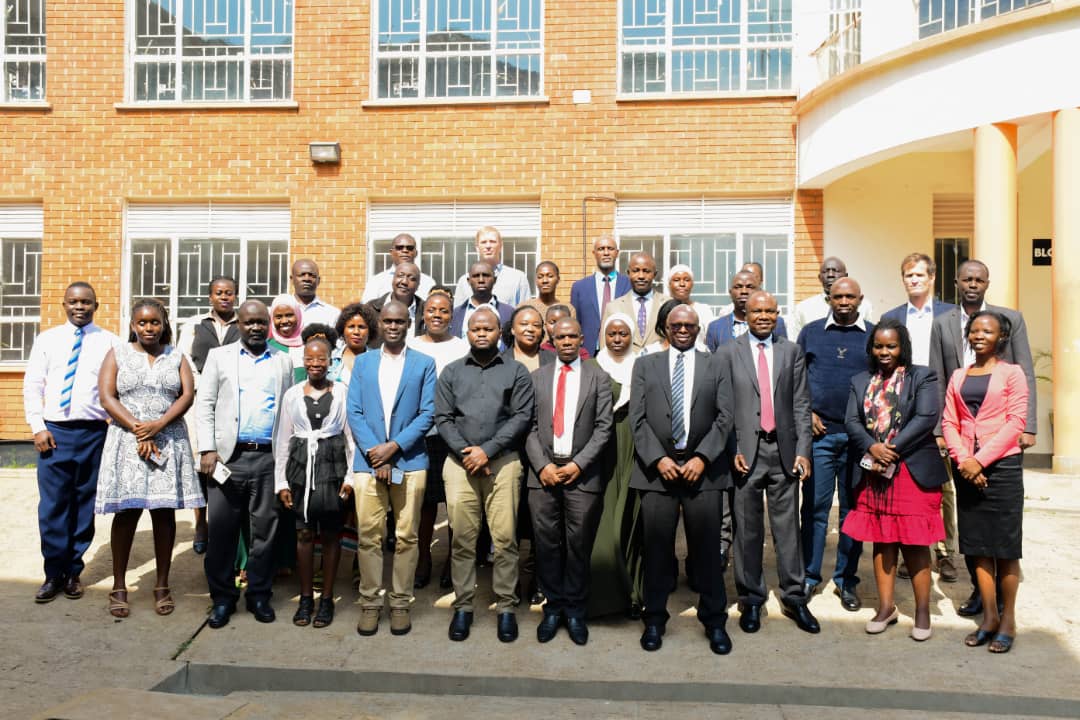
Researchers and experts are calling for intensified formalisation of Uganda’s informal sector, warning that merely registering businesses is insufficient to drive sustainable development.
Uganda’s informal economy employs nearly 78% of the workforce and has the potential to contribute significantly to green and inclusive growth—but only if formalisation efforts are linked to tangible sustainability incentives, a new study reveals.
The policy brief, Firm Formalization and Sustainable Development in Uganda, draws on research conducted between 2022 and 2024 by Makerere University, Copenhagen Business School, and the Uganda Small Scale Industries Association (USSIA).
It found that while registration with the Uganda Registration Services Bureau (URSB) lends legitimacy, and local government licensing often burdens firms, tax registration with the Uganda Revenue Authority (URA) yields the most substantial improvements in business management, labour standards, and environmental practices.
“Fiscal registration, despite initial resistance, consistently improved business management, labour standards, and even environmental practices over time,” said Prof Faisal Buyinza, one of the study’s lead authors.
“By contrast, local government licensing was associated with weaker or even negative outcomes, pointing to the urgent need for reform.”
Across Sub-Saharan Africa, nearly 90% of small and medium-sized enterprises (SMEs) operate informally.
In Uganda, this ranges from roadside vendors to unregistered manufacturing workshops, offering livelihoods but limiting productivity, worker protections, and environmentally responsible practices.
The study combined randomised controlled trials with surveys of over 1,100 small-scale firms nationwide.
Findings revealed that firms registered with the tax authority reported improved recordkeeping, fairer labour practices, and medium-term compliance with environmental standards.
While URSB registration modestly enhanced credibility, it had little measurable impact on labour or environmental outcomes.
Local government licensing, in contrast, imposed extra costs and procedural hurdles, sometimes leading to harassment and duplication of fees.
“Formalisation isn’t just about registering a name or paying taxes. It must be linked to incentives, training, and green financing if Uganda is to achieve sustainable industrial growth,” said Veronica Namwaje, Executive Secretary of USSIA.
The study also highlighted disparities across Uganda’s enterprise landscape. Male-owned firms were 13% more likely to survive than female-owned firms due to greater access to resources, yet women entrepreneurs showed stronger sustainability practices, particularly in recycling and organic farming.
Urban firms had 10–20% higher survival rates than rural ones, though rural firms tended to adopt more environmentally friendly practices.
Education was a strong predictor: owners with university training had up to 24% higher survival rates than those with only primary schooling.
Recommendations include raising sustainability standards in business registration, integrating environmental and social criteria into formalisation processes, providing tax incentives and preferential credit for eco-friendly firms, strengthening social protection for workers, and offering entrepreneurial training on circular economy principles.
The study also urges support for youth-led agribusinesses, greater leadership roles for women in sustainable enterprises, digitisation of registration systems, and empowerment of civil society to ensure a just transition that balances labour rights with green growth.
“Formalisation linked with sustainability incentives can be a driver of Uganda’s green and inclusive growth agenda,” said Prof Marcus Larsen of Copenhagen Business School.
As Uganda works toward middle-income status, the study calls on government agencies, business associations, and civil society to reform outdated licensing systems, reduce compliance burdens, and ensure that every step toward formalisation contributes to climate, labour, and development goals.
Without such measures, authors warn, formalisation risks becoming another bureaucratic hurdle rather than a pathway to resilience and environmental responsibility.
