

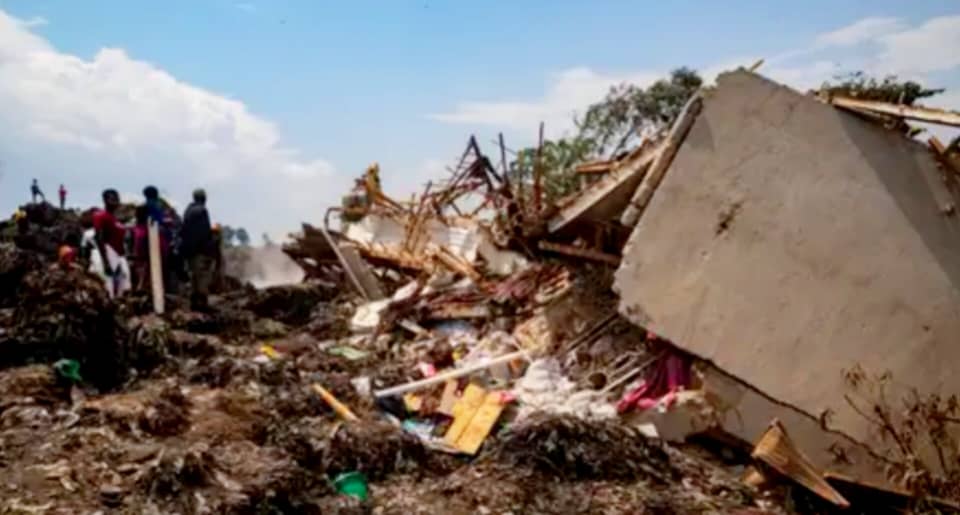
When the Kiteezi landfill collapsed, it raised urgent questions about where Kampala would dispose of the more than 2,500 tons of waste generated each day.
The disaster left the city overwhelmed by heaps of uncollected garbage.
Kampala Capital City Authority (KCCA) leaders, including the Lord Mayor and technical team, appealed for immediate assistance from neighbouring councils, but the sheer volume of waste from Kampala quickly overwhelmed those partners.
The search for a new disposal site began in earnest.
KCCA has since purchased over 230 acres of land in Buyala, Mpigi District, about nine kilometres from Kampala via Mityana Road, to build a proper garbage management facility.
The site, already in limited use by garbage trucks, adds to land previously acquired in Ddundu, Mukono.
Kiteezi was meant to be officially closed, but this has not yet happened.
Lord Mayor Erias Lukwago claims funds for the closure were released but never received by KCCA.
“We have it on good authority that the 16 billion shillings allocated was released, including that meant for decommissioning Kiteezi. How the 13 billion meant to be remitted to KCCA is nowhere to be seen,” Lukwago said.
At a recent press conference, KCCA’s head, Sharifa Buzeki, warned that the landfill is dangerously unstable.
“There are cracks that experts observed and this makes the landfill dangerous,” Buzeki said, adding that the authority is partnering with UN-Habitat to decommission part of the site.
“A grant of USD 1 million through UN-Habitat will take care of decommissioning seven acres of Kiteezi landfill.”
However, while Buyala is being used, developing it to the expected standard faces financial hurdles. Currently, KCCA is using only 50 acres of the site, having paid just 15 percent of the cost.
“We have so far paid 2.4 billion shillings. And no one can let you use the entire property without full payment. This means the facility can’t be developed,” Lukwago said.
He added that earlier plans to attract investors who could generate electricity from garbage failed after government capped the price per megawatt.
“The garbage from Kampala can generate 60 megawatts according to experts, but investors can’t do anything because selling at five cents would cause them losses,” Lukwago noted.
KCCA spokesperson Dan Nuwabiine said the land in Buyala and Ddundu is earmarked for waste-to-compost and waste-to-power facilities.
But for now, the timelines for these projects remain uncertain, leaving Kampala’s long-term waste management in limbo.