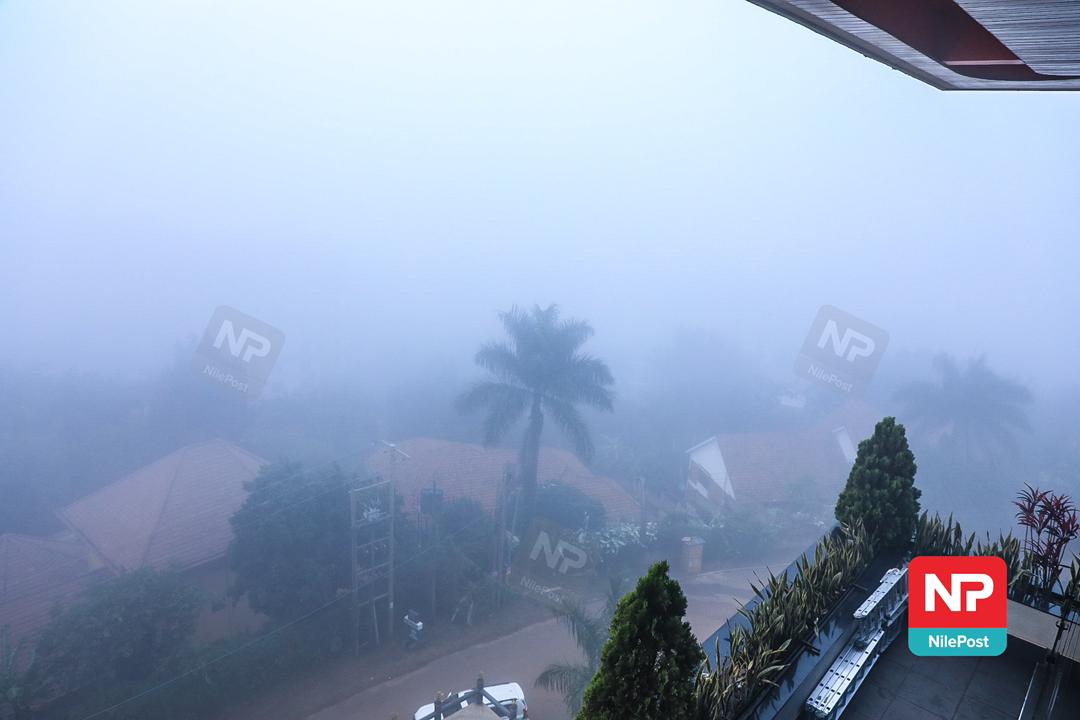
A thick blanket of fog covered large parts of the country, particularly central and eastern regions, on the morning of Wednesday, June 25, drastically reducing visibility and disrupting normal routines for motorists and early risers.
In Kampala, the fog was particularly dense with Naguru, where the usually visible national flag atop the iconic Next Media Park disappeared entirely from ground view.
From the upper floors of the towering building, visibility was equally impaired—obscuring buildings less than 100 meters away, as captured in photos taken by Nile Post at 6am and 9am.
The fog lingered for several hours, with many city dwellers reporting difficulty in navigating through the mist. Road users were urged to drive with caution as the haze posed potential risks, especially in high-traffic areas with poor street lighting.
Fog is essentially a cloud that forms close to the ground. It occurs when the temperature drops and the air becomes saturated with moisture, causing water vapor to condense into tiny droplets suspended in the air.
According to the Uganda National Meteorological Authority, Tuesday's fog was a result of overnight cooling coupled with high humidity, which led to radiation fog formation—a common type of fog during dry seasons when skies are clear, and the ground rapidly loses heat at night.

Met sources say the morning’s fog was intensified by the still air and low wind speeds, which allowed moisture to condense and remain suspended near the ground.
While fog is typically harmless, it can be dangerous for transport and aviation. Drivers are advised to use headlights or fog lights, reduce speed, and maintain safe distances to avoid collisions.
In some areas, the fog delayed school drop-offs and early business openings. Visibility was also poor in parts of Jinja, Mukono, and Iganga, according to early reports from local radio stations.
Despite its inconveniences, fog plays a role in regulating local temperatures and occasionally supports plant hydration through dew formation.
As of 10:00 am, conditions were improving in most areas as temperatures rose and the sun began to break through the cloud cover.
Ugandans are encouraged to remain alert over the next few mornings, as similar weather patterns may continue through the week—especially in elevated or inland areas.