

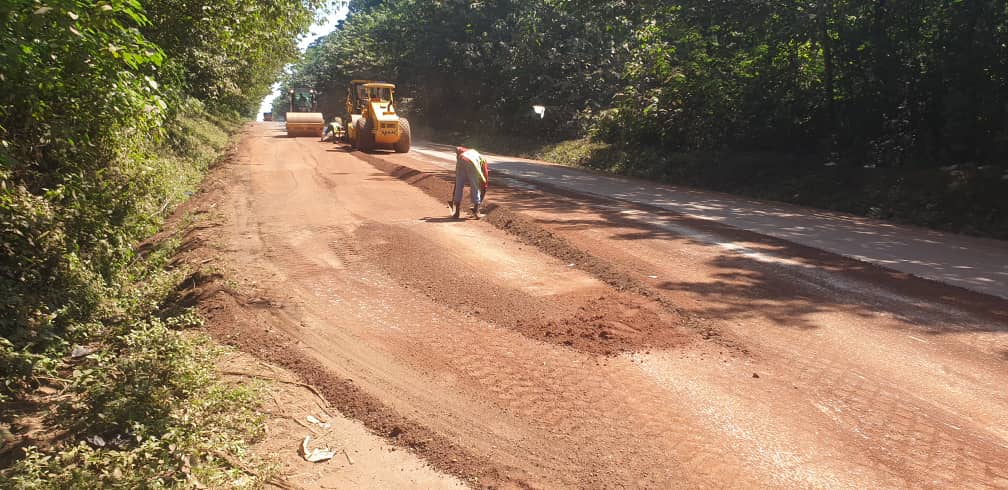
The Ministry of Works and Transport has launched the second phase of emergency repairs on the dilapidated Mabira section of the Kampala–Jinja highway, aiming to address worsening road conditions that continue to endanger motorists.
This phase follows similar works conducted in December 2024, which saw over one kilometre of the highway rehabilitated.
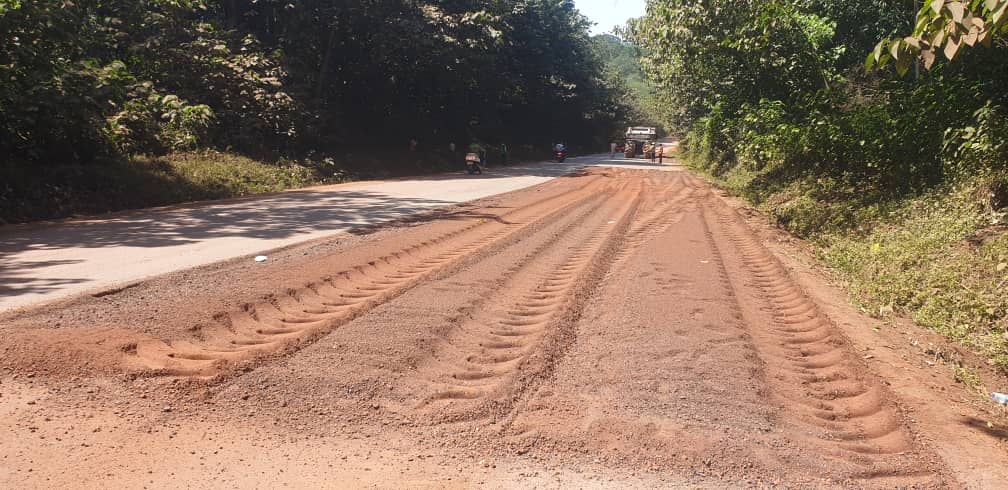
The current repairs, expected to run until the end of June, involve resurfacing the stretch with asphalt concrete, patching potholes, and reworking the road shoulders to enhance safety and durability.
“This section has been in bad shape. It is riddled with potholes which always cause accidents. Almost every week, we’ve been registering accidents here. We encourage the government to reconstruct this road since it is the busiest highway in Uganda,” said a concerned resident near Mabira Forest.
The Kampala–Jinja highway is Uganda’s busiest route, serving not only as a vital link between the capital and eastern regions but also as a major trade corridor to Kenya and other neighbouring countries.
Years of neglect have left critical sections, especially through Mabira Forest, pockmarked and unsafe, prompting public outcry.
Allan Ssempebwa, Senior Communications Officer at the Ministry of Works and Transport, confirmed that in-house ministry teams are carrying out the ongoing repairs.
“We have deployed our internal teams to conduct these critical repairs on the Mabira stretch. During this period, we urge motorists to exercise caution and consider using alternative routes,” Ssempebwa said.
Alternative Routes Recommended:
- Heavy Vehicles: Mukono–Kyetume–Katosi–Kisoga–Nyenga/Njeru road
- Light Vehicles: Njeru–Kayunga–Mukono or Kalagi–Gayaza route to Kampala
During the works, traffic will be restricted to one lane, causing potential delays. Motorists are urged to be patient and plan ahead to avoid congestion.
The emergency intervention comes amid growing frustration over the stalled full-scale rehabilitation of the entire highway.
In 2020, Serbian contractor Energoprojekt was awarded a Shs 82 billion contract to rehabilitate the road.
The project began in July 2021 and was due for completion by July 2022, but progress stalled at the Namagunga section, leaving the Mabira stretch and others in a perilous state.
As repair works continue, road users are hopeful that the short-term fixes will at least ease travel risks while the government finalizes permanent reconstruction plans.