
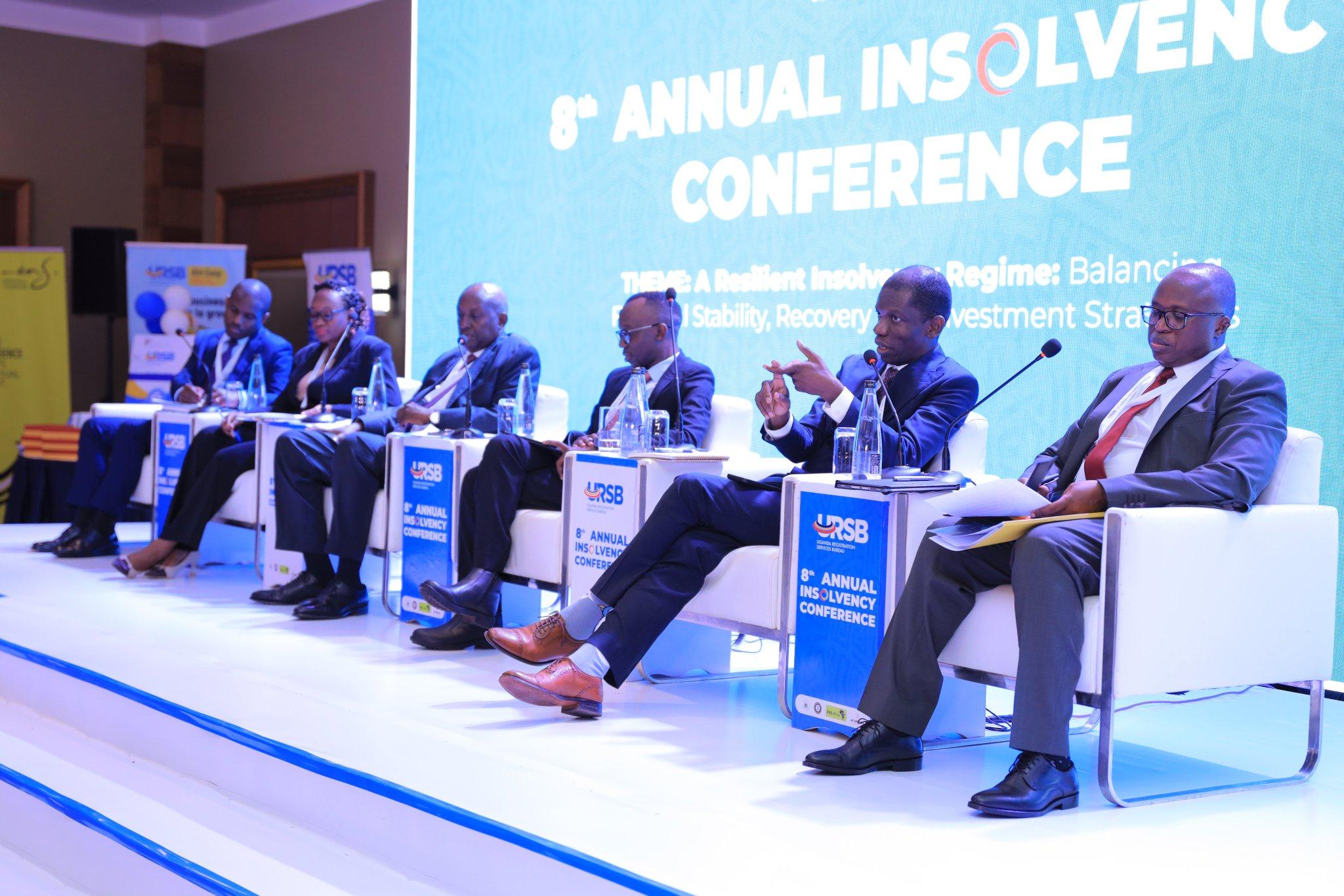
Experts at the 8th Annual Insolvency Conference have called for robust judicial oversight and stronger institutional frameworks to support transparent and effective business rescue processes in Uganda.
Held in Kampala, the conference brought together insolvency professionals, private sector players, and government officials to discuss how businesses can better navigate economic distress.
Speaking at the event, Deputy Speaker of Parliament Thomas Tayebwa emphasised that insolvency should not be viewed as failure but rather as a tool for corporate renewal.
“In today’s volatile global economy, especially for small and medium-sized enterprises, insolvency is a critical tool for recovery, restructuring, and continuity,” Tayebwa said. “We need legal mechanisms that allow businesses to bounce back, not disappear.”
The Uganda Registration Services Bureau (URSB) used the occasion to launch its Insolvency Journal, aimed at demystifying insolvency processes and providing guidance to struggling enterprises.
*Mercy Kainobwisho*, the Registrar General at URSB, stressed the importance of an enabling environment for both registration and sustainability of businesses.
“It’s not just about registering businesses it’s about helping them thrive,” Kainobwisho said. “We’ve trained over 500 businesses on how to protect themselves from collapse, but more need to come forward and formalize.”
According to URSB data, 850,000 businesses are currently registered in Uganda, a rise from 800,000 in 2021. However, many may have closed informally, highlighting the urgency of developing responsive insolvency mechanisms.
Commercial lawyer Harold Turigye raised concerns about gaps in the current system.
“Many businesses are struggling silently. Without proper legal and institutional support, the going concern of these enterprises cannot be guaranteed,” Turigye warned.
Experts agreed that improving access to restructuring options, increasing public awareness, and equipping the judiciary to handle insolvency cases fairly and efficiently will be critical for economic resilience.
The conference concluded with a call to action for government, regulators, and private sector players to prioritise insolvency reforms, not as a last resort but as a proactive strategy to preserve livelihoods and stimulate growth.
