

The City of Paris has requested a ban on the planned "Solidarity Congo" concert, citing concerns that its timing and messaging could inflame tensions between Rwandan and Congolese communities amid the ongoing conflict in eastern DR Congo.
The event, scheduled for April 7 at Accor Arena, was reportedly meant to raise funds for children affected by the war in DR Congo but has instead sparked diplomatic concerns and accusations of genocide denial.
According to a statement issued by the Paris Mayor’s Office on March 25, the decision to intervene followed concerns raised by Rwanda’s ambassador to France, François Nkulikiyimfura, and leaders of Rwandan survivor organizations.
They warned that the concert’s scheduled date—April 7—coincides with Rwanda’s national day of commemoration for the 1994 Genocide against the Tutsi.
"Given the existing tensions between the Rwandan and Congolese communities in Paris—linked to the situation in the Great Lakes region—as well as the negationist remarks made by some of the artists set to perform, the Mayor of Paris believes this concert, on this date, risks causing public disorder," the statement reads in part.
The ongoing war in eastern DR Congo has fueled an explosive diplomatic fallout between Kinshasa and Kigali.
The Congolese government accuses Rwanda of backing the M23 rebel group, which has seized large areas of North Kivu province and displaced over seven million people.
Kigali has denied these allegations, instead blaming DR Congo for harboring the FDLR, an armed group with ties to those responsible for the 1994 genocide.
Paris officials say inflammatory rhetoric surrounding the concert—particularly on social media—reinforces their concerns.
"Hate speech targeting Rwandans and Tutsis in response to this concert's announcement has confirmed the necessity of canceling it," the statement noted.
Unicef, initially listed as a beneficiary of the event’s proceeds, has also distanced itself from the concert.
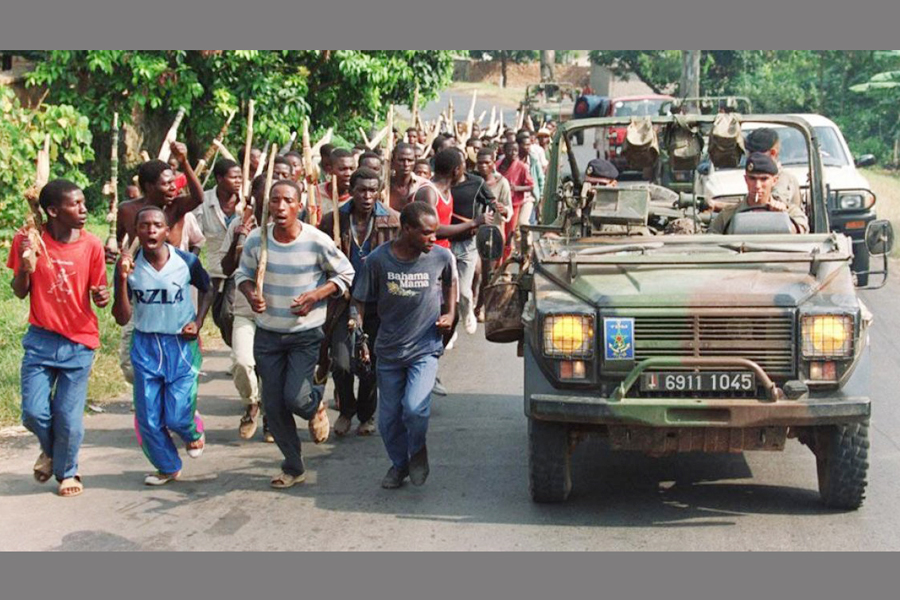
Rwanda will be observing the 31st anniversary of the Genocide against the Tutsi on April 7. At least a million people, the majority of them minority ethnic Tutsi and moderate Hutu, were slaughtered in a space of 100 days from April 7, 1994 to July 4, 1994.
The genocide was planned and executed by the government of the time with the help of interahamwe militia whose remnants the Kigali government accuses Kinshasa of harbouring and assimilating to fight alongside its national army against the M23 rebels.
The request to ban the concert was officially submitted to the Paris police chief, Laurent Nuñez, on March 10. The move mirrors a broader pattern of international diplomatic strains, as Kinshasa and Kigali continue to trade accusations over the conflict.
With no immediate resolution in sight, the war in DR Congo is not only destabilizing the region but also spilling into the international arena, exposing deep-rooted divisions far beyond Africa’s borders.