

The Cabinet has approved the National Alternative Dispute Resolution (ADR) Policy, a move aimed at reducing case backlog in Uganda’s judicial system.
Minister for Justice and Constitutional Affairs, Norbert Mao, made the announcement Tuesday February 11, 2024, stating that the policy would help popularize ADR mechanisms as an alternative to traditional court processes.
“I’m pleased to announce that yesterday, Monday 10th February 2024, the Cabinet unanimously approved the National Alternative Dispute Resolution Policy. The policy is a roadmap to popularize ADR in the resolution of disputes. This will reduce case backlog in our courts,” Mao revealed in a statement posted on his X account.
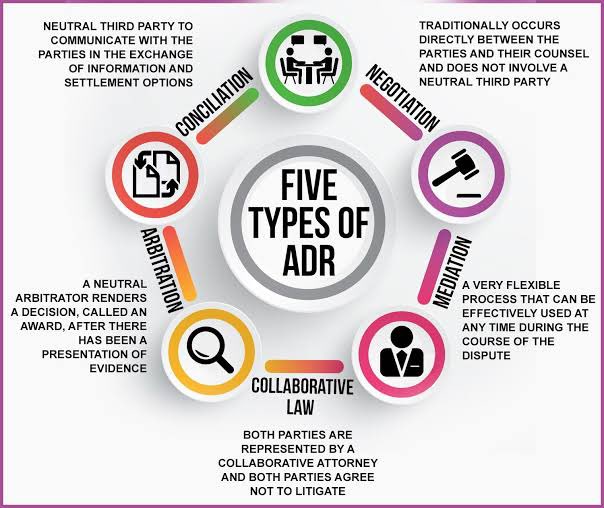
The minister also shared an illustration outlining five key types of ADR: negotiation, mediation, arbitration, conciliation, and collaborative law. These methods provide alternative ways to resolve disputes outside of the formal court system, involving neutral third parties where necessary to facilitate settlements.
ADR processes are expected to help expedite case resolution, cut legal costs, and improve access to justice, especially for individuals who may struggle with prolonged litigation.
Mediation and conciliation, for instance, encourage dialogue between disputing parties, while arbitration allows a neutral arbitrator to render a decision based on presented evidence.
In recent years, Uganda’s courts have struggled with overwhelming case backlogs, leading to delayed justice. Legal experts have long advocated for increased use of ADR to ease the burden on courts and improve dispute resolution efficiency.
With Cabinet approval, the next step will involve implementing strategies to integrate ADR into Uganda’s legal framework. The policy is also expected to guide legal practitioners and the public on how to effectively use ADR mechanisms to resolve conflicts.
The Ministry of Justice and Constitutional Affairs is expected to provide further details on the implementation process, including awareness campaigns and training for legal professionals.
Meanwhile, stakeholders in the justice sector will likely play a key role in ensuring the policy's success.