
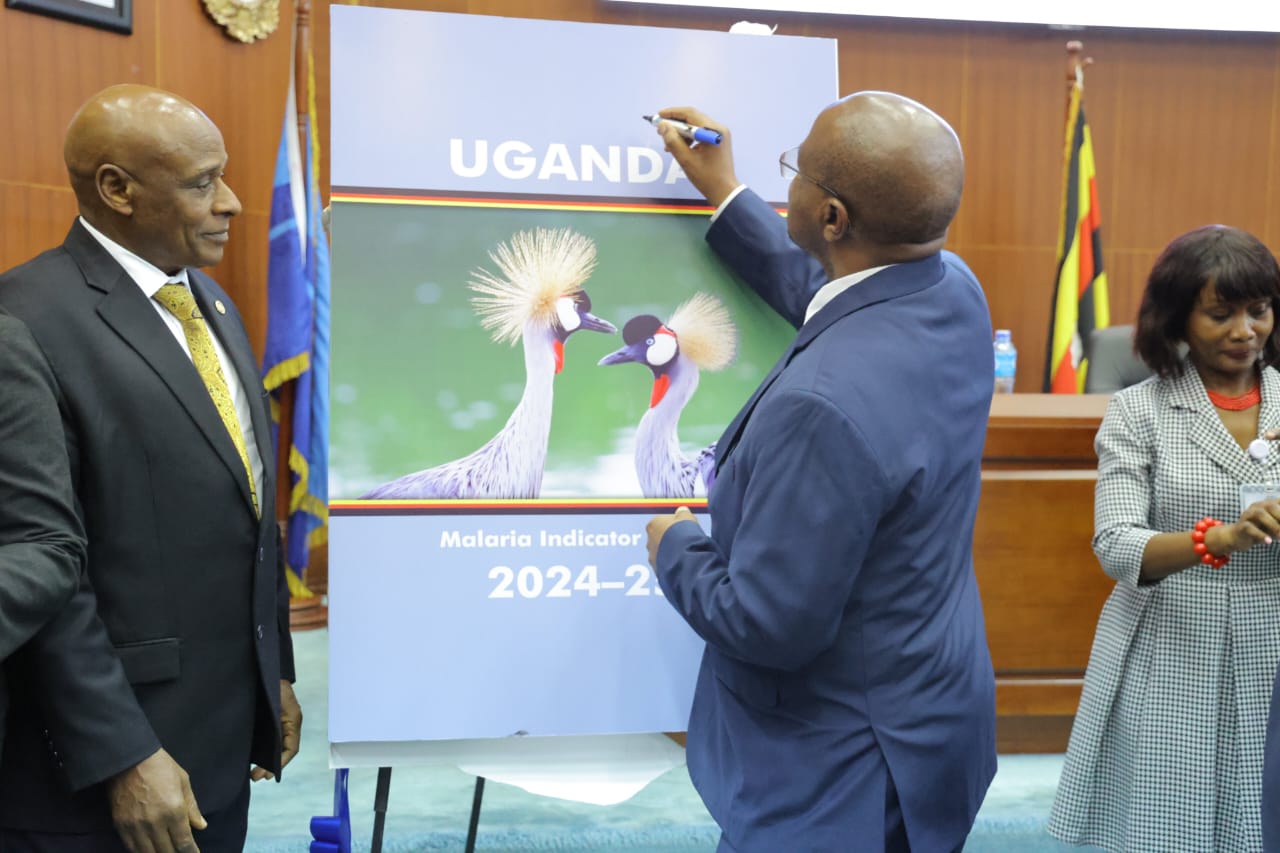
The State Minister for Finance, Amos Lugoloobi, has revealed that the government will intensify efforts to investigate and address the remaining challenges hindering the complete elimination of malaria in Uganda.
Lugoloobi made the remarks while officiating at the release of the 2024/2025 Malaria Indicator Survey report at the headquarters of the Uganda Bureau of Statistics (UBOS) in Kampala.
Malaria remains one of the leading diseases claiming the lives of many Ugandans, despite ongoing interventions by the government and development partners to control its spread.
The report reveals that Household Indoor Residual Spraying (IRS) against mosquitos in the past 12 months, stands at 10% Nationally, while percentage use in rural areas is at 12% and 8% for urban centres. IRS usage is high in the West Nile while SMC is highly applied in Karamoja
According to findings from the 2024/2025 Malaria Indicator Survey, the number of people contracting malaria has increased since the last national population census conducted in 2024, raising concerns among health officials.
The report indicates that the survey mainly focused on children aged between six months and 59 months, who are among the most vulnerable groups to malaria infection. Findings show that 13 percent of the children tested were found to have malaria.
Officials also revealed that 73 percent of pregnant women received at least three doses of the malaria preventive drug Fancidar, a development that has strengthened efforts to protect mothers and unborn babies from malaria-related complications.
Despite the concerning figures, the survey highlights notable progress compared to previous years. Since the first survey began in 2009, malaria prevalence among young children was as high as 45 percent. However, the latest report—the fourth survey of its kind—shows that the rate has reduced significantly.
Minister Lugoloobi called on government agencies and lawmakers to utilize such reports in planning the country’s health sector and allocating sufficient funding for malaria prevention and treatment programs.
He also expressed concern that some Ugandans tend to ignore important research findings and reports instead of using them to guide policy formulation and development planning.
“We must ensure that such reports guide our planning processes and resource allocation so that the country can effectively tackle diseases like malaria,” Lugoloobi said.
He pledged that the Ministry of Finance, Planning and Economic Development will continue to strengthen funding for health programs aimed at controlling malaria and other major diseases.
Meanwhile, the Executive Director of the Uganda Bureau of Statistics, Chris Mukiza, noted that although a significant number of Ugandans use mosquito nets, malaria infections remain common, particularly in rural areas.
Mukiza said the report shows that about 65 percent of Ugandans use mosquito nets, while 84 percent of households own insecticide-treated mosquito nets. The remaining households use nets that do not contain insecticide, which reduces their effectiveness in preventing mosquito bites.
He therefore called for the revival and strengthening of earlier malaria control interventions such as indoor residual spraying, which he said has been neglected in recent years.
“Indoor residual spraying was once a very effective intervention in controlling malaria, but it has not been given the attention it deserves in recent times,” Mukiza said.
Mukiza added that although the survey report has now been released, the responsibility lies with the Ministry of Health Uganda to implement the recommendations and urgently address the gaps identified.
Health experts believe that continued investment in preventive measures such as mosquito net distribution, indoor residual spraying, early diagnosis, and treatment will be critical in reducing malaria prevalence and ultimately eliminating the disease in Uganda.
Close to 90% of the respondents intimated that they got them from the mass distribution campaigns conducted in their areas. Other sources included Antenatal visits, community health workers, bought from a shop, Government health facilities, and schools among others. 3/5
On behalf of development partners, the World Health Organization Country Representative, Dr. Kasonde Mwinga, together with a representative from the United States Embassy, reiterated their commitment to continue supporting Uganda’s malaria control programmes.
Uganda’s fight against malaria remains a major public health priority, as the disease continues to be one of the leading causes of illness and death, especially among children under five years and pregnant women.
