

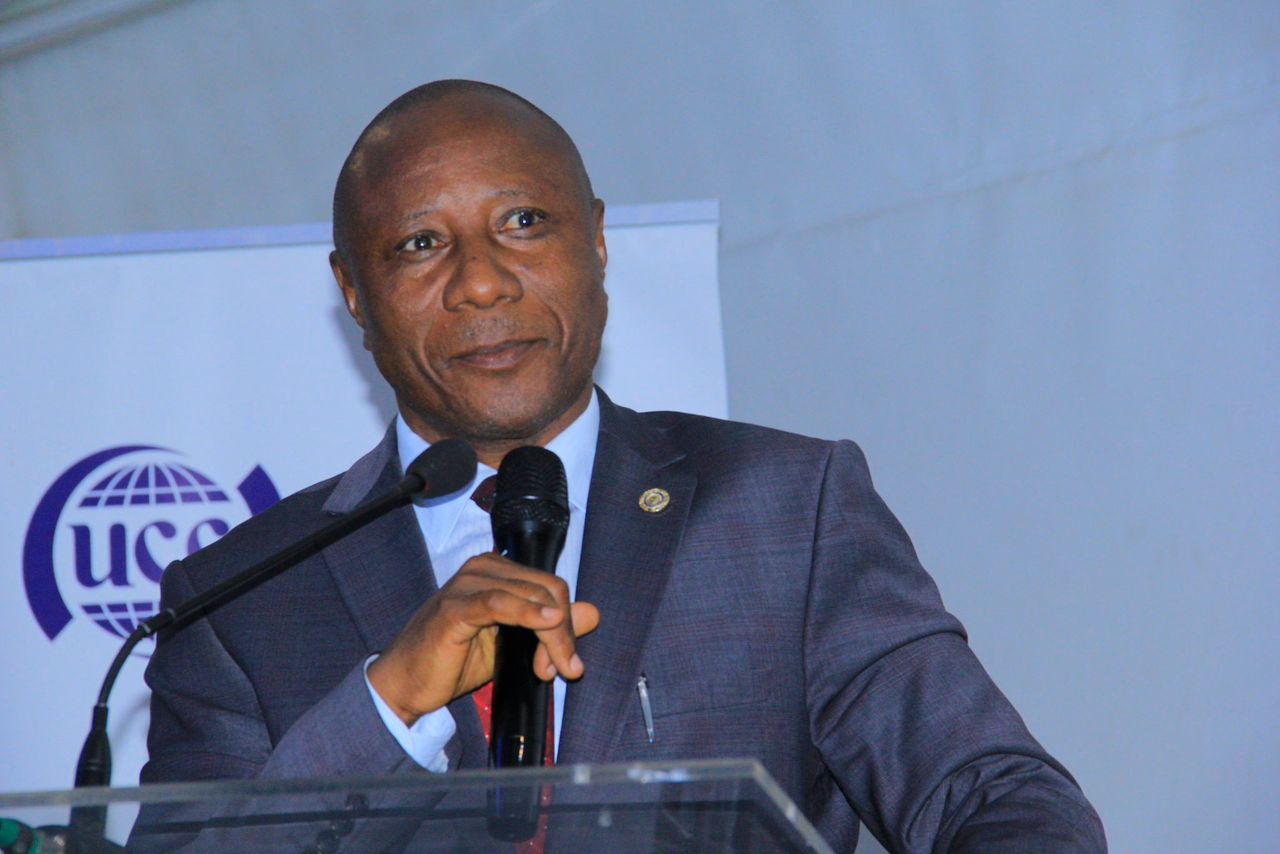
The Minister of State for Information, Communications Technology (ICT) and National Guidance, Godfrey Baluku Kabbyanga, has defended the Protection of Sovereignty Bill, 2026, stating that the legislation is intended to safeguard Uganda’s national interests and prevent foreign interference in domestic affairs.
Speaking to Canary Mugume during NBS Face Off on Sunday, Kabbyanga said government introduced the Bill “in good faith” in response to what he described as increasing external influence in national systems and decision-making.
“As government, we have seen the emergence of a lot of foreign interference in many aspects, and we wanted to safeguard the country. That is why we introduced the Sovereignty Bill, which is now being processed,” he said.
Kabbyanga emphasized that Uganda remains open to foreign funding but insisted it must be transparent and aligned with national priorities.
“We are not saying funding should not come into the country; rather, we are saying it should come in for specific purposes, and its sources should be known,” he said.
“First of all, most of the funding for start-ups in the country comes from companies within Uganda. I do not see many foreign companies funding start-ups in the country,” he added.
He further dismissed fears that the legislation could deter legitimate international support.
“We are not going to lose any foreign assistance because of the Sovereignty Bill; those that will pull out are only those that were engaged in suspicious activities,” he said.
Kabbyanga also stressed that Uganda would not tolerate external influence in its internal affairs.
“We shall not allow anyone to influence anything here from abroad. If you want to influence anything, come into the country,” he stated.
He further noted that the ruling National Resistance Movement (NRM) remains politically strong following the January 15 elections.
“NRM is now in a comfortable position; we have just won elections with about 71% of the vote. So what else is there?” he said.
His remarks come as Cabinet is expected to meet today to finalize harmonization of the Protection of Sovereignty Bill 2026 ahead of its second and third readings in Parliament scheduled for Tuesday.
The Bill has in recent weeks become the subject of intense national debate, drawing scrutiny from political, economic, and civil society actors.
President Yoweri Museveni has since distanced himself from what he described as “misinterpretations” of the proposed law. In a statement shared on his X (formerly Twitter) account, Museveni questioned whether critics were referring to the version he initiated in Cabinet.
He stressed that his original proposal was grounded in Uganda’s historical struggle for sovereignty and policy independence, clarifying that the intent was to safeguard autonomy in decision-making across political, social, cultural, economic, and diplomatic spheres.
Museveni firmly rejected suggestions that the Bill seeks to restrict foreign direct investment, remittances, or religious funding.
He emphasized that Uganda remains a free-market economy, where private sector activity is central to national development and foreign exchange is freely traded through private bureaus.
He further noted that legally earned money can move in and out of the country without hindrance.
To ensure alignment with this intent, the President held discussions with Government Chief Whip Denis Hamson Obua and relevant parliamentary committee leadership, directing that the Bill be refined to focus strictly on sovereignty in policymaking while protecting private enterprise.
The draft legislation currently before Parliament, tabled by State Minister for Internal Affairs David Muhoozi, has attracted widespread criticism over its broad regulatory scope.
Among its key provisions are enhanced government oversight of digital platforms and civic engagement, mandatory registration and vetting of foreign-funded entities, restrictions on foreign funding without ministerial approval, and strict monthly reporting requirements for financial institutions.
One of the most controversial clauses introduces the offence of “economic sabotage,” broadly defined to include publishing information deemed harmful to economic stability or mobilizing opposition to government policy without prior approval.
Critics argue that these provisions risk undermining freedoms of expression, association, and access to information, while potentially exposing journalists, researchers, and civil society actors to criminal liability.
The Governor of the Bank of Uganda, Michael Atingi-Ego, has warned that the Bill could have far-reaching economic consequences, including capital flight, weakening of the shilling, and reduced investor confidence.
He cautioned that Uganda’s external financial stability could be affected due to its reliance on foreign capital inflows.
In response to mounting concerns, Attorney General Kiryowa Kiwanuka has proposed amendments exempting financial institutions supervised by the Central Bank, as well as medical, educational, and religious institutions, from the scope of the Bill.
Despite these revisions, critics maintain that the core regulatory framework remains overly expansive.
Government officials and supporters within the ruling establishment, including the NRM Parliamentary Caucus, have defended the Bill as a necessary safeguard against foreign interference and covert influence operations, noting that similar regulatory frameworks exist in other jurisdictions.
According to parliamentary sources, majority members of the joint committees on Legal and Parliamentary Affairs and Defence and Internal Affairs have agreed to support the Bill with the Attorney General’s proposed revisions.
The legislators have been meeting since Friday at Munyonyo Commonwealth Resort to compile their report ahead of presentation to Parliament.
Notably, the position has reportedly been backed by some opposition Members of Parliament, including representatives from the Forum for Democratic Change (FDC) and Uganda People’s Congress (UPC), although their identities remain undisclosed.
However, deliberations have been marked by tension, with reports of chaos and a brief scuffle after the Committee Chair allegedly pushed for adoption of the amended draft without a thorough clause-by-clause review.
The Joint Committee is chaired by Wilson Kajwenge and co-chaired by Stephen Baka Mugabi.
One committee member described the proceedings as strained:
“We still had a lot we wanted to change, but even getting a chance to speak became a tug of war.”
Security personnel remain deployed at the venue as report writing continues.
Government Chief Whip Denis Hamson Obua said on Sunday that the government remains optimistic that, following Museveni’s guidance, a revised version of the Bill will be presented to the country soon.
“Either this week or the next,” he said, stressing that the legislation is intended to put a full stop to “external influence on matters of governance and politics in Uganda as an independent state.”
