

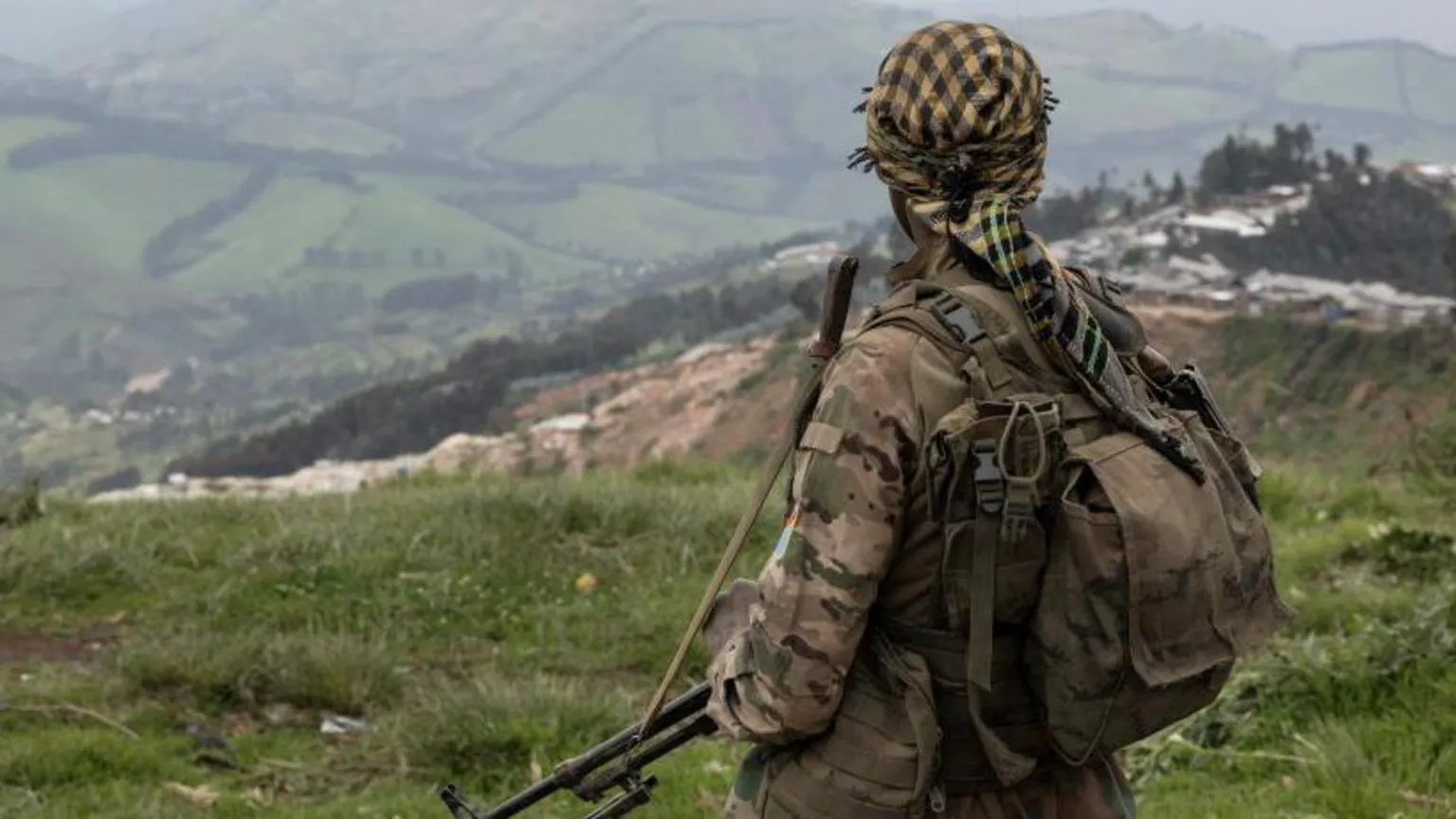
A new rebel group has emerged in the Katanga region of the Democratic Republic of the Congo, claiming to have taken control of the locality of Lusinga in Mitwaba Territory.
In a communiqué dated March 6, 2026, the group identifying itself as the Mouvement Debout Katanga pour la Libération du Congo (MDKC) - Stand Up Katanga Movement for the Liberation of Congo - said its fighters captured Lusinga on March 3 as the first step in what it described as an armed struggle against the government in Kinshasa.
“The situation currently facing Katanga and the Katangese people, as well as the Democratic Republic of the Congo in general, has exceeded the limits of what is tolerable,” the group said in the statement signed by its spokesperson, Colonel Ngoy 'Tigre' Kumwimba.
The group accused the government of Félix Tshisekedi of closing avenues for dialogue among Congolese political actors and pursuing constitutional changes aimed at extending its hold on power.
“We have decided to take matters into our own hands and begin an armed struggle to liberate Katanga and the Congo from tyranny,” the statement said.
The MDKC also called on officers and soldiers of the Armed Forces of the Democratic Republic of the Congo to dissociate themselves from the government and join the movement, while urging the Congolese population to engage in what it described as popular resistance against the authorities in Kinshasa.
However, Congolese authorities say the situation in the area remains under control.
According to reports cited by Radio Okapi, a fragile calm has returned to Lusinga after the incident, while the Congolese army has launched sweeping operations in Mitwaba territory to secure the area.
Local officials also reported that five agents from the Institut Congolais pour la Conservation de la Nature (ICCN) were killed in the attack, though the MDKC statement did not mention the deaths.
The emergence of the group has generated intense debate on Congolese social media, where some users have attempted to link the movement to former president Joseph Kabila.
No evidence has publicly confirmed such links.
Kabila, who served as president of DR Congo from 2001 to 2019, is widely associated with the Katanga region despite being born in Fizi Territory in eastern Congo.
His family roots trace back to Katanga through his father, Laurent-Désiré Kabila, who was from Manono Territory, historically part of the wider Katanga region.
During his presidency, Kabila’s political base was largely anchored in key Katangese cities including Lubumbashi, Kolwezi and Likasi.
The former president returned to Congo in April 2025 after a period of self-imposed exile abroad and travelled to Goma, then under the control of the March 23 Movement.
During his visit, he met religious leaders and other local opinion figures to discuss the security crisis in eastern Congo.
Reports indicated that some of the engagements took place in the presence of M23 representatives, prompting criticism from the government of President Tshisekedi, which has accused Kabila of links to the rebel movement.
Kabila and his allies have denied those allegations, saying the consultations were aimed at exploring paths toward peace.
The appearance of a new armed group in Katanga raises concerns for Kinshasa because the region is one of the country’s most strategically important areas, rich in copper and cobalt and historically the centre of powerful political networks.
Security analysts warn that if the MDKC gains traction or links up with other armed movements operating across the country, it could further complicate an already volatile security landscape in DR Congo.
The emergence of the MDKC adds to the already crowded landscape of armed groups operating across DR Congo. Security researchers estimate that more than 120 armed groups are active in eastern Congo, while some government assessments suggest the number could exceed 250 local militias and about a dozen foreign armed movements.
Many of these groups are small and loosely organised tribal militia, often numbering only a few dozen or several hundred fighters, although some larger movements command thousands.
Analysts say most of the militias originate as local self-defence forces formed along ethnic or tribal lines, created by communities seeking protection from rival groups or government forces.
Over time, however, some of these militias evolve into insurgent movements that claim political goals such as fighting poor governance, resisting marginalisation, or seeking control over territory and mineral resources.
