

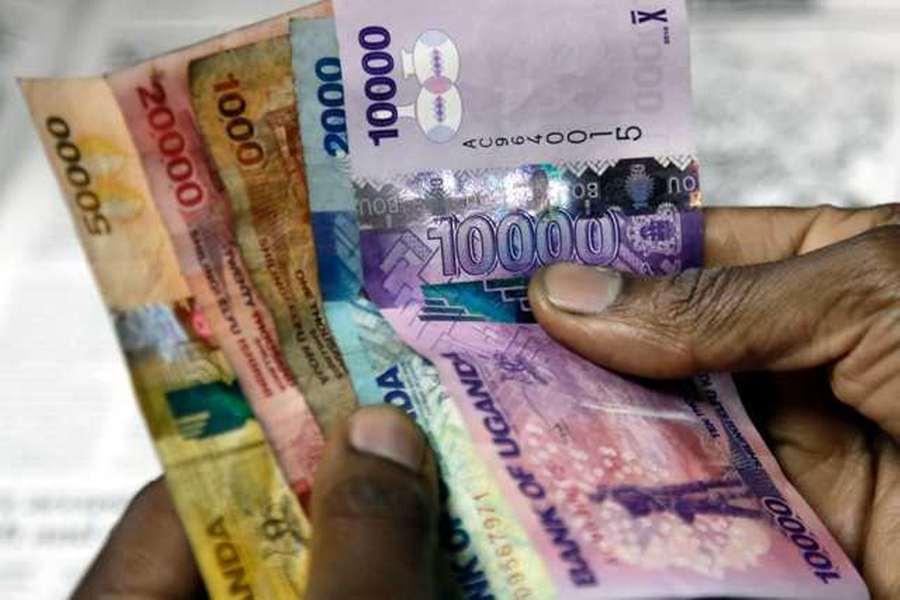
There was a time a traveller from Kigali to Uganda would be all smiles at the border when exchanging their Rwandan Franc into the Shilling. With just Rwf20,000, one would be nearly Shs100,000 richer the moment they crossed the border.
But the days of glee have turned to frown and gloom now, as the Shilling has made significant ground on the neighbouring Franc.
Until just a few years ago, the Rwandan Franc (RWF) commanded a value more than four times that of the Shilling.
In 2014, it traded as high as Rwf1 to Shs4.7. Today, that margin has nearly halved, with the Rwandan Franc barely fetching double the Shilling—marking a notable currency shift between the two East African neighbours.
Uganda’s currency has quietly, steadily strengthened in recent years, thanks in part to an uptick in exports—especially coffee and maize—rising remittances, and increased investor confidence tied to oil sector developments.
Coupled with relatively steady inflation and prudent monetary policy by the Bank of Uganda, the Shilling has become one of the more stable currencies in the region.
On the flip side, Rwanda—despite its reputation for strong governance and innovation—has seen its currency gradually slide in relative terms.
In economics, one would suggest trade deficits, high import dependency, and external debt obligations have added pressure to the Franc, which now struggles to maintain its once-commanding lead over the Shilling.
For cross-border traders and businesses operating between the two countries, the narrowing currency gap is far from academic—it’s deeply practical.
Ugandan exporters, especially in agriculture and light manufacturing, now find their goods slightly more expensive in Rwandan markets, potentially weakening their competitive edge.
For Rwandan importers, the reduced exchange advantage might mean tighter margins or higher consumer prices.
Meanwhile, informal border trade—which has long thrived on currency differentials and quick conversions—may also feel the squeeze.
"The shrinking gap means less room for arbitrage and less profit for small-scale traders who rely on these margins to survive," says a cross-border market vendor in Katuna.
"Before, we’d make Shs4,000 or more on every Rwf1,000. Now? Maybe half that."
The shift also raises broader questions about the trajectory of East Africa’s economies. Both Uganda and Rwanda are part of the East African Community’s plan for eventual monetary union.
If formerly wide currency disparities can compress this quickly, the dynamics of convergence may be more volatile—and more politically sensitive—than previously assumed.
Uganda’s monetary policy has earned marks for managing inflation and resisting unnecessary intervention in forex markets, which has allowed the Shilling to adjust naturally.
Rwanda, however, faces a different set of challenges, balancing its ambitious development agenda with external economic pressures.
There’s also a psychological element at play. Currency strength often serves as a proxy for economic performance—fair or not—and the Shilling’s ascent has become a symbol of Uganda’s growing regional confidence.
While a stronger Shilling may sound like good news on the surface, it comes with trade-offs. It can dampen export competitiveness and make domestic goods pricier abroad.
For Rwanda, the declining edge of the Franc may prompt re-evaluation of trade strategies, especially as it continues to invest heavily in infrastructure and technology.
The border exchange dynamic has changed—and with it, the expectations of travellers, traders, and policymakers.
Whether this shift marks a long-term rebalancing or a short-lived currency dance remains to be seen.
But for now, the days of walking across the border with Rwf20,000 and emerging a Shs100,000 "millionaire" are long gone.
