

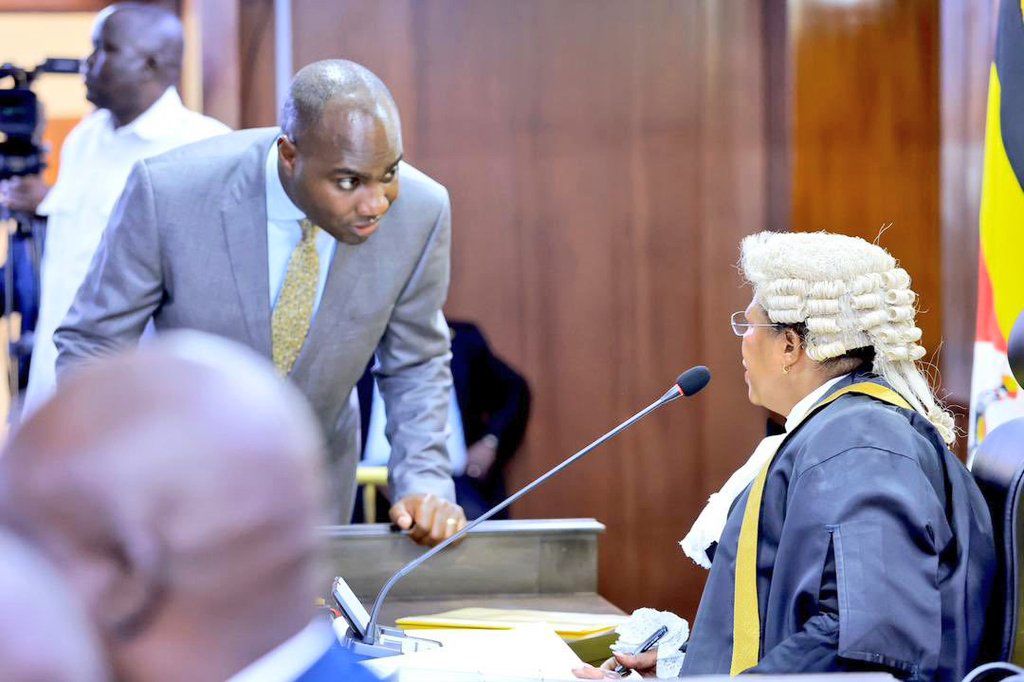
A total of Shs 1,105.16 billion has been allocated under Supplementary Expenditure Schedule No. 5 for the Financial Year 2025/26 has been approved by Parliament to address pressing national priorities, with a strong emphasis on wage obligations, institutional functionality, and key upcoming national and international commitments.
The supplementary budget, presented on Tuesday by Henry Musasizi, Minister of State for Finance, Planning and Economic Development, reflects a strategic redistribution of resources rather than heavy reliance on new funding streams.
A significant portion—Shs 985.8 billion—will come from improved efficiency in budget execution and cash management, signaling a shift toward internal optimization.
Additional financing sources include Shs 40.21 billion from budget reallocation, Shs 6.25 billion from non-tax/local revenue, and Shs 72.9 billion in external financing.
Of the total approved expenditure, Shs 519 billion falls within the 3% supplementary budget threshold, while Shs 586.16 billion exceeds it, indicating substantial intervention in critical sectors.
A notable allocation of Shs 56.95 billion has been earmarked for LCI, LCII, and Women Council Committee elections nationwide, in line with Cabinet directives.
Meanwhile, Shs 29.57 billion will support preparatory activities for the 2027 Africa Cup of Nations (AFCON), highlighting Uganda’s commitment to hosting continental events.
Security obligations also feature prominently, with Shs 132.9 billion allocated to settle outstanding commitments under the Uganda Police Force.
The health and education sectors receive targeted support through wage-related interventions. Shs 40.21 billion has been reallocated to facilitate the recruitment of health workers across 19 referral hospitals, while Shs 23.21 billion will fund wages needed to operationalize newly constructed schools under the UGIFT Programme.
Additionally, Shs 107.52 billion is designated to address shortfalls in wages, pensions, and gratuities across various government entities.
An external financing boost of Shs 72.9 billion from the World Bank will go toward the Generating Growth Opportunities and Productivity for Women Enterprises (GROW) project, reinforcing efforts to expand economic inclusion and productivity among women entrepreneurs.
Beyond the above allocations, multiple Ministries, Departments, and Agencies will benefit from the supplementary expenditure, ensuring continuity of government operations and service delivery.
