

Health experts have called for stronger engagement of young men in the fight against teenage pregnancy, warning that Uganda’s persistently high rates among adolescents will not decline unless boys are part of the solution.
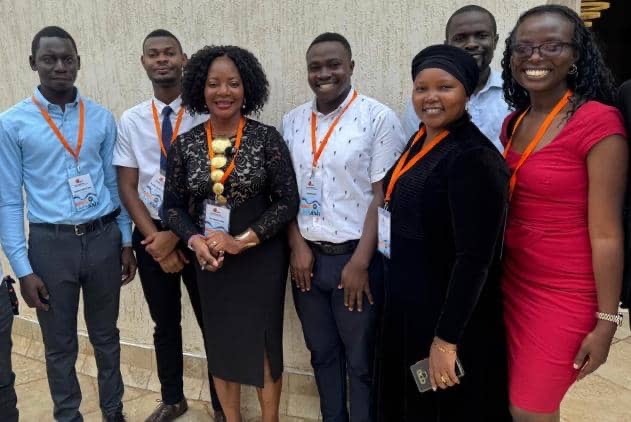
The call was made on Tuesday at Day One of 11th Annual Adolescent Health Conference, organised by the Society of Adolescent Health in Uganda (SAHU) under the theme “Adolescent Health: Fostering Wellness Through Collaborations.”
The two-day conference, chaired by Dr Sabrina Kitaka, has brought together experts from Uganda, the United States, Nigeria, Botswana, Mauritius and Cameroon.
Speaking to journalists Dr Kitaka, a paediatrician and adolescent medicine specialist at Makerere University, said she was encouraged by the diversity and turnout of participants.
“We planned for 100 people but I can tell you we’ve received more than 130 participants. We have people from across Uganda- from Kisoro, Gulu and Karamoja, and beyond Africa. Every single one of us is part of the village that raises the adolescent," Kitaka said.
She urged parents, teachers and community leaders to take an active role in guiding young people.
“It starts with you, the parents. You are the first point of care for our children. Support them with information, guidance, and ensure they are vaccinated and protected," Kitaka noted.
One of the most striking presentations came from Dr Damalie Mirembe, who shared findings from her study on the role of young men aged 15–24 in teenage pregnancies.
“We realised that all the interventions and focus have been on the young girls, and we are leaving out the young men,” she said.
“Despite all the government and NGO efforts, the teenage pregnancy rate has remained stagnant at 25% for almost two decades.”
Her research revealed that 45.8% of young men surveyed had ever impregnated a teenage girl, while 36% admitted to pressuring girls into abortion.
Alcohol and drug use, peer influence and lack of parental guidance were identified as major drivers during her presentation.
“Young men whose friends had children were 73% more likely to impregnate a teenage girl. Most were not ready to be fathers, many were scared and unprepared," she explained.
Dr Mirembe added that many young men lacked accurate knowledge of contraception, noting that most of them only knew about condoms.
"Those who used condoms were 71% less likely to impregnate a teenage girl, but those who tried using pills or other contraceptives were at higher risk, showing they lack proper knowledge," Mirembe explained.
Adding an international perspective, Dr Melissa Stockwell, a senior paediatrician from Columbia University, spoke about the growing challenge of long COVID among adolescents.
“For some people, symptoms like extreme fatigue, brain fog and headaches can last months after a mild infection. We are learning that even children and adolescents can experience this, and proper diagnosis and support are critical," Dr Stockwell told journalists.
From the Ministry of Health, Dr Allan Kasozi of the Department of Reproductive and Child Health said the findings highlight the urgent need to involve boys and young men in adolescent health interventions.
“We must engage the male child and men as key figures in changing the course of adolescent health,” he said.
“Cultural and religious barriers still fuel early marriages, teenage pregnancies and child labour. We must address these head-on," Kasozi added.
He said that the Ministry will use evidence from the conference to strengthen Adolescent-Friendly Health Services nationwide.
“Adolescents want parents, teachers and health workers to be more approachable so they can freely express their concerns," he said.
The conference continues with sessions on mental health, school health and non-communicable diseases among adolescents.
“Every adolescent matters and deserves support to reach their full potential. Our job is to make sure they grow, thrive and live to become the adults and grandparents of tomorrow.” Kitaka said.
