

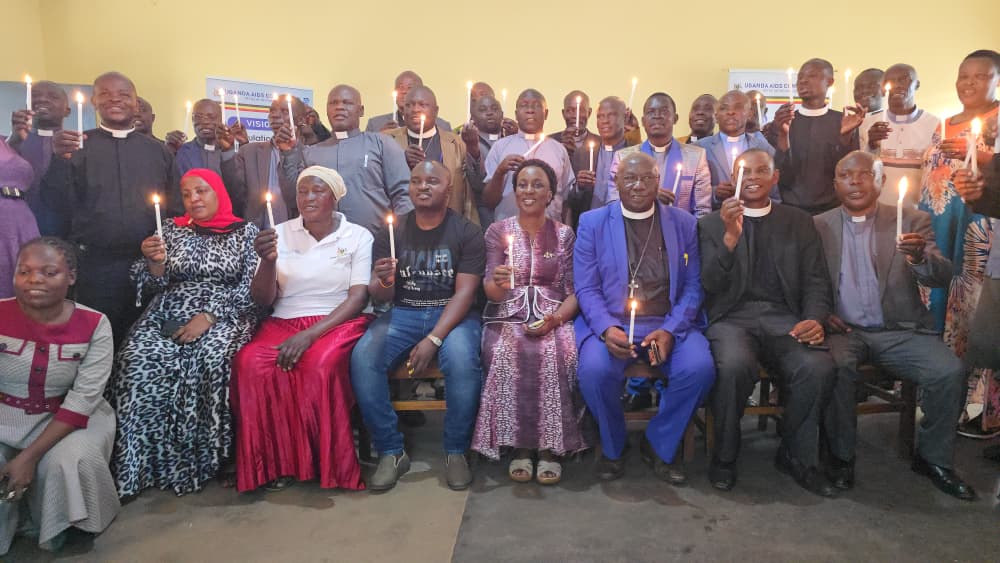
A training for Anglican religious leaders in Mbale Diocese has spotlighted the growing vulnerability of children and young people in Uganda’s HIV response, with experts warning that gaps in prevention and care could fuel a new wave of infections among adolescents.
The engagement, coordinated under the Uganda Aids Commission, brought Anglican faith leaders together to strengthen community messaging on HIV prevention, testing, and treatment adherence, with a strong focus on youth.
Uganda AIDS Commission Chairperson Canon Ruth Ssenyonyi told participants that while the country has made progress, the pace of decline in new infections remains too slow to meet the 2030 target.
About 38,000 new infections are still recorded annually, significantly above the target of 15,000.
Much of the concern at the training centred on adolescents, particularly girls and young women aged 15 to 24, who remain the most affected due to social and power imbalances in relationships.
New infections among adolescent girls account for 78 percent, compared to 22 percent among boys.
“There are men, especially over 40, who are positive and not on medication, engaging with young girls in schools and universities,” Ssenyonyi said.
Participants also pointed to a troubling behavioural trend among young people, noting that many prioritise preventing pregnancy over protecting themselves from HIV infection, undermining prevention efforts.
Health workers raised alarm over cases where children who test negative at birth later test positive during follow-up visits, a trend linked to postnatal exposure and gaps in caregiving and protection systems.
Mbale City HIV focal person Rehema Wangiro highlighted cases involving children exposed while under alternative caregiving arrangements, warning that such situations reveal vulnerabilities within households that directly affect child safety and health outcomes.
She also cited instances of older children, including those aged 10 and 13, found HIV positive despite both parents testing negative, raising concern about hidden exposure pathways and delayed detection.
These developments, she said, suggest Uganda could be facing a growing group of HIV-positive children transitioning into adolescence without early diagnosis and treatment, increasing long-term public health risks.
Ssenyonyi emphasised that prevention tools such as treatment adherence, viral suppression, and the “undetectable equals untransmittable” principle remain effective, but only if testing and treatment begin early and are maintained consistently.
She stressed that individuals not on treatment continue to drive new infections due to high viral loads, while those adhering to medication pose almost no transmission risk.
HIV prevalence in Mbale City stands at 4.9 percent, in line with the national average, compared to 3.3 percent in Mbale District.
With only three years left to 2030, the training underscored the urgency of strengthening youth-focused interventions, improving caregiver responsibility, and ensuring that religious leaders amplify accurate HIV messaging within families and communities.
Uganda’s HIV response, participants noted, is increasingly shifting towards protecting children and adolescents who risk inheriting the epidemic if prevention gaps are not urgently addressed.
