

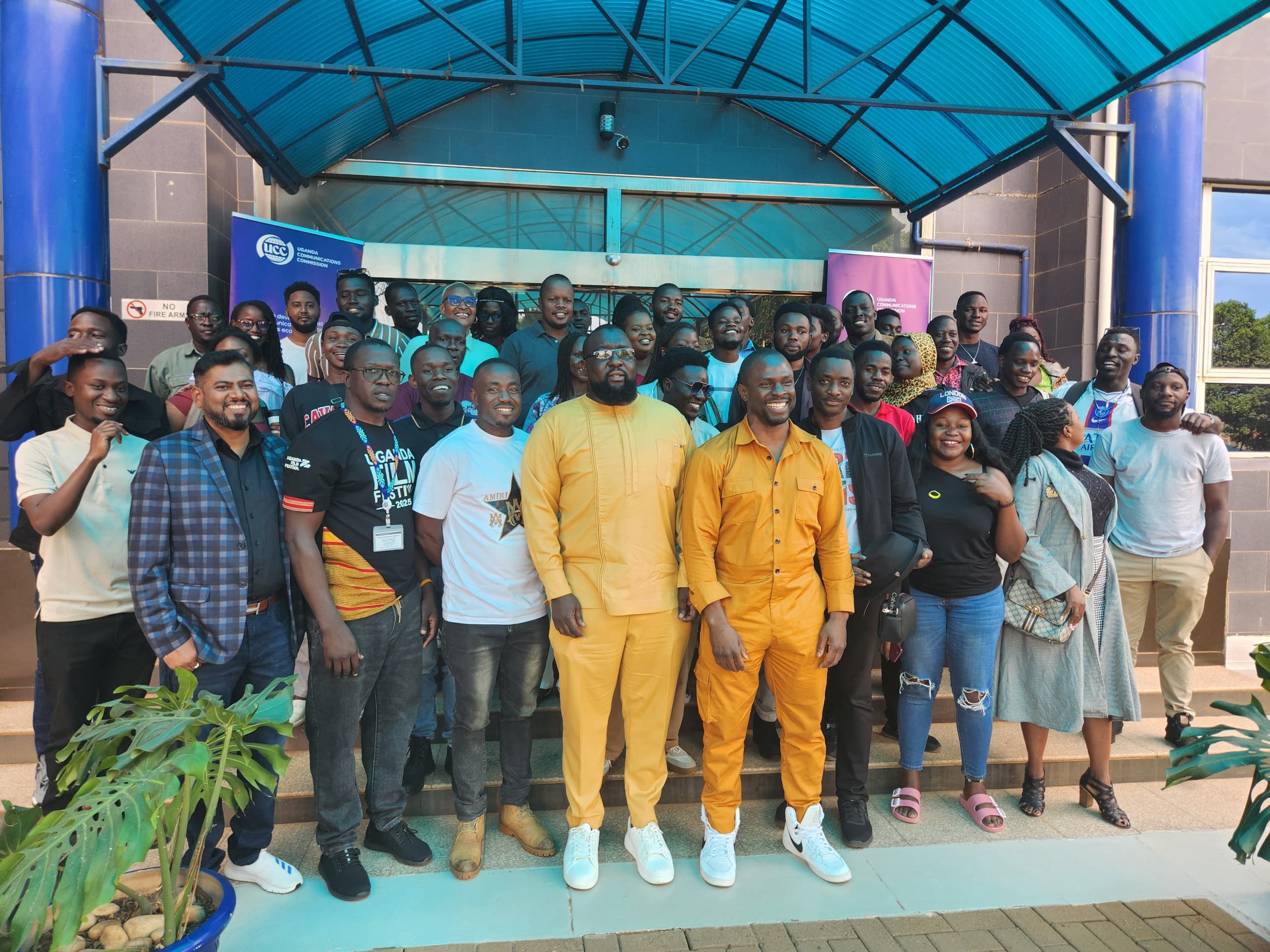
Renowned Hollywood actor and producer Gbenga Akinnagbe has urged Ugandan filmmakers to embrace their native languages and authentic cultural narratives as a gateway to global recognition.
Speaking during a dynamic industry engagement at UCC House in Bugoloobi, Kampala, on Saturday, Akinnagbe emphasized that the world is hungry for real, human-centered African stories told in their true voice.
“I highly recommend that Uganda also make stories in their own native languages,” he said. “Uganda, like anywhere else, has beautiful, tragic, and heroic stories that are about the human experience. That is what attracts international markets.”
The actor—best known for his role as Chris Partlow in HBO’s The Wire—was visiting Uganda as a guest of the Office of the President's Diaspora Affairs department, led by Ambassador Abbey Walusimbi. The session brought together Ugandan filmmakers, producers, and creatives to connect, share ideas, and explore opportunities for collaboration and international exposure.
Craft First, Then the Rest
In his address, Akinnagbe stressed that while financing and networks are valuable, it is a creator’s skill and quality of work that ultimately open doors.
“Craft is more important than network and financing,” he said. “If you can’t make anything good, no one’s going to watch it. Work on your craft, and the people you're meant to work with will find you. Trust the process.”
He also emphasized the importance of establishing formal systems in Uganda’s film industry—particularly contracts—to protect both creatives and investors as the sector grows.
“Necessity is the mother of invention. Now that you need it, invent contracts,” he said.
Akinnagbe expressed deep appreciation for Uganda’s hospitality and cultural richness, describing his visit as both humbling and inspiring.
“I’ve only been in Uganda for a couple of days, and I’m already in love. The people are amazing. Africa is my own. Uganda is my own,” he said. “Anything I can do to shine a light on the variety of amazing stories and opportunities that exist here—I’m going to do it.”
Building Talent, Not Just Budgets
Isaac Kigozi, Senior Principal Trade and Investment Officer at the Office of the President – Diaspora Affairs, encouraged filmmakers to define the kind of support they truly need, emphasizing that knowledge and collaboration often outweigh financial aid.
“In most cases, people ask for money, forgetting that knowledge is better,” he said. “Cash matters, but knowledge is king. Prioritize mastering scriptwriting, production, and distribution. Skills build careers; funding follows talent.”
He applauded President Museveni for always supporting Uganda's film and arts industry.
Kigozi also highlighted the importance of strategic networking for industry growth.
“Networking isn’t optional—it’s the heartbeat of Uganda’s film industry. Collaboration is what will connect you to Cannes, to international guilds like SAG-AFTRA and PGA, and help build a thriving creative ecosystem,” he said.
He reaffirmed the government’s commitment, through the Diaspora Affairs office in partnership with UCC, to supporting the growth of Uganda’s film sector.
Leonard Amanya, a film producer, marketing and promoter specialist at UCC said Akinnagbe’s visit was part of a broader strategy to strengthen Uganda’s creative industry through international exchange.
“By inviting Gbenga Akinnagbe, we’re exposing our local talent to global talent. This builds capacity and shows our filmmakers how things are done at the highest level,” he said.
Matthew Nabwiso, film director and President of the Uganda Producers Guild, praised the engagement as an invaluable opportunity to share knowledge and reflect on industry challenges.
“When people from bigger industries share, it helps us understand our own gaps and improve,” he said. Nabwiso also urged filmmakers to register with collecting societies to protect their intellectual property and earn royalties.
“If you’re not a member, when royalties are collected, you miss out. Protect your work.”
During an open question and answer session with local filmmakers and actors, Akinnagbe fielded questions on branding, international distribution, and how to break into global markets. His message remained consistent: prioritize quality, be patient, and remain committed.
“Keep working and keep making the quality better. There are so many film companies in the U.S. discussing how to get stories from Africa. The opportunities are there. Just keep going,” he advised.
Akinnagbe’s presence energized the local industry, offering hope and guidance to Uganda’s growing pool of talent. From the stage to the screen, his career—spanning The Wire, Power Book II: Ghost, The Old Man, To Kill a Mockingbird on Broadway, and festival hits like Rob Peace—reflects a deep commitment to storytelling rooted in truth and humanity.
His visit leaves behind a powerful call to action: to tell Uganda’s stories boldly, authentically, and in the voices that make them truly unique.
