
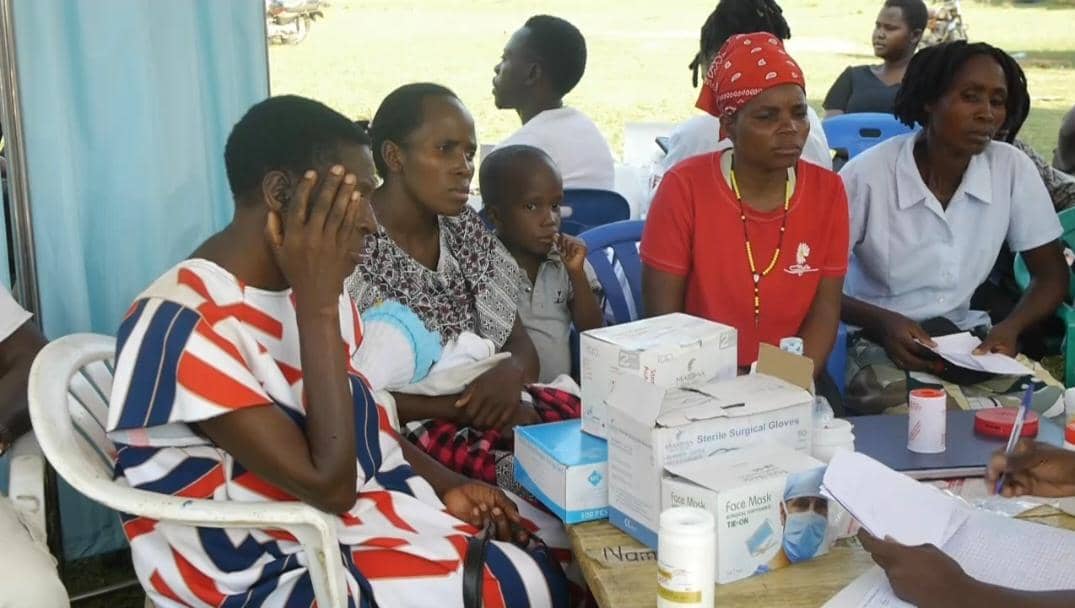
Residents of Busunju Town Council in Ssekanyonyi Subcounty, Mityana District, are increasingly alarmed by the deteriorating state of health services in their area.
They are appealing to the government to step up efforts by increasing medical supplies and improving infrastructure in public health facilities.
The concerns came to light during a health camp organized by the area Member of Parliament, Richard Lumu, as part of broader efforts to promote better healthcare within the constituency.
Access to adequate medical care remains one of the community's most pressing challenges.
Residents complain that government health centres frequently run out of essential drugs—particularly those required to treat common and chronic illnesses—forcing patients to seek costly alternatives.
“We struggle to access treatment because medicines are always out of stock, and sometimes we are forced to buy drugs from private clinics which most people here cannot afford,” one resident shared during the health camp.
Adding to the burden, residents say that health facilities are located far from many villages, making it difficult for the sick to access care promptly.
The situation has had serious implications, particularly for vulnerable groups such as children, the elderly, and expectant mothers.
Charles Basudde, the District Councillor in charge of health, acknowledged the deep frustrations within the community.
“The poor state of health services has forced many people to give up on seeking treatment. Some end up suffering silently with their illnesses at home,” Basudde said.
In his address, Richard Lumu admitted to the challenges and limitations facing healthcare provision in the area.
“It is true we cannot provide every single service needed, but at least some people have been diagnosed and treated at this health camp. What matters is that government continues to extend free healthcare to our people,” he said.
Lumu further noted that the poor health situation is having a knock-on effect on development, with many residents rendered unproductive due to preventable illnesses.
At the camp, Emmanuel Tumusiime, the in-charge of Busunju Health Centre III, said that despite the constraints, the facility continues to serve hundreds of patients each month.
“We are overwhelmed. Every month, we handle more than 400 patients who come here for free medical services. The demand is far higher than the resources we receive,” Tumusiime said.
He noted that the health camp had provided specialized services including blood testing, eye care, dental treatment, and general medical consultations, all of which were well received by the community.
Both local leaders and residents emphasized the urgent need for increased government investment in rural health services, warning that without decisive intervention, the area risks falling further behind in terms of basic public health.
