
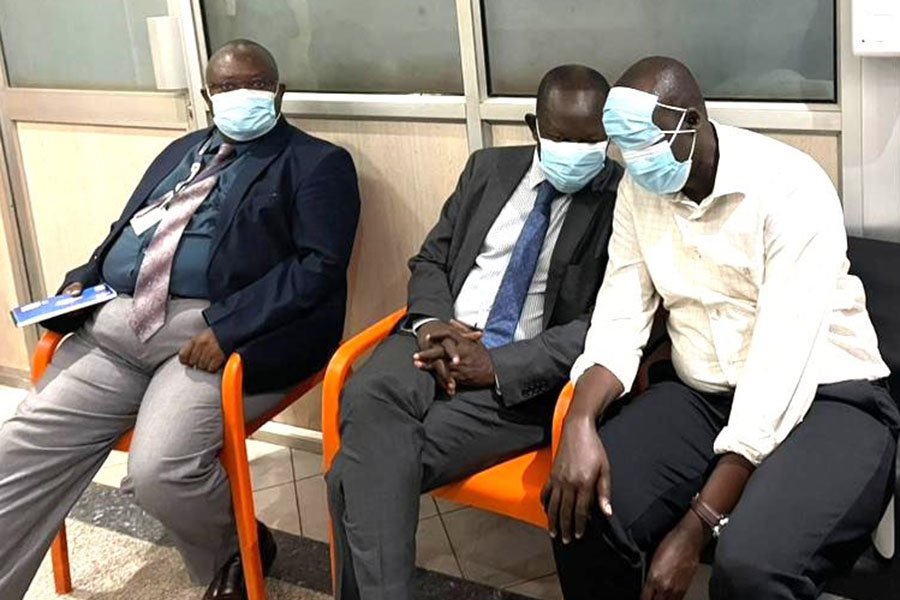
As investigations into the arrest of six senior officials from the Office of the Prime Minister’s (OPM) Department of Refugees intensify, community sources from affected asylum seeker groups are coming forward with explosive claims of systemic manipulation, selective enforcement, and a two-tiered registration system that allegedly favoured those who could pay while blocking genuine refugees.
The arrests of Commissioner Patrick Okello, Assistant Commissioner Douglas Asiimwe, Senior Settlement Commandant Geoffrey Mugabe, Registration Officer Henry Bwena, and others by the Inspectorate of Government (IGG) have opened a Pandora’s box of long-simmering grievances.
Multiple sources within the Eritrean, Ethiopian, and Somali communities allege that Commissioner Patrick Okello personally exerted pressure on the Minister responsible for Disaster Preparedness and Refugees to arbitrarily halt the registration of Eritrean asylum seekers.
One community insider claimed: “The commissioner called the minister instructing him to stop registering these asylum seekers,” despite Uganda’s long-standing open-door asylum policy
. This move came amid broader suspensions of prima facie recognition for certain nationalities, officially justified by funding shortages and shifting conflict dynamics.
However, sources insist the directive created artificial bottlenecks that funnelled desperate applicants toward corrupt brokers.
Following the alleged intervention, asylum seekers were reportedly required to produce national identity cards and passports from their countries of origin — documents many genuine refugees fleeing persecution either do not possess or risk their lives obtaining.
Community members described this as a clear violation of international refugee protection principles, which recognize that those escaping conflict often arrive with minimal or no documentation.
Brokers, VIP Treatment, and Queue-Jumping
Sources claim these restrictive requirements pushed many applicants into the arms of middlemen linked to senior officials. They specifically name Registration Officer Henry Bwena and Head of Registration (Senior Settlement Commandant Geoffrey Mugabe) as allegedly complicit in facilitating access for a fee.
Meanwhile, communities from Pakistan, Afghanistan, Syria, and Iran allegedly received “VIP treatment.” Sources allege that individuals from these nationalities, particularly Pakistanis, were fast-tracked, allowed to bypass long queues, and processed more quickly because of their ability to pay substantial sums.
This preferential treatment has reportedly strained relations between OPM’s Department of Refugees and the Ministry of Internal Affairs’ Immigration Department.
Tensions escalated over Pakistani nationals who entered Uganda on valid work visas but were allegedly encouraged by brokers to switch to refugee status.
Under Regulation 64 of the Uganda Citizenship and Immigration Control Regulations, 2021, recognized refugees are exempt from paying for work permits.
Sources argue this practice not only undermined legitimate immigration channels but also deprived the government of significant revenue from work permit fees.
Security and Profiling Concerns
Compounding the allegations is the claim that some applicants, particularly from certain Asian and Middle Eastern countries, underwent inadequate security profiling and screening by police. This has raised serious concerns given prevailing national security considerations around foreign nationals.
One community leader told Nile Post: “While poor Eritreans and Somalis were blocked or forced to pay brokers, those with money from Pakistan and elsewhere were ushered through with minimal scrutiny.”
As of Friday afternoon, Commissioner Okello remains at the Central Police Station (CPS) while investigations continue.
The IGG operation, which also netted a Pakistani national identified as Zafar Ahmad in some reports, is examining an alleged extortion ring where asylum seekers paid between $5,000 and $10,000 for refugee status documents.
The Department of Refugees, headquartered on Sir Apollo Kaggwa Road in Old Kampala, serves as the nerve centre for registration, status determination, and coordination with UNHCR and implementing partners.
Uganda hosts nearly 2 million refugees and asylum seekers, making transparent and accountable management critical to sustaining donor support and the country’s progressive refugee policy.
These latest revelations come against a backdrop of previous fraud scandals in refugee settlements, including inflated numbers and ghost beneficiaries.
While Uganda has been globally praised for allowing refugees freedom of movement, the right to work, and access to land, systemic corruption risks eroding both public trust and international confidence.
Refugee community representatives have called for a comprehensive, independent audit of the entire registration process, including the handling of suspensions for Eritrean and other nationalities.
Humanitarian partners are closely monitoring developments to ensure protection gaps do not leave vulnerable individuals exposed.
Nile Post will continue tracking this fast-moving story, including any court appearances at the Anti-Corruption Court, official responses from OPM and the IGG, and further details on the evidence gathered.
