

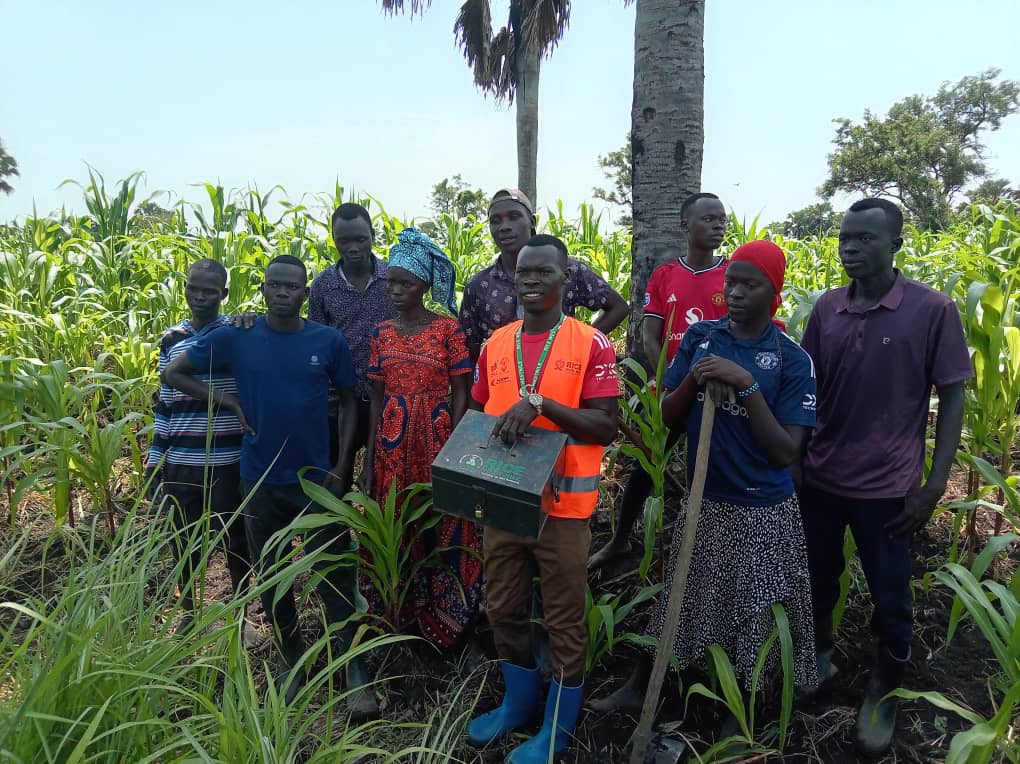
A major environmental initiative is transforming livelihoods and restoring ecosystems in northern Uganda as communities in West Nile and Karamoja increasingly embrace climate-smart practices and environmental conservation.
The Strengthening Environmental Accountability (SEA) project, funded by a consortium of embassies led by the Embassy of Denmark in Uganda alongside Ireland, Sweden, and the Kingdom of the Netherlands, is now in its third year of implementation under the broader PACER programme.
The four-year initiative, running from August 2024 to December 2027, is being implemented by Rice West Nile in partnership with SPACE, Friends of Zoka, and the African Centre for Energy and Mineral Policy (ACEMP).
According to project officials, the initiative is tackling major drivers of environmental degradation, including low environmental awareness, population pressure, and overdependence on natural resources.
“Communities in Karamoja and West Nile lack awareness of environmental protection. As the population increases daily, dependence on natural resources intensifies, leading to degradation,” said Rolex Aleku, the SEA-WNK Project Consortium Monitoring, Evaluation, Accountability and Learning Coordinator.
The project is being implemented across six districts: Adjumani District, Obongi District, Zombo District, and Madi-Okollo District in West Nile, alongside Amudat District and Nakapiripirit District in Karamoja.
Project officials say the initiative has so far reached 22,102 people, with women accounting for 58.6 percent of beneficiaries. More than 200 Climate Action Champions have also been trained to support grassroots mobilisation.
In West Nile alone, project partners report planting 24,464 trees with support from the National Forestry Authority and other stakeholders.
Local leaders say enforcement efforts are beginning to reduce environmental destruction.
“We have realised some encroachment and deforestation in reserves has reduced after we confiscated tools of those encroaching,” said Henry Onzimai Look.
In Madi-Okollo District, leaders say a newly passed environmental ordinance is already improving compliance on waste management, plastics, and public health.
Outgoing LC3 Chairperson of Uleppi Sub-county, Adaku John, said communities are already seeing visible transformation.
“With support from Rice West Nile, we now have a garbage site. People have adopted climate-smart farming and livestock keeping. More than 26 households have moved away from river buffer zones, and fish production has increased,” he said.
In Adjumani District, environmental protection efforts are also being driven through low-cost innovations such as energy-saving stoves.
Community trainer Peter Iya said the stoves have significantly reduced firewood consumption and pressure on forests.
“Unlike the traditional three-stone fire, these stoves cook faster and use less firewood,” he explained.
He said he has already trained more than 50 residents and constructed stoves across four villages in Jihwa Parish.
Women in the area say the technology has reduced the time spent collecting firewood, allowing them to focus on income-generating activities.
In some communities, youth who previously depended on charcoal burning are now turning to agriculture and climate-smart enterprises.
In Waka Parish, Mwamba Kassim said training under the SEA project helped mobilise young people into climate-smart farming.
“We started tomato farming on two acres and earned about UGX 2.45 million. We also expanded into maize production to support refugee communities,” he said.
The group has also supported youth to access government programmes such as the Parish Development Model.
Farmers in Zombo District are also increasingly adopting sustainable agricultural practices including mulching, trenching, and tree planting.
“We sensitise farmers to stop bush burning and use climate-smart methods. People are now actively asking for seedlings,” said Abeditho Adrogy.
According to Veronica Weirimu, the project places strong emphasis on behavioural change and community empowerment.
“We have trained over 200 climate community champions. We also link youth to livelihood opportunities and engage women, including those with disabilities, in environmental advocacy,” she said.
Despite the progress, project implementers say challenges such as limited financing for youth groups, poor road infrastructure, weak market access, lack of irrigation systems, and waste management gaps continue to affect communities.
However, stakeholders remain optimistic about the future.
“We are working with institutions like Muni University to generate evidence and link communities to government programmes such as PDM,” Aleku said. “The goal is to address real problems with practical solutions.”
As the SEA project enters its final implementation phase, stakeholders hope the progress recorded in West Nile and Karamoja can be scaled up to strengthen Uganda’s broader climate resilience and environmental protection efforts.