
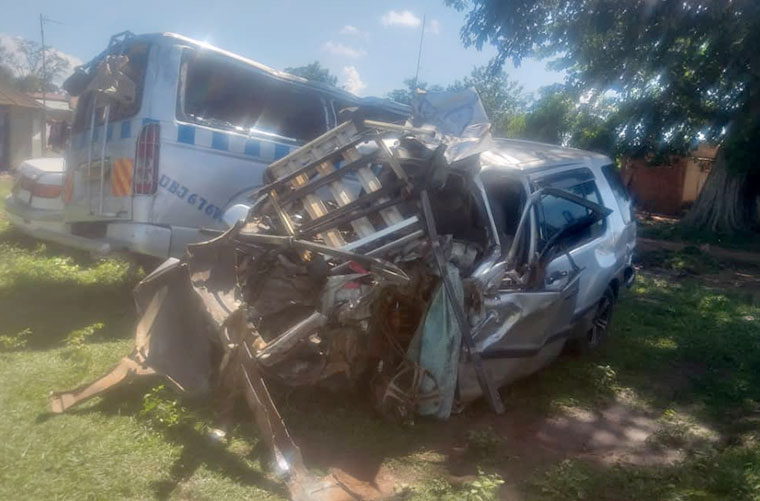
Driving, at its core, is about decision-making. A proper driving test is not just about steering or changing gears; it is about judging distance, reading the road, anticipating danger, and knowing when not to act.
A competent instructor evaluates whether a driver can independently make safe, sound decisions. If that standard were strictly applied, many of the commuter taxi drivers on our roads would struggle to pass.
What has become routine on Uganda’s roads is poor judgement dressed up as confidence. Every day, lives are lost not because crashes are inevitable, but because of a single reckless choice: dangerous overtaking.
What some drivers see as a quick manoeuvre to save a few minutes often becomes a fatal miscalculation that costs families their loved ones.
We often hear that the problem is the size of our roads. The argument goes that because our highways are narrow, overtaking becomes risky—therefore we must widen them. But widening a road does not correct poor judgement. It does not fix impatience. It does not teach discipline. You do not solve bad driving by creating more space for it.
Overtaking is governed by clear, simple rules:
- Only overtake when the road ahead is completely clear.
- Never overtake on corners, hills, bridges, or near junctions.
- Obey solid road lines—they exist to save lives.
- If in doubt, do not overtake.
How often have you sat in a vehicle that violated some, if not all, of these rules? Yet we still blame the road instead of the decision.
On highways connecting Kampala to towns like Gulu, Mbarara and Jinja, reckless overtaking is one of the leading causes of head-on collisions. These are largely single carriageways, with vehicles travelling in opposite directions separated only by painted lines. One misjudgement—one wrong assumption about distance or speed—and a normal journey turns tragic.
These incidents are often called accidents. But overtaking is not random. It is a deliberate decision. A driver assesses the road—sometimes with poor visibility—and chooses to gamble that the oncoming lane is clear long enough.
Frequently, that calculation is wrong. Passengers sit in silence, hoping the gamble pays off. Near misses are laughed off. The driver is praised for “skill.” The lesson is never learned—until the day the risk ends in catastrophe.
Reckless overtaking commonly happens when drivers grow impatient behind slow-moving trucks, when public transport operators compete for passengers, when motorists underestimate the speed of approaching vehicles, or when road markings and blind spots are ignored. Many convince themselves they can “beat” the oncoming car. But speed and distance are deceptive. What looks safe can close in seconds.
When overtaking goes wrong, the result is often a head-on collision—the deadliest kind. Two vehicles collide at combined speeds, multiplying impact. Survivors suffer severe injuries, permanent disability, or trauma. Behind every statistic is a grieving family: children without parents, parents burying sons and daughters, households losing breadwinners in an instant.
The pressure on taxi and bus drivers to maximise trips only worsens the problem. Yet professional drivers carry dozens of lives at once. Their responsibility is greater, not smaller. Transport companies and enforcement agencies must strengthen discipline, training and monitoring.
Uganda has traffic laws designed to prevent dangerous driving, but enforcement is inconsistent. Speed governors, signage and patrols help—but they cannot replace personal responsibility.
Reckless overtaking is not bravery. It is not skill. It is gambling with human life.
Saving five minutes is meaningless compared to saving a life. The true mark of a responsible driver is patience and restraint. On Uganda’s roads, one decision determines whether you arrive safely—or never arrive at all.
Let us choose caution over speed, responsibility over impatience, and life over risk. Because on the road, a reckless overtake can be a fatal one.
