
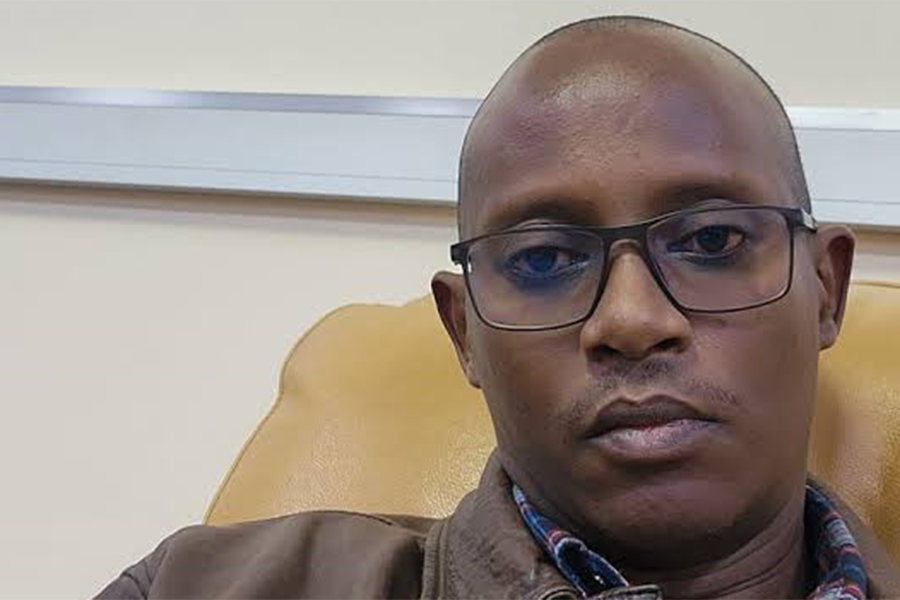
As former Patriotic League of Uganda (PLU) official Michael Katungi Mpeirwe awaits a court hearing to determine whether he should be extradited to the United States, newly obtained government documents have brought into focus the legal sequence followed in Uganda's extradition process after the Executive approved the request months before judicial proceedings began.
Katungi, a former commissioner in the Patriotic League of Uganda, the political pressure group associated with First Son and Chief of Defence Forces Gen. Muhoozi Kainerugaba, also contested for the Igara East parliamentary seat in Bushenyi District.
He is currently detained as Ugandan authorities process a request by the United States, where he is wanted to stand trial in the U.S. District Court for the Eastern District of Virginia on narcotics and firearms-related charges. He denies the allegations.
The Buganda Road Chief Magistrate's Court is expected to hear the substantive extradition application after Katungi challenged the proceedings and opposed his surrender to American authorities.
However, official correspondence seen by this publication reveals that by the time the matter reached court, the Executive had already completed several critical steps in considering the American request.
The paper trail begins with a March 27, 2026 letter from Solicitor General Pius Perry Biribonwoha to the Director of Public Prosecutions.
The letter refers to a diplomatic request transmitted through the Ministry of Foreign Affairs after the United States sought Katungi's extradition.
"The Government of the United States of America requests the extradition of Mr. Michael Katungi Mpeirwe for him to stand trial in the U.S. District Court for the Eastern District of Virginia for narcotics and firearms offences," Biribonwoha wrote.
After reviewing the request, the Solicitor General concluded that Uganda was legally able to cooperate.
"We have considered the matter and note that the assistance may be rendered by virtue of the 1988 UN Convention against Illicit Traffic in Narcotic Drugs and Psychotropic Substances and the Extradition Act, Cap. 124," the letter states.
The request was then forwarded to the Director of Public Prosecutions "for your further management."
The next stage is documented in a June 16 application filed before the Buganda Road Chief Magistrate's Court by Assistant Director of Public Prosecutions and Head of International Cooperation Vicky Nabisenke.
The application states that "on 07th April 2026, the Director of Public Prosecutions received approval from the Attorney General's Chambers to extradite Michael Katungi Mpeirwe."
It further explains that the approval was granted because "the assistance may be rendered by virtue of the 1988 UN Convention against Illicit Traffic in Narcotic Drugs and Psychotropic Substances and the Extradition Act, Cap. 124."
Perhaps more notably, the filing discloses that Justice and Constitutional Affairs Minister Norbert Mao subsequently requested the court to issue an arrest warrant.
"Pursuant to Section 8 of the Extradition Act, the Hon. Minister of Justice and Constitutional Affairs, in his letter dated 14th April 2026, requested you to issue a warrant for the apprehension of Michael Katungi Mpeirwe to pave way for his surrender to the United States of America," the application reads.
A separate letter signed by Mao uses similar wording.
"The matter has been considered by the Director of Public Prosecutions (DPP), who has since expressed readiness to commence extradition proceedings against Mr. Mpeirwe," Mao wrote.
"The purpose of this letter, therefore, is to request you to issue a warrant for the apprehension of Mr. Michael Katungi Mpeirwe pursuant to Section 8(2) of the Extradition Act, Cap. 124, to pave way for his surrender to the United States of America."
The language contained in the correspondence has drawn attention because it illustrates that the Executive had already formed the view that Uganda could honour the American request before the judiciary became involved in the matter.
At the same time, the documents also show that executive approval did not itself complete the extradition.
Instead, the government proceeded to court, seeking the warrant and subsequent judicial proceedings required under Uganda's Extradition Act.
That distinction has become more apparent as the case unfolds before the Buganda Road Chief Magistrate's Court.
When Katungi first appeared in court, his lawyers argued that the prosecution had not yet filed the substantive extradition application required under the law and challenged the proceedings. They also sought his release on bail.
The court declined to release him at that stage, ruling that the extradition process was still ongoing. It directed the prosecution to file the formal extradition application before the matter proceeds to a substantive hearing.
The chronology emerging from the official correspondence highlights the respective roles assigned to different state institutions under Uganda's extradition framework.
The Attorney General's Chambers first assessed whether Uganda could legally render the requested assistance under domestic legislation and international treaty obligations.
The Director of Public Prosecutions then assumed responsibility for commencing extradition proceedings.
The Minister of Justice requested the issuance of an arrest warrant.
Finally, the matter was placed before the Chief Magistrate's Court, which must determine whether the statutory requirements for extradition have been satisfied before any surrender can lawfully take place.
The case has also attracted attention because it comes only months after Parliament enacted the controversial Sovereignty legislation, which was promoted as reinforcing Uganda's autonomy against foreign legal processes.
While that law has generated extensive political debate, the Katungi proceedings are being conducted under the Extradition Act, Cap. 124, and the 1988 United Nations Convention against Illicit Traffic in Narcotic Drugs and Psychotropic Substances, both of which are expressly cited in the government's correspondence authorising the extradition process.
Whether the new sovereignty law has any legal bearing on ongoing extradition proceedings has not yet been tested before the courts.
For now, the Buganda Road Chief Magistrate's Court remains the forum that will determine whether Katungi's case satisfies Uganda's legal threshold for extradition.
Its decision is likely to clarify not only Katungi's fate but also how Uganda balances executive cooperation with foreign governments against the judiciary's role in safeguarding due process in extradition proceedings.
