
You have to be a logical thinker to make sense of most things in the world. Without that grounding, you risk being taken down blind alleys without even knowing when or where the rain started beating you.
This is precisely why it is essential—if only at a cursory level—to understand the three classical laws of thought and the basics of logical reasoning. In Uganda, public argument tends to drag on because very few people are equipped to assess whether the positions they are being sold make any logical sense.
Put simply, many of the arguments paraded in political spaces are nonsensical—not as an insult, but in the strictest technical sense.
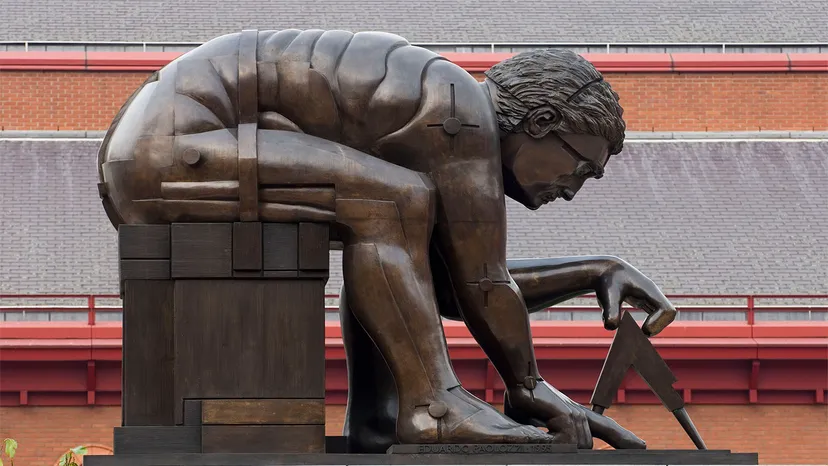
Let me offer an analogy: Sir Isaac Newton, when formulating his laws of motion, probably didn’t imagine he was offering tools that could one day help Ugandans navigate political deception. Yet his First Law tells us that a body in motion will remain in motion unless acted upon by an external force.
That force must be stronger than the momentum it seeks to interrupt. A car rolling down a hill will not stop unless something—brakes, a wall, a rock—compels it to stop.
That’s why engineers build retainer walls: to resist the force of soil or water. But such walls must be thoughtfully built. I’ve had the misfortune of rebuilding one multiple times after it gave way to floodwater. It failed not because the water was too strong, but because the wall was poorly constructed.
And here’s where politics enters the conversation.
If a retainer wall is built with excuses instead of strength, it will fail. Likewise, if opposition parties exist only to complain about how unfair the ruling National Resistance Movement (NRM) is, they have already admitted defeat. Their purpose becomes hollow.
This is not a defence of the NRM's conduct. Uganda has long known its ruling party does not play fair. Dr. Kizza Besigye has been telling us since 2001 that the NRM has no intention of participating in free or fair competition for power. That point is now well established.
What is not clear is what the opposition intends to do about it.
What Uganda needs is an external force—an opposition capable of pushing back against the NRM’s inertia. Yet what we often see are political formations formed solely to repeat known grievances. They do not function as brakes, barriers, or resistance. They merely occupy the space labelled “Opposition” while conceding that the task is too difficult to meaningfully attempt.
Take the laws passed by Parliament—many of which are widely seen as anti-people. These go through with little meaningful resistance, proof that the ruling party faces no real institutional check.
This begs the question: what exactly is the so-called opposition opposing? What does it have the capacity—or even the will—to oppose? Or is it simply performing opposition as a ceremonial role in a political system designed to absorb dissent without yielding to it?
These are not rhetorical questions. They demand urgent answers.
My argument has simply been to show the connection between logic, physics, and political reality. If we embrace logical thought, we may begin to demand more from those claiming to stand on our side—and better understand the mechanisms required to meaningfully resist a system in motion.
