
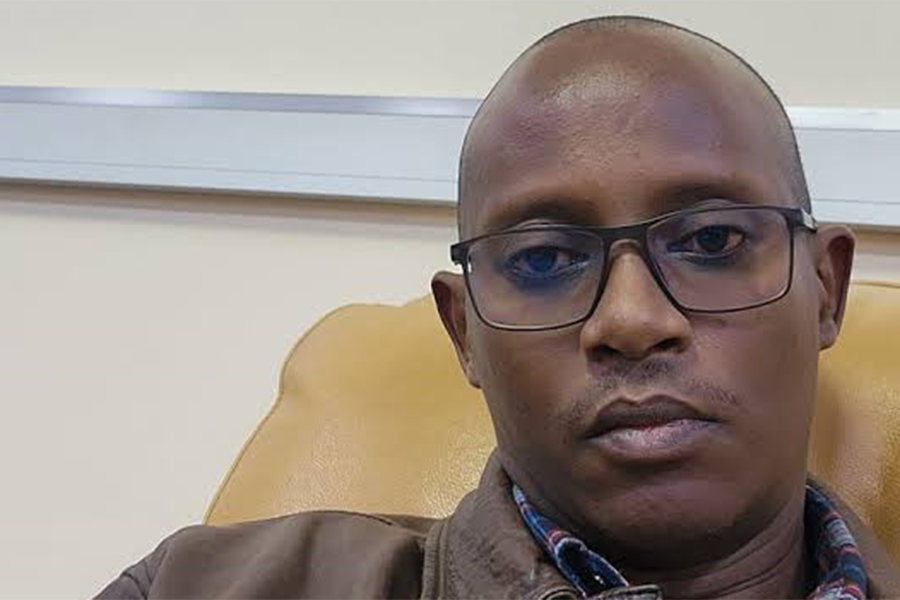
In a modest courtroom at Buganda Road Chief Magistrates’ Court in Kampala, a retired Ugandan army lieutenant sat in the dock. Michael Katungi Mpeirwe, former External Affairs Commissioner of the Patriotic League of Uganda, former intelligence operative, and one-time African Union security official, faces extradition to the United States.
The United States wants him in the Eastern District of Virginia to answer charges of conspiring to arm one of the world’s most violent drug cartels Mexico’s Cártel Jalisco Nueva Generación, or CJNG. The alleged plot involves roughly $58 million in military-grade weapons: machine guns, rocket launchers, sniper rifles, anti-aircraft systems, grenades, and more. Prosecutors say Katungi and co-conspirators used fraudulent end-user certificates to disguise the destination, claiming the arms were for a Tanzanian government buyer when they were allegedly destined for the cartel.
He is also charged with cocaine trafficking conspiracy and providing material support to a designated foreign terrorist organization. His co-accused a Bulgarian arms dealer and two others from Kenya and Tanzania have already been extradited and sit in U.S. federal custody. Katungi remains in Luzira Prison, presumed innocent until proven guilty.
But this case is no longer just about one man’s alleged crimes. It has become a mirror reflecting a much larger question: Is sovereignty on trial?
Katungi is not a shadowy figure pulled from the margins. He is a man who operated close to power. A retired UPDF lieutenant with experience in high-level security logistics, he served as Acting Head of the African Union’s Security and Safety Division in Addis Ababa. He participated in investigations into regional conflicts, including the 2005 helicopter crash that killed South Sudanese leader John Garang. He worked as Deputy Head of Mission at Uganda’s High Commission in Abuja, Nigeria, and advised on security across East Africa.
Politically, he rose in the Patriotic League of Uganda, serving as its External Affairs Commissioner. He helped shape the party’s international outreach and was even named by General Muhoozi Kainerugaba as an envoy to Haiti amid that country’s gang violence crisis. Until the indictment surfaced in 2025, he was regarded as a connected insider.
Then the DEA’s undercover operation, spanning multiple continents and years, allegedly unraveled the network. The U.S. indictment, unsealed in 2025, paints a picture of a sophisticated transnational scheme. Uganda, party to the 1988 United Nations Convention Against Illicit Traffic in Narcotic Drugs and Psychotropic Substances, received a formal extradition request. In April 2026, the government through Justice Minister Norbert Mao approved it. By late June, Katungi was arrested.
Uganda and the United States do not have a bilateral extradition treaty. The request rests on the multilateral UN drug convention. Uganda has cooperated with U.S. requests before. Past cases show a pattern of acquiescence when Washington asks.
The defense team led by lawyers Samuel Kakande, Ramadhan Akatwijuka, and Musa Nsamba are fighting on procedural grounds: document disclosure, the legality of the process itself. They are not conceding the substantive allegations.
Meanwhile, the broader debate has erupted. Retired General David Sejusa has publicly questioned the wisdom of surrender. He argues Uganda should invoke the “active personality principle” the right of a state to prosecute its own nationals for serious crimes committed abroad and try Katungi at home if evidence warrants. He poses the blunt question others are now whispering: Would the United States ever extradite one of its own citizens to Uganda to face trial?
History offers a gallery of examples that frame this moment.
In 2010, Thailand extradited Russian arms dealer Viktor Bout the so-called “Merchant of Death” to the United States. Bout was convicted and later swapped in a high-profile prisoner exchange.
Mexico eventually handed over Joaquín “El Chapo” Guzmán after years of pressure. Colombia once banned extradition entirely because Pablo Escobar threatened to turn the country into a graveyard rather than allow its citizens to face American courts.
In 1989, the United States invaded Panama, seized President Manuel Noriega, and tried him in Miami on drug charges an operation widely condemned as a violation of sovereignty, even as Noriega was convicted.
Julian Assange’s long fight against extradition from the UK to the U.S. on espionage charges continues to divide opinion, with critics arguing the process reveals selective application of international norms.
In each case, the pattern is clear: when American interests especially drug markets, security, or global reach — are at stake, Washington pursues aggressively. When the power dynamic reverses, the response is often very different. Russia refuses to extradite its nationals without specific treaties. China almost never does. France and Germany routinely protect their citizens from extradition outside the European framework on constitutional grounds.
America reaches Kampala. Kampala has never reached Washington in the same way.
This brings us to the heart of the matter. Transnational crime especially the deadly alliance of drug cartels and arms trafficking is a genuine global threat. CJNG has flooded American streets with fentanyl and cocaine while terrorizing communities in Mexico and beyond. Effective prosecution often requires cross-border cooperation. No serious person disputes that.
But cooperation is not the same as capitulation.
Several questions demand honest answers from everyone watching this case Ugandans, Americans, and citizens of every nation caught in similar dynamics: Does the absence of reciprocity undermine the legitimacy of the process? If Uganda extradites a citizen to face life imprisonment in Virginia, what moral or legal authority does the United States have to refuse, in principle, to send one of its own citizens to Kampala for comparable offenses committed on Ugandan soil or affecting Ugandan interests? Many nations explicitly refuse to extradite their own nationals. The United States has the legal capacity in some treaties but exercises enormous discretion. The asymmetry is not hidden; it is structural.
Is sovereignty negotiable only for the weaker party? Uganda receives hundreds of millions in U.S. assistance annually and cooperates militarily on regional security, including counter-terrorism efforts. When a diplomatic note arrives requesting extradition, the leverage is rarely equal. Smaller nations often face a stark choice: comply or risk strained relations, reduced aid, or diplomatic friction. Larger powers rarely confront the same pressure in reverse.
Should Uganda prioritize domestic prosecution under the active personality principle? If credible evidence exists, trying Katungi in Ugandan courts would affirm sovereignty while still delivering justice. It would send a message that Uganda takes transnational crime seriously on its own terms, not merely as a subcontractor for foreign prosecutions.
What precedent does this set for future cases? Every extradition without robust reciprocity chips away at the principle that states are equal sovereigns under international law. It reinforces a two-tier system: rules for the powerful, requests for everyone else.
Where does genuine international justice end and selective enforcement begin? Fighting cartels is necessary. But when the architecture of that fight consistently flows in one direction from powerful capitals outward it begins to resemble power politics dressed in legal robes rather than neutral rule of law.
Sovereignty is not isolationism. It is the fundamental right of a people, through their institutions, to control their territory, their citizens, and their destiny without external veto. True partnership against transnational crime requires mutual respect, not one-sided surrender.
Uganda has every right and arguably a duty to examine whether domestic mechanisms can handle serious allegations against its nationals before automatically deferring to foreign courts. It has the right to insist on clear reciprocity in any future cooperative framework. And it has the right to ask, without apology: if the roles were reversed, would Washington hand over an American citizen accused of arming a group threatening Ugandan security?
The honest answer, based on history and current practice, is almost certainly no or at minimum, subject to far higher political and legal hurdles. That reality does not make the Katungi allegations disappear. It does, however, expose the imbalance that turns “cooperation” into something closer to hierarchy.
The Katungi case is not merely about guns, cartels, or one man’s fate. It is about whether smaller nations can maintain meaningful sovereignty in a world where powerful states project criminal jurisdiction globally while shielding their own citizens from equivalent accountability.
International law and treaties exist to combat real threats like drug trafficking and arms proliferation. They lose moral force, however, when applied asymmetrically.
Today in that Kampala courtroom, more than Michael Katungi’s future is being weighed. The principle of sovereign equality — the idea that nations, large and small, stand on equal footing before the law — faces its own quiet test.
If the world truly wants a just global order, it must build one based on reciprocity, not reach. Until then, cases like this will continue to ask the same uncomfortable question:
Whose sovereignty is truly secure, and whose is permanently on trial?
