

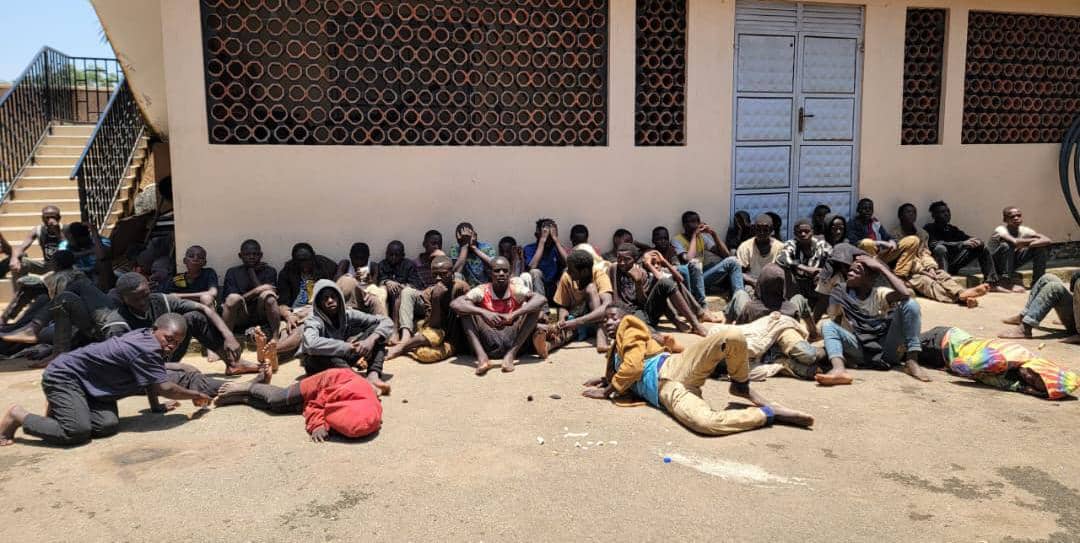
Police in Mbarara City, in coordination with the City South Probation Office, have arrested 124 street dwellers—including 74 minors—during a coordinated night operation targeting areas with a high concentration of people living on the streets.
The operation, conducted on Monday night, focused on key hotspots including Kisenyi, Kakoba, Kijungu, and High Street, following rising public concern over the increasing number of street children and their impact on security, business, and public health.
According to Gershom Kakuru, the Probation Officer for Mbarara City South Division, the surge in street populations has been exacerbated by migration from the Nakivale Refugee Settlement in nearby Isingiro District.
“Many children and young men from Nakivale end up drifting into Mbarara. This has contributed to the growing numbers of street children in the city, which poses a challenge to both business and social safety,” Kakuru said.
Rwizi Region Police Spokesperson, SP Samson Kasasira, confirmed the operation’s outcome, detailing that among those apprehended were 24 foreign nationals and 23 adults aged 18 and above. He noted that the adult group is currently being screened as investigations proceed.
Street children continue to represent a major social and policy challenge across Uganda, often linked to petty crime, illiteracy, poor health outcomes, and broader concerns around urban safety and development. At the same time, the children themselves are vulnerable to exploitation, violence, and chronic deprivation—often trapped in a cycle that hinders long-term national development.
Uganda’s efforts to respond to this crisis date back to the colonial era. In 1952, the British administration established the Kampiringisa Rehabilitation Centre—then known as the Boys’ Approved School—to address juvenile delinquency and support children beyond parental control. However, decades later, systemic solutions remain elusive.
Estimates suggest there are between 10,000 and 15,000 street children across the country, though some experts believe the real number could be significantly higher due to underreporting and the transient nature of this population.
Authorities in Mbarara have indicated that similar operations will continue as part of a broader strategy to reduce urban street populations.
At the same time, social services are being engaged to support rehabilitation and reintegration programs for vulnerable children, with a focus on education, shelter, and family reunification where possible.
“We cannot arrest our way out of this problem,” said one local official. “Rehabilitation and long-term social support remain key.”