

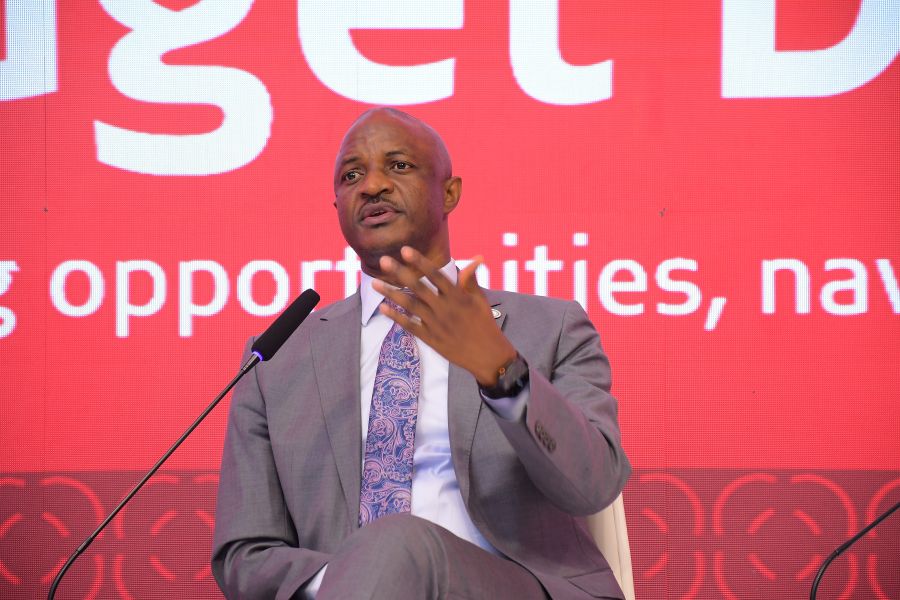
The Minister for Finance Permanent Secretary and Secretary to the Treasury, Ramathan Ggoobi has said it is foolhardy for anyone to say that Uganda’s economy is not growing.
“The economy is doing well at a macro level and it's only someone who's not actually very honest and good-willing who can say that. What do you see about inflation, about the exchange rate, about availability of the foreign exchange in the country, about the growth of economic activity itself,” Ggoobi said.
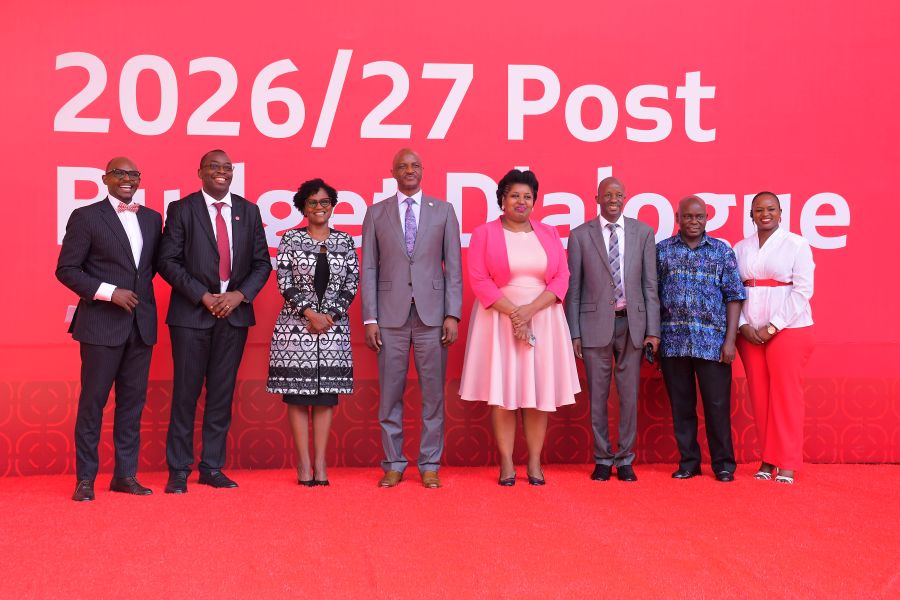
He was on Friday speaking during the 5th edition of the Absa Post-Budget Forum, a high-level engagement bringing together key players from government and the private sector to discuss the implications of the 2026/27 national budget.
The engagement was held at Kampala Serena Hotel.
The Secretary to the Treasury said the current economic outlook of the country indicates everything thing is moving in the right direction.
“Uganda is a beehive of many activities. For example those Ugandans abroad, for the 12 months up to around March, sent home 2.8 billion dollars(about shs10trillion) .This is amazing. These are our relatives who are out there and they have decided to bring all their money home. That's the vote of confidence in the economy and we are no longer relying on foreign direct investors only and the portfolio investors,”Ggoobi said.
“Ugandans have now toppled the portfolio flows; they are now number two after FDI in bringing in these dollars. That's the vote of confidence that in an election year, people bring money home.”
While government continues to boast about the stellar performance of the country’s economy, many Ugandans water this down, saying the growth is not reflected in their personal accounts.
Many say there is a big disconnect between GDP and household welfare as everyday cost of living continues to rise leaving many citizens without a noticeable increase in their purchasing power.
Speaking on Friday, Permanent Secretary Ggoobi admitted that while there has been macroeconomic growth, more is still needed to be done on the microeconomic side.
“We want that macro picture to come down now to the microeconomics,” he said.
Ggoobi was quick to point to a number of reforms that he says government is to work on to ensure economic growth is reflected in the pockets of Ugandans.
He said will begin implementing significant tax policy and public finance reforms starting in the coming financial year, aimed at broadening the tax base and improving revenue collection across the economy.
According to Ggoobi, the reforms under the Domestic Revenue Mobilisation Strategy will focus on addressing inefficiencies in tax collection and reducing evasion, particularly within the formal sector.
“We are going to have key reforms in tax policy and the policy area, and I think we shall have a discussion on tax policy as a country.All these things like a trade order and so on actually border on that.”
He explained that the new reforms aim to shift the approach of the Uganda Revenue Authority (URA) from focusing narrowly on registered taxpayers to a broader, whole-of-government system that expands the tax net.
He emphasized that while the reforms will not deliver immediate results, they mark the beginning of a long-term transformation in Uganda’s revenue mobilisation system.
Speaking during the dialogue, Absa Uganda Chief Financial Officer Michael Segwaya expressed optimism about Uganda’s Budget Framework, saying several of its priorities signal strong potential for business and economic growth.
He pointed to the projected acceleration in economic growth from 6.6 percent to 10.4 percent as a sign of confidence in the country’s economic direction, noting the focus on agro-industrialisation, mineral-based industrial development, and science, technology and innovation as key drivers of jobs and value addition.
“The projected acceleration in economic growth from 6.6 percent to 10.4 percent reflects a strong sense of ambition and confidence in Uganda’s future,” Segwaya said.
He also welcomed government efforts toward fiscal consolidation, including the planned reduction in domestic borrowing from about shs 11.4 trillion to shs 9.0 trillion, saying it would help ease pressure on domestic credit markets and improve access to affordable capital for businesses.
For many businesses, he noted, government’s increased focus on clearing domestic arrears—from shs 200 billion to shs 1.4 trillion—is particularly significant for liquidity and confidence in the economy.
“This is not simply a fiscal issue; it is a matter of liquidity, business continuity and confidence in the broader economy,” he said.
However, Segwaya emphasized that implementation will determine whether the budget delivers real impact, including infrastructure delivery, timely payments and a more competitive business environment.
He called for stronger collaboration between government, the private sector and financial institutions, noting that Absa remains committed to supporting Uganda’s growth through financing and partnerships across key sectors.