
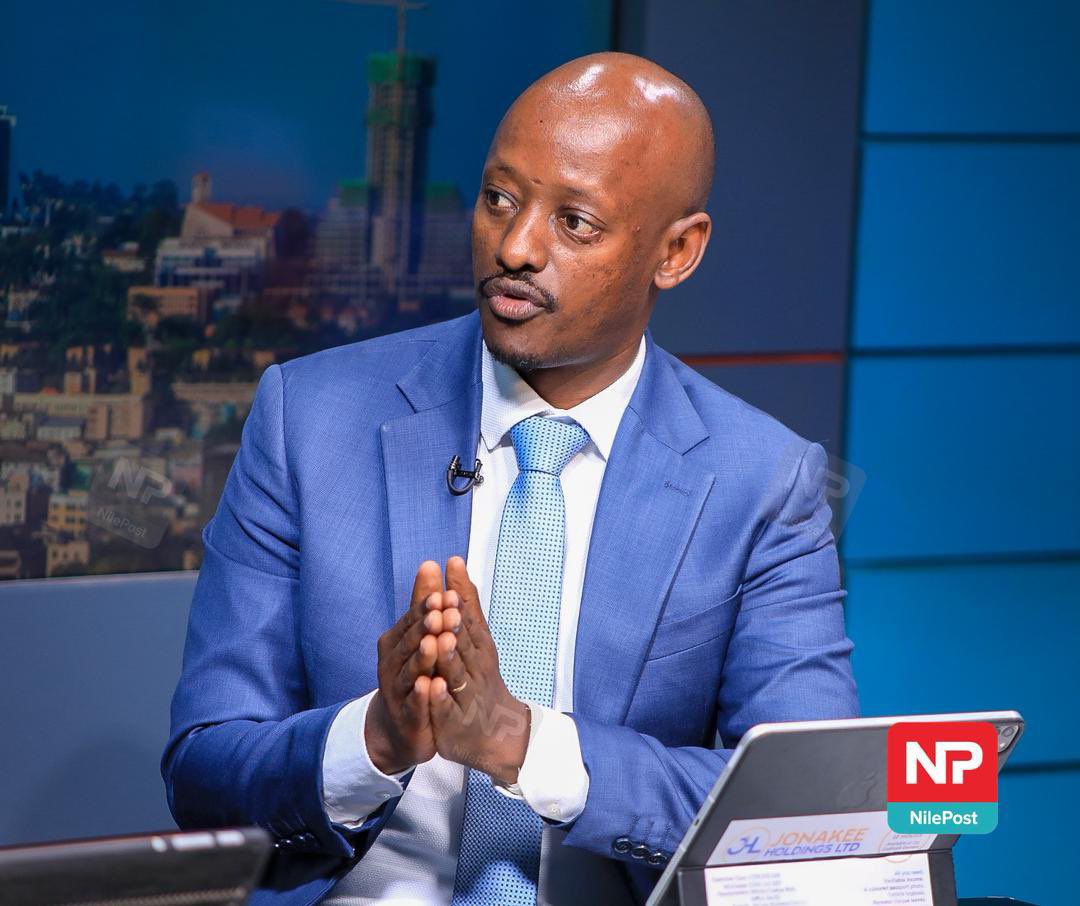
Economist and businessman Jonan Akandwanaho has called for a stronger focus on practical economic transformation in Uganda’s national budgeting process, emphasizing that government spending must translate into tangible benefits for ordinary citizens and local enterprises.
Speaking during NBS Morning Breeze on Thursday, Akandwanaho argued that national budgets often remain theoretical frameworks that fail to meaningfully impact grassroots economic activity.
“The budget only makes sense when it transforms from paper to the actual people,” he said, underscoring the gap between policy intentions and real-world outcomes.
Akandwanaho expressed concern that, in many cases, public expenditure disproportionately benefits already established or well-connected entities, leaving local entrepreneurs and small-to-medium enterprises with limited opportunities to scale. He cited large infrastructure projects such as the Standard Gauge Railway (SGR), noting that contracts are frequently awarded to foreign firms rather than Ugandan businesses.
“Most of the time, the budget benefits the well-off. For example, the contracts for the SGR will not be awarded to Ugandans. That’s why, as business people, we are rarely excited by the trillions in the budget,” he said.
Akandwanaho stressed that for the private sector, particularly manufacturers and producers, the real measure of a budget’s success lies in its ability to unlock access to financing and markets. Using a practical example, Akandwanaho explained that meaningful transformation would be reflected in increased production capacity.
“If I’ve been producing one tonne of bar soap, and I get financing from institutions like Uganda Development Bank and scale to five tonnes, that’s when the budget makes sense for me,” he said.
Akandwanaho’s remarks come in the wake of broader government disclosures about the Financial Year 2026/27 budget framework. In Wednesday’s plenary session, the Minister of State for Finance, Planning and Economic Development, Henry Musasizi, announced that the official Budget Speech will be delivered on June 11, 2026.
Presenting the draft annual budget estimates, Musasizi revealed that the proposed national budget stands at Shs 84.29 trillion, signaling an ambitious fiscal plan designed to sustain economic growth and structural transformation.
According to Musasizi, the budget aligns with Uganda’s Fourth National Development Plan (NDPIV) and the government’s Tenfold Growth Strategy. It will also mark the first financial blueprint to implement the NRM Manifesto for the 2026/27–2030/31 period.
The budget places strong emphasis on the ATMS development strategy—Agro-Industrialization, Tourism Development, Mineral-Based Industrial Development, and Science, Technology, and Innovation, including ICT and the creative arts industry. These sectors are expected to play a pivotal role in driving Uganda’s long-term economic expansion.
Significant allocations have also been directed toward large-scale infrastructure and strategic projects. These include the development of the Standard Gauge Railway, rehabilitation of the Meter Gauge Railway, construction of the Kampala–Jinja Expressway, expansion of national road networks, and electrification of industrial parks.
Additionally, funds have been earmarked to support Uganda’s preparations for the 2027 Africa Cup of Nations (AFCON27), positioning the country to effectively co-host the continental tournament.
In the social sector, the budget proposes salary enhancements for primary school teachers, arts teachers in secondary schools, and instructors in Business, Technical, and Vocational Education and Training (BTVET) institutions. These measures are intended to improve service delivery and strengthen human capital development.
To finance the ambitious expenditure plan, the government has introduced tax policy measures projected to generate Shs 1.741 trillion in additional domestic revenue, reinforcing fiscal sustainability.
