
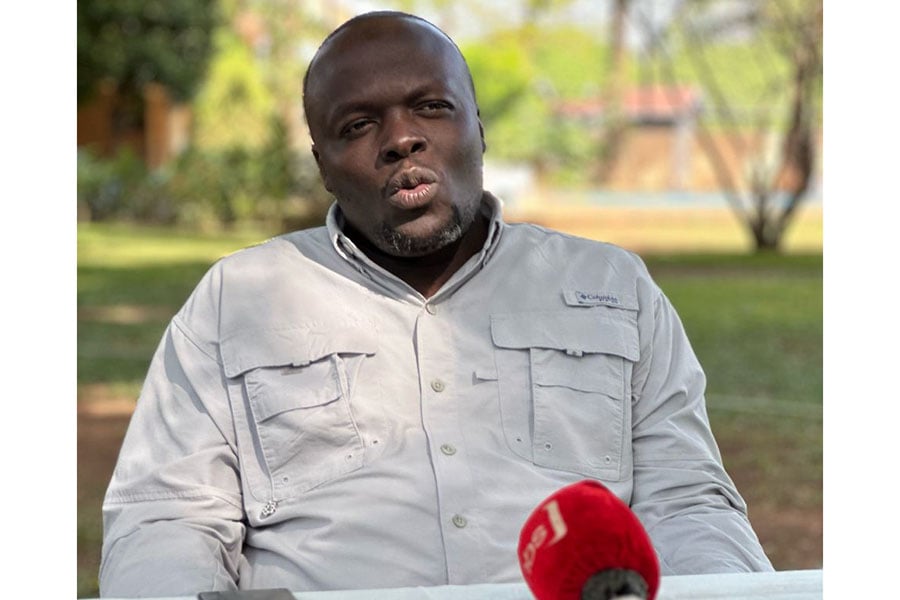
It’s never an easy shift—from the high-powered life of a legislator to the quieter, uncertain path of a private citizen. Many Members of Parliament (MPs) struggle once their tenure ends, grappling with financial pressure, loss of status, and public expectations that don’t quite fade with their term.
In this candid conversation, we speak with Oscar Omony, the former Northern Youth MP (2016–2021), who shares his journey after leaving Parliament, the hard lessons on financial discipline, and the often unforgiving expectations of the electorate.
How has life been after your five years in Parliament?
Honestly, it's a huge shift. When you’re in Parliament and don’t return, it hits hard. The late Speaker Jacob Oulanyah once told us: the day you enter Parliament, you should start planning your exit. Unfortunately, many MPs don’t do that. I took his advice seriously.
As an MP, your lifestyle changes—you earn well, you’re constantly needed, and expectations are high. But the moment you leave, reality sets in. You start facing the same challenges ordinary Ugandans go through. And unless you’re absorbed into government or have something going on, it can get very tough.
I personally set up businesses in Gulu and got involved in farming. Being Acholi, farming is part of our heritage, and I’m proud to be making good use of that. I also ventured into hospitality. So I’m doing okay—not having to deal with the constant voter demands that come with being in office.
What kind of stress are you referring to when you're still in office?
As an MP, you’re like a one-man government. People expect you to finance burials, hospital bills, school fees—you name it. The public perception is that whatever you have belongs to them. Even something as small as wearing a new shirt can spark accusations that you’re misusing "their" money.
The mindset is that MPs must change people’s lives with their salary alone. But even if you earn Shs100m a month, it’s impossible to sustainably impact the lives of thousands. The expectations are unrealistic.
Many young people think getting into leadership is a fast track to success or riches. That’s a flawed mentality. The truly wealthy are in business, not politics. Leadership is a calling for service, not a shortcut to wealth. I’ve seen MPs exit Parliament completely broken because they weren't prepared for life after.
Let’s talk about MPs and loans—many of your colleagues leave office in debt. What’s your take?
Absolutely. The MP salary is attractive, and banks love to lend to you. But many MPs aren’t financially literate. We saw it in 2016—people rushing for loans. Imagine coming from earning Shs5–8m as a councillor or RDC, then suddenly you're earning Shs40 million monthly. The temptation is real.
Some MPs took Shs600m loans, only to pay back nearly Shs300m in interest. You’re left servicing a debt that eats half your salary. Then add the lifestyle pressure—decent house, good car, constituents to support—it’s overwhelming.
Some MPs ended up taking more loans just to campaign again, only to lose and be stuck with mountains of debt. Politics here is monetised. In Western Uganda, it can take a billion shillings to win a parliamentary seat; in Acholi, maybe Shs200m. Voters expect you to give money upfront. If you don’t have it, you’re out.
There’s a group or association of former MPs. Does it help in any way?
Yes, we have a network. But like many things, it’s not easy keeping people together. Everyone is on a different path—business, personal pursuits. Still, it helps us share experiences and support one another.
As former national leaders, we’re often seen as still having influence. And in a way, we do—especially to young people who look up to us. When they see that I’m still running businesses and doing well, they realize there’s life after Parliament. That gives me fulfilment.
Do you still get approached for help—school fees, medical bills, etc.?
All the time. Poverty in this region is deep. Many people have no stable income, and they look to anyone they associate with power—even former leaders. It’s not always about money. Sometimes it’s advice or guidance on how to use the small land or resources they have.
Leaders like Gen. Salim Saleh and Gen. Otema [Awany] have been very supportive of young people here. If more of us who’ve been in leadership came together to support society, even in small ways, it would reduce the suffering.
Personally, I can’t feel okay if I’m doing well but the people who helped me get where I am are suffering. We have to give back. That’s the only way to make the leadership journey meaningful.
Final thoughts?
Leadership is more than just the five years in Parliament. The real test comes after. How you live, how you impact others, and how you prepare for the next chapter—that’s what truly defines you.
