

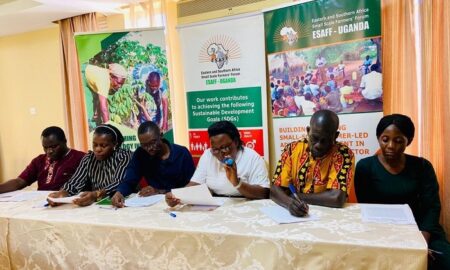
Civil society organisations led by Food Rights Alliance have called for urgent national action to address what they describe as a growing food safety crisis, warning that food contamination is increasingly threatening public health, livelihoods, human rights, and economic productivity across Uganda.
The call was made during a press conference in Kampala held to mark World Food Safety Day under the theme, "From Burdens to Solutions: Food Safety Everywhere."
The organisations, which included Food Rights Alliance, Action Against Hunger, FIAN Uganda, Caritas Uganda and Global Consumer Centre, said unsafe food has become a national concern that requires immediate government intervention.
Food safety advocates estimate that about 1.3 million Ugandans suffer from foodborne illnesses annually, with contaminants such as aflatoxins, pesticide residues and antibiotic residues posing significant risks to consumers.
According to the organisations, the burden falls disproportionately on vulnerable groups, including children, pregnant and breastfeeding women, older persons, and individuals with weakened immune systems.
They warned that unsafe food contributes to illness, malnutrition, rising healthcare costs, lost household income and reduced productivity.
“A right to food is meaningless when the food available to families can make them sick. Every food consumer has the right to food that is available, affordable, nutritious and safe,” said Agnes Kirabo, Executive Director of Food Rights Alliance.
“Government, business and other food system actors must be held accountable for protecting that right from farm to the mouth. Food safety is everyone’s business. If it’s not safe to eat, it’s not food,” she added.
The organisations commended the government, particularly the Ministry of Agriculture, Animal Industry and Fisheries, for introducing legal and regulatory measures aimed at strengthening food safety governance.
They specifically welcomed the recent restriction and ban of 18 highly hazardous agrochemicals, describing the move as a significant step towards reducing exposure to toxic substances, protecting public health and promoting environmentally sustainable agriculture.
However, they urged the government to go further by banning or restricting all identified highly hazardous pesticides used within Uganda’s agricultural sector.
The CSOs also called for the expedited review and operationalisation of key regulatory instruments under the Chemicals Control Act, as well as the fast-tracking of the proposed Food and Agriculture Regulatory Authority to improve coordination and enforcement across the food system.
In addition, they urged National Agricultural Research Organisation (NARO) to accelerate the commercialisation and distribution of Aflasafe, a biological product designed to reduce aflatoxin contamination in crops such as maize and groundnuts.
The organisations argued that improving food safety requires a coordinated approach involving government agencies, farmers, food processors, traders and consumers.
They warned that failure to act decisively could result in worsening public health outcomes, increased economic losses and reduced competitiveness of Uganda’s agricultural exports in international markets.