

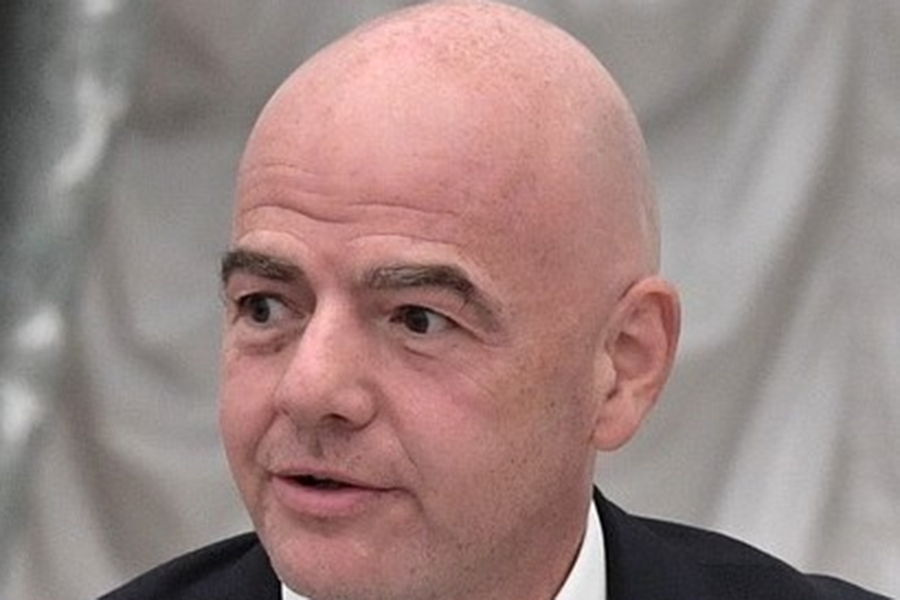
FIFA President Gianni Infantino is facing mounting pressure as a series of controversies surrounding the 2026 FIFA World Cup continue to dominate headlines, threatening to overshadow the tournament before a ball has even been kicked.
Former Dutch football great Ruud Gullit has become one of the most prominent voices calling for accountability, arguing that the competition has drifted away from its core purpose of celebrating football.
In a strongly worded statement, Gullit said he believes Infantino should consider stepping down if FIFA cannot address the growing concerns surrounding the tournament.
According to Gullit, issues ranging from travel restrictions and ticket allocation disputes to the treatment of match officials have transformed what should have been a global football festival into a source of division and controversy.
Central to the criticism is the case of Somali referee Omar Artan, who was selected by FIFA to officiate at the World Cup but was reportedly denied entry into the United States despite possessing the necessary documentation.
Artan, widely regarded as one of Africa's leading referees, was due to become the first Somali official to referee at a FIFA World Cup. Instead, he was reportedly subjected to lengthy immigration questioning before being placed on a return flight to Somalia.
The incident has triggered widespread concern among football stakeholders, with anti-discrimination campaigners and former players questioning how a FIFA-appointed official could be prevented from participating in the tournament.
Gullit argued that FIFA's repeated assurances that the World Cup would be open and accessible to all participants now appear increasingly difficult to defend.
"If those assurances are proving unreliable, accountability must start at the very top," he said.
Former England captain Steven Gerrard has also criticised the tournament's preparations, describing the situation as increasingly chaotic.
Gerrard pointed to reports that Iranian supporters had lost access to allocated World Cup tickets, concerns over extensive security procedures affecting players and delegations, and the growing number of immigration-related disputes involving individuals connected to the tournament.
"The headlines aren't making FIFA look good, and they certainly aren't making this look like the celebration of football it was supposed to be," Gerrard said.
The controversy extends beyond individual cases.
Iranian authorities have reportedly complained that allocations for supporters were withdrawn ahead of the tournament, while concerns persist over visa access for citizens of countries affected by United States travel restrictions.
The issues have revived longstanding fears that immigration policies could undermine the tournament's promise of inclusivity.
Critics argue that FIFA should have anticipated such challenges when awarding hosting rights to the United States, alongside co-hosts Canada and Mexico.
Questions have also been raised about soaring ticket prices, accommodation costs and transportation expenses, with supporters' groups warning that the World Cup is becoming increasingly inaccessible to ordinary fans.
The criticism is particularly sensitive for Infantino because FIFA has traditionally insisted that World Cup hosts guarantee smooth access for players, officials and supporters.
Observers have noted the contrast with previous tournaments in countries such as Russia and Qatar, where special travel arrangements were introduced to facilitate entry for fans and tournament personnel.
The growing backlash has intensified scrutiny of Infantino's relationship with the administration of Donald Trump, with critics arguing that FIFA has appeared reluctant to challenge policies that could affect participation in the tournament.
For now, FIFA maintains that immigration decisions remain the responsibility of the host country and are outside the organisation's control.
However, as more disputes emerge in the lead-up to the competition, pressure is building on football's governing body to provide answers.
With concerns over visas, ticketing, costs and access continuing to dominate discussion, many fear the 2026 World Cup risks becoming remembered as much for controversy as for football.
For Infantino, the coming months may prove a crucial test of leadership as FIFA seeks to restore confidence in the world's biggest sporting event.