

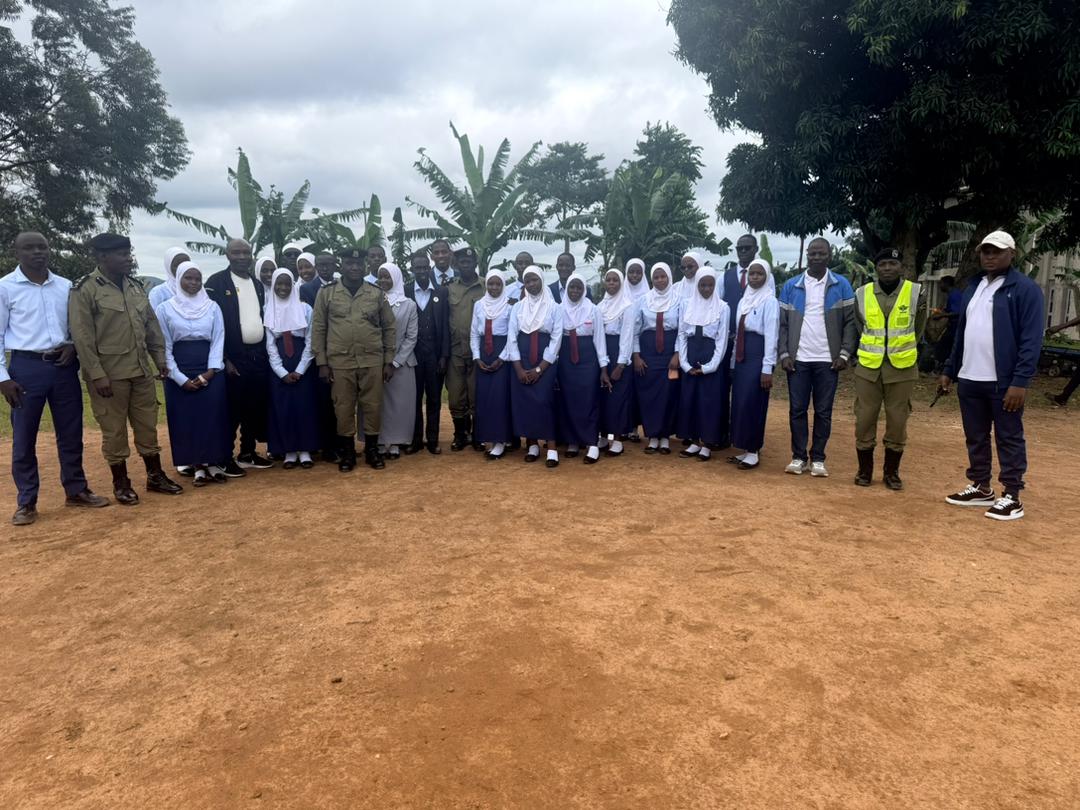
Education leaders and security officials have called for the integration of patriotism and cultural values into Uganda’s national curriculum, arguing that early civic education is critical in shaping responsible citizens and addressing persistent social challenges such as corruption and domestic violence.
The call was made during a student induction and pass-out ceremony at Gombe Secondary School, where administrators highlighted the role of structured orientation programmes in instilling discipline, national identity, and respect for rules among learners.
School authorities said the week-long induction programme, conducted for Senior One and Senior Five students, is designed to align learners from diverse backgrounds into a shared institutional culture.
The training includes what the school describes as “patriotic drills,” as well as guidance based on its code of conduct, commonly referred to as the “gulani book.”
The programme culminates in a parade and certification ceremony, marking students’ successful completion of the orientation and their readiness to integrate into the school environment under a common set of values.
The headteacher Hajji Abdul Zimbe said such initiatives go beyond school discipline, arguing that they lay the foundation for responsible citizenship and national cohesion.
He emphasized that instilling values such as love for country, respect for cultural diversity, and unity particularly through the promotion of a common language like Swahili can play a significant role in shaping behavior both in and outside the classroom.
According to the school leadership, the absence of strong patriotic values in society contributes to a range of social problems, including corruption and domestic violence. They argued that addressing these challenges requires a long-term approach that begins with learners at an early stage of education.
“Building patriotism from a young age helps learners understand their responsibility to the country and society,” Zimbe said, noting that such grounding can influence ethical decision-making later in life.
The school has now urged the government to consider introducing a continuous civic and cultural education curriculum spanning from primary school to university level.
Educators believe such a structured approach would strengthen national identity, promote unity, and support Uganda’s broader socio-economic development goals.
The call comes amid growing debate within the education sector on the role of value-based learning in addressing moral and governance challenges.
Increasingly, educators are advocating for a curriculum that not only focuses on academic excellence but also prioritizes character development and civic responsibility.
At the same event, the Uganda Police Force underscored the importance of patriotism training in preparing young people to contribute meaningfully to national development.
Senior Superintendent of Police Rogers Kapere, the Deputy Regional Police Commander for Katonga Region, said such programmes are essential in instilling a sense of national identity among students. He represented the Regional Police Commander at the ceremony.
Kapere said the initiative encourages young people to place national interest above personal, tribal, or regional considerations, which he described as a key principle in building a cohesive society.
He linked the training to constitutional obligations, noting that Article 17(e) of the 1995 Constitution requires every Ugandan citizen to defend the country and be ready to render national service when called upon.
According to Kapere, the patriotic training also aligns with the ideological pillars of the National Resistance Movement, including patriotism, pan-Africanism, socio-economic transformation, and democracy. He said these principles are vital in guiding the next generation of leaders and citizens.
He emphasized that the programme equips students with values necessary for promoting integrity and accountability, particularly in the fight against corruption.
“Whoever engages in corruption cannot be patriotic because such actions undermine public good,” Kapere said.
Police officials say initiatives like the one at Gombe Secondary School are part of broader efforts to prepare young Ugandans to uphold national values and actively participate in development processes.
Students who completed the induction programme were formally passed out, symbolizing their transition into a disciplined and value-oriented school community. Authorities expressed optimism that such training would have a lasting impact on the learners’ attitudes and conduct.
Education stakeholders maintain that while academic knowledge remains important, the integration of patriotism and cultural education could play a transformative role in addressing some of the country’s most pressing social and governance challenges.
They argue that nurturing a generation grounded in national values, ethical behavior, and civic responsibility is essential for building a more cohesive and accountable society.