

The State Minister for Works and Transport, Musa Ecweru, has blamed bureaucratic inefficiencies within the Ministry of Finance for delaying critical maintenance works on the Kampala–Jinja Highway, especially the Mukono to Jinja section—a major regional trade route.
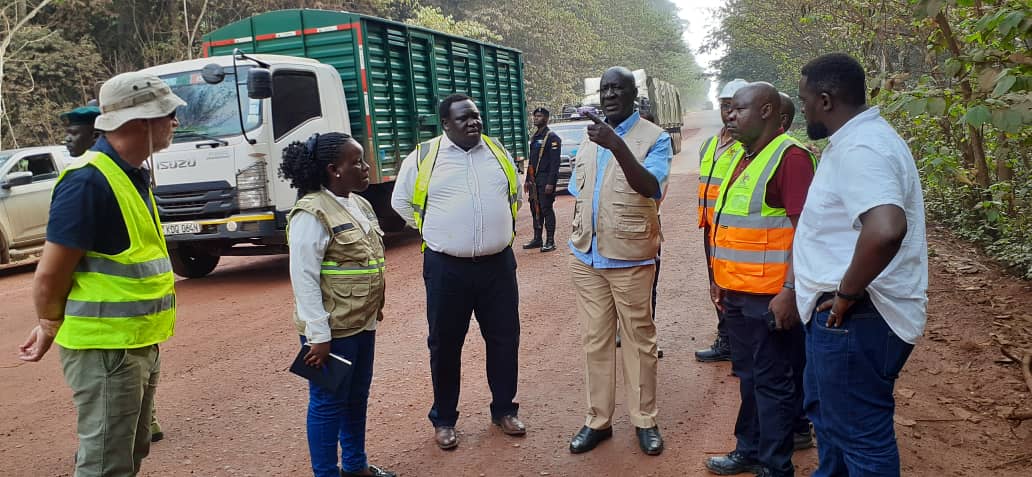
During an inspection tour on Friday, Minister Ecweru visited the ongoing rehabilitation of a 3-kilometre stretch between Kigombya and Namawojjolo Trading Centre, near Mabira Forest. The project, being handled by contractor Energo Projekt, has experienced significant delays, which Ecweru squarely attributed to sluggish processing of payments.
“This road is a critical artery to the East African Community. We cannot continue like this. Bureaucracy in accounts is messing up everything,” a visibly frustrated Ecweru told reporters.
He noted that the deteriorating condition of the highway has become a regional concern, with Uganda facing pressure from East African trade partners over poor road infrastructure that hampers the flow of goods and services.
While on-site, Ecweru interrogated Nikola Videnovic, an engineer with Energo Projekt, and officials from the National Roads Construction Unit, demanding answers for the slow progress. Videnovic assured the minister that the rehabilitation could be completed in two months—if funds are released on time.
In addition to funding delays, Engineer Ronald Olaki cited flooding in Mabira Forest as a serious obstacle.
He explained that changes in natural water channels and land degradation have rendered existing culverts ineffective.
“The area needs a permanent box culvert. The contractor is ready to install it, but we are awaiting necessary approvals,” Olaki said.
Officials from the Ministry of Works and Transport later confirmed that delayed approval of payments—both to the contractor and the ministry’s in-house construction team—is the primary cause of the project’s stalling.
In response, Minister Ecweru announced a policy shift, revealing that the ministry would grant semi-autonomous status to its in-house road construction unit, allowing it to manage its own procurement and financial processes, and reduce reliance on the central government accounts system.
“Someone taking two weeks to review a file before authorizing funds is unacceptable. We must support the contractor and expedite this work,” Ecweru said.
The Kampala–Jinja Highway is one of Uganda’s most strategic transport corridors, facilitating trade with Kenya and other East African nations. Its worsening condition has raised alarm among logistics operators, traders, and regional authorities, with calls for urgent action growing louder.
Ecweru’s remarks underscore the tension between technical ministries and financial oversight bodies, as Uganda grapples with balancing accountability and service delivery in major infrastructure projects.