

Tech experts have called for stronger alignment between innovation training, industry needs and ecosystem financing as Uganda intensifies efforts to turn student research into commercially viable technologies.
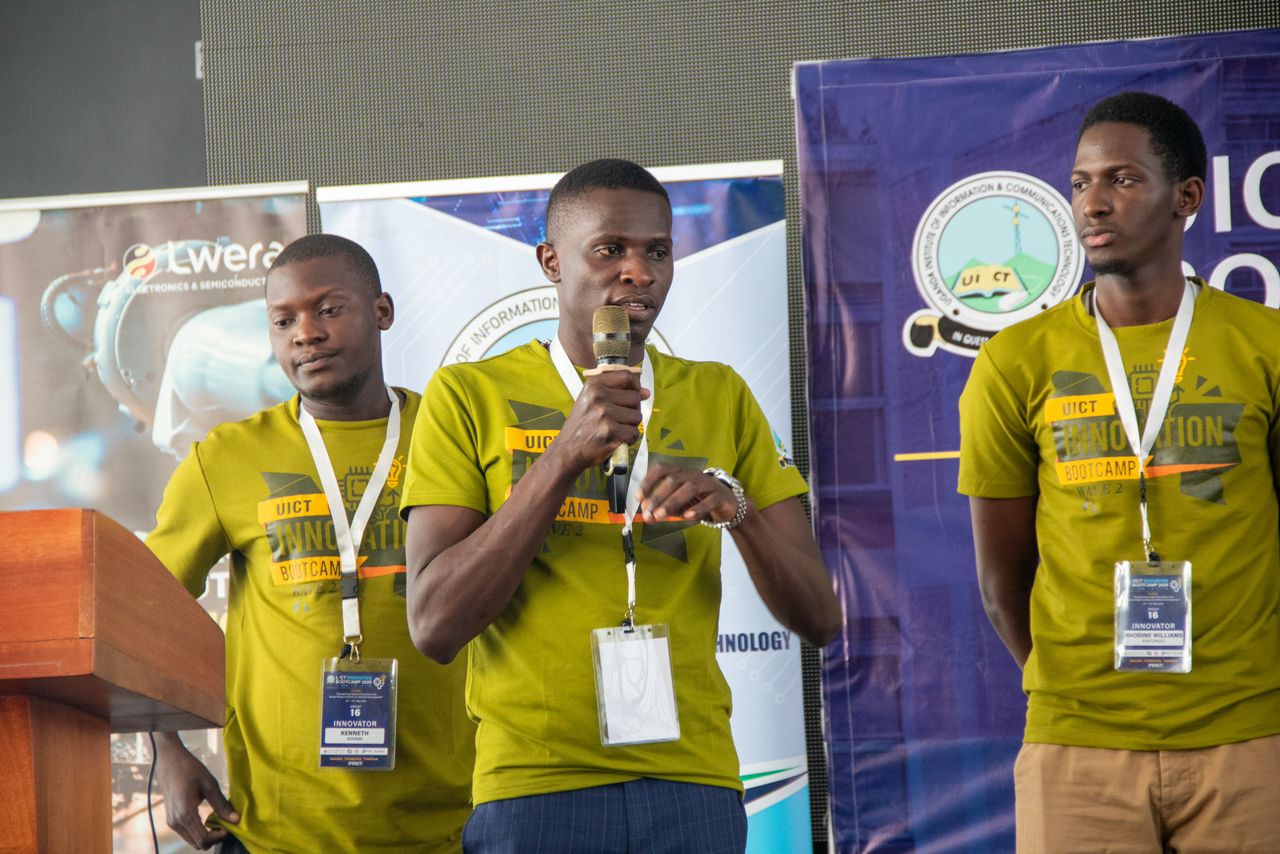
The call came as the Uganda Institute of Information and Communications Technology (UICT) launched the second phase of its Innovation Boot Camp, a programme designed to transform student research projects into startups, patents and market-ready products.
Savio Mwaka, Senior Consultant for Research, Innovation and Projects at UICT, said the initiative is aimed at bridging the gap between classroom learning and real-world commercial innovation.
“The main aim is to transition student research into innovations,” Mwaka said. “Government’s focus is that people should not just study ICT and stop there. Their learning should culminate into innovations that are market-ready and capable of solving real-world problems.”
The boot camp brings together students, industry experts and innovation partners to guide selected projects through mentorship, pitching, intellectual property protection and commercialization training.
According to Mwaka, more than 50 student projects were evaluated, with 25 selected for intensive incubation over the past three days.
“These students are being trained on pitching, Uganda Registration Services Bureau requirements, patents and what it takes to move from an idea to a business,” he said.
At the end of the programme, four outstanding projects will be awarded, although Mwaka emphasized that all 25 participants are considered successful for advancing through the innovation pipeline.
“It is not only the four winners. All the 25 students have demonstrated the ability to develop and communicate their ideas,” he said.
Mwaka noted that Uganda has made significant investments in science, technology and innovation, but many young innovators are still not fully utilizing existing support systems.
He pointed to the National ICT Innovation Hub as a key government facility that remains underutilized despite being open and accessible to the public at no cost.
“One of the biggest barriers we face is access to information. The facility is available for innovators, but many do not know about it or fail to use it,” he said.
To strengthen the transition from ideas to products, UICT has partnered with private sector actors, including electronics and semiconductor companies, to provide prototyping and technical support.
One of the programme’s partners has committed about Shs120 million to support young innovators in developing prototypes and refining their products before market entry.
The initiative is aligned with government’s Technical and Vocational Education and Training (TVET) reforms, which emphasize practical skills, innovation and job readiness.
“We want students to leave the education system with hands-on skills, ready for employment and entrepreneurship,” Mwaka said.
However, he cautioned that innovation is a long-term process that requires patience and resilience.
“Innovation is a long journey. You do not create an idea today and expect success in three or six months. In many cases, it takes five to eight years before an innovation becomes commercially successful,” he said.
He urged students to actively seek funding opportunities and avoid over-reliance on government support.
“There is funding available for technology startups, but innovators must be proactive. They must build partnerships and pursue opportunities wherever they exist,” he said.
In a related analysis of Uganda’s innovation landscape, industry leaders have urged a shift from isolated innovation efforts to structured value chain participation in order to improve sustainability and industrial competitiveness.
Ivan Karugaba, Chief Executive Officer of Lwera Electronics and Semiconductors, said Uganda’s innovation potential remains high, but many entrepreneurs fail because they attempt to build entire systems alone rather than focusing on specific roles within the ecosystem.
“Uganda is one of the most innovative countries in terms of ranking, but innovators struggle because of how they approach innovation,” Karugaba said. “Innovation should be viewed through a value chain and ecosystem perspective. Businesses succeed when they understand where they fit best.”
He said government has already identified key innovation value chains through the Science, Technology and Innovation Secretariat, including Industry 4.0 technologies such as artificial intelligence, robotics, Internet of Things and industrial automation, as well as health innovation and e-mobility.
Karugaba cited companies such as Kiira Motors, Zembo and Bodawerk as examples of firms operating within Uganda’s emerging e-mobility ecosystem.
He argued that sustainable innovation requires collaboration rather than duplication of efforts.
“If Kiira Motors is building electric buses, others should ask how they can contribute—whether through brake systems, tyres or components,” he said.
He stressed that no single company can dominate the entire innovation cycle, calling for stronger linkages between manufacturers, researchers and suppliers.
Experts say such ecosystem thinking, combined with practical training initiatives like UICT’s boot camp, could play a key role in turning Uganda’s innovation potential into scalable businesses and industrial growth.
As Uganda advances its Vision 2040 agenda, stakeholders say the focus is shifting from producing graduates to producing innovators capable of building solutions, creating jobs and driving economic transformation.