

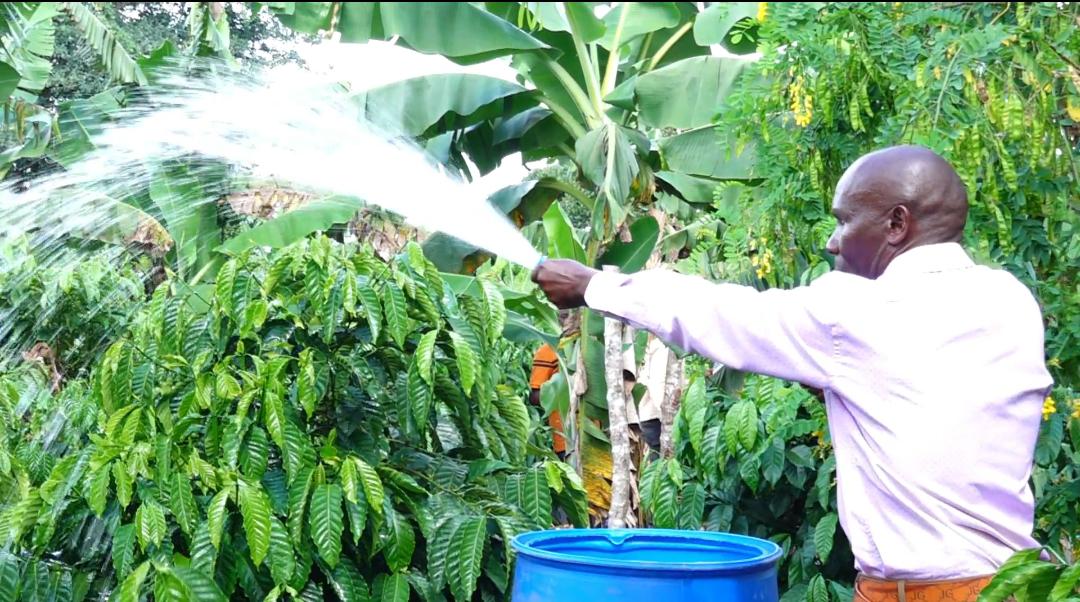
Residents of several villages in Lwengo District, long affected by persistent drought, have received irrigation equipment to help them sustain crop production and improve their livelihoods.
The beneficiary villages include Kyalutwaka, Musuubiro, Nkoma, Lwenziga, Kitazigukukuka, and surrounding areas in Lwengo Rural Sub-county. For years, residents in these communities have struggled with prolonged dry spells that have destroyed crops and forced some families to relocate in search of better conditions.
Despite repeatedly appealing to relevant authorities for support, the communities say they received little assistance until now.
Their situation has been eased by the intervention of philanthropist Asmat Nabalamba, who donated irrigation pumps and supported the excavation of water ponds for households. Each benefiting family is expected to have a water reservoir to facilitate irrigation.
The donated equipment includes simple water-pumping machines that draw water from ponds into containers, from where water is distributed to gardens through pipes. Residents say the technology is easy to use, even for children, making it practical for daily farming activities.
“We have suffered for a long time, especially during the dry seasons when the sun would scorch our crops,” residents said. “This was worsened by the cutting down of trees and the loss of natural water sources we depended on.”
Some farmers revealed that they had nearly abandoned the current planting season due to fears of crop failure caused by drought. However, with the new irrigation equipment, they are now optimistic about farming throughout the year without relying solely on rainfall.
Residents also expressed concern over water access challenges, noting that some private individuals had restricted them from using natural water sources. As a result, many have been forced to buy water at about shs. 1,000 per jerrycan, increasing the burden on already struggling households.
Tom Kabali, the area councillor for Musuubiro Parish, who represented Asmat Nabalamba during the handover ceremony, urged beneficiaries to take good care of the equipment, emphasizing that the intervention is intended to provide a long-term solution to water scarcity.
“Use these tools well and maintain them so they can continue to help you for a long period of time,” he said, noting that the community has endured significant hardship due to lack of water.
Lwengo District is among the areas most affected by water scarcity in Uganda, largely due to its location within the so-called “dry corridor,” where rainfall is often unreliable and insufficient.
Local leaders and residents hope that such interventions will improve food security and restore livelihoods in a region that has long battled the harsh effects of climate variability.