

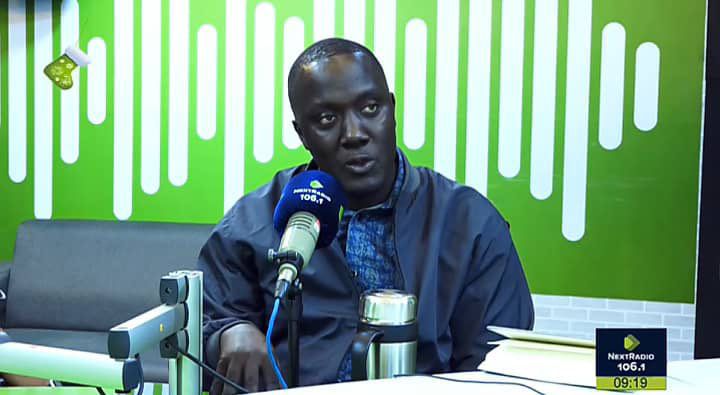
The Country Director of the Netherlands Institute for Multiparty Democracy (NIMD), Primus Atukwatse Bahiigi, has called for a renewed national commitment to dialogue, electoral reforms and the protection of citizen dignity as Uganda prepares for the 2026 general elections.
Speaking to Canary Mugume on Next Big Talk on Next Radio on Saturday, Bahiigi said a recent hotspot mapping exercise conducted by NIMD to understand drivers of conflict during electoral processes had identified several recurring factors behind electoral violence and instability.
Chief among them, he said, is the radicalisation of political party members by political actors, a practice he noted cuts across all political parties.
“We conducted hotspot mapping to understand some of the drivers of conflict in electoral processes. One of the critical issues identified is the radicalisation of members by political actors, and this is something we observed across all political parties,” Bahiigi said.
He stressed that Uganda’s democratic trajectory ultimately depends on deliberate choices made by citizens about governance and political participation.
“There is a need for us as citizens to make a deliberate choice on how we want to be governed,” he said.
Bahiigi underscored the need for collective responsibility in strengthening democratic culture, urging political leaders, citizens, the media, civil society organisations and academia to work together and agree on minimum democratic standards.
“We must come together and agree on bare minimums, one of them being the dignity of citizens who go to vote,” he said.
He further called for a negotiated and dialogue-driven political future, anchored in guarantees and reforms aimed at improving electoral governance and fostering national cohesion.
“We need to have a negotiated and dialogued future where we put guarantees and reforms that can build a better Uganda,” Bahiigi said.
However, he observed that one of the country’s persistent challenges is an unwillingness to embrace dialogue as a credible tool for resolving political differences, with radical approaches often taking precedence.
“The challenge we have as a country is that we have not reached a point where we appreciate that dialogue can work. Sometimes, we have chosen to take the radical approach,” he said.
With the 2026 elections drawing closer, Bahiigi urged all stakeholders to reject radicalism and instead commit to constructive engagement as the foundation for peaceful, credible and inclusive electoral processes in Uganda.