
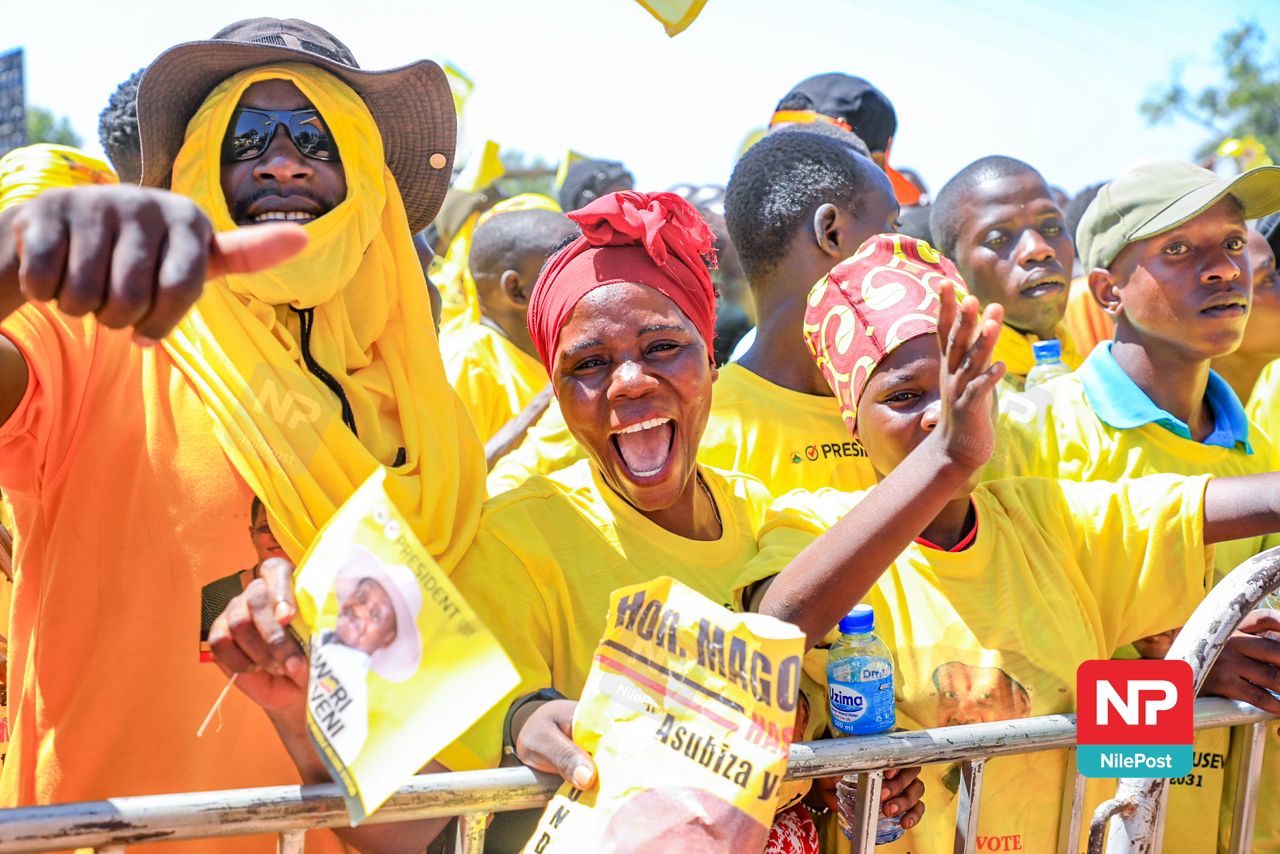
Uganda’s political season has once again delivered familiar scenery: walls plastered with yellow-themed posters, candidates smiling beneath the unmistakable image of President Museveni, and a governing party keen to project cohesion even where fractures are obvious.
But this time, the picture is more troubling. The longstanding boundary between the National Resistance Movement’s official flagbearers and independents who lost in primaries has been deliberately blurred.
What was once a clear distinction—reinforced by rules barring independents from using the party’s official insignia—has now dissolved into a haze of political convenience. And with that, an important layer of democratic clarity has quietly evaporated.
For years, one of the few accountability tools within Uganda’s electoral environment was the separation between officially endorsed candidates and those who broke ranks after losing internal primaries. Voters could at least see, from a distance, who was backed by the NRM and who had chosen to defy or bypass the party’s internal processes.
This transparency mattered. It ensured that primaries were not meaningless rituals, and that winners enjoyed the legitimacy that came with being recognised as the true representatives of the party.
Today, the country is littered with posters that tell a very different story. Independents—many of them frustrated losers in the NRM primaries—are now campaigning under full NRM colours, with the unmistakable yellow background, the party emblem, and images of President Museveni himself.
It is a cosmetic treatment that tries to unify a fractured base, but the cost to democratic integrity is high. When losing candidates can effortlessly pass themselves off as official party choices, voters are deprived of the right to clear information.
Elections depend on informed consent, not staged uniformity.
This shift cheats the victors of the primaries, whose hard-earned legitimacy becomes indistinguishable from that of those they defeated. The meaning of party discipline is weakened, and the incentive to participate in internal processes is diminished.
Why fight in a primary if the difference between winning and losing is merely the graphic designer who arranges your poster?
The greater harm, however, goes beyond the NRM’s internal housekeeping. It rewrites the rules of incumbency in ways that undermine the fairness of the broader electoral environment. Incumbency already carries significant advantages—access to state resources, visibility, favourable media exposure, and in Uganda’s case, the unmatched influence of being associated with the head of state.
But what is now unfolding goes further: it is the conversion of incumbency into a blanket that covers not just the party but its unofficial satellites as well.
In effect, every candidate who can project the President’s image on a poster now claims the legitimacy and authority of the ruling party, regardless of whether the party actually chose them. The president’s endorsement—once a privilege reserved for flagbearers—is now a general aesthetic, free for appropriation.
This blurring of lines erodes the essence of competitive politics. Voters are left guessing who truly represents the party’s agenda, who carries its mandate, and who is simply riding the coattails of its machinery.
Democracy is weakened not only when rights are taken away, but also when clarity is lost. A ballot cannot be meaningful if the road to it is paved with deliberate confusion.
Uganda’s political space has long been shaped by the tension between the ruling party’s need to project unity and the reality of internal fragmentation.
But allowing independents to campaign under official colours is not unity—it is camouflage. It masks disagreements instead of resolving them and gives voters the illusion of harmony where contestation actually exists.
If the NRM is confident in its internal processes, it must restore the clarity that once existed. Primaries must matter. Endorsements must be distinct. Party symbols must signify something real.
Anything less is not just a slippery slope—it is a quiet abandonment of the principles that any functioning democracy requires.
