
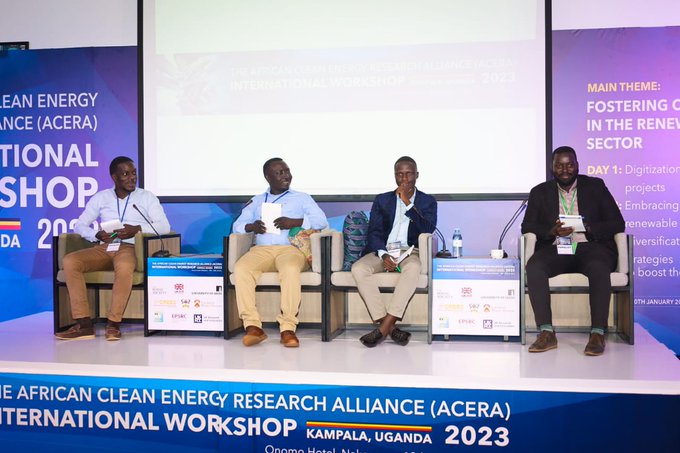
Experts have urged the Ugandan government to invest in research but also collaborations that will boost innovation in cheaper, modern and clean energy technologies.
Speaking during the African Clean Energy Research Alliance (ACERA) International workshop at Onomo Hotel in Kampala , Dr. Mary Suzan Abbo, the Managing Director Center for Research in Energy and Energy Conservation (CREEC) said there is need for investment into research in clean energy which is environmentally friendly and efficient.
She said that with the challenge of climate change that the globe is grappling with, it is high time the country thought of investment in cheaper and clean energy sources.
“As a country, we need to invest in skilling and capacity building. For example at CREEC we have this as one of the key missions to build capacity of technicians and all players in the energy sector. This includes formal training for competence and informal trainings for people who are users and providers through small companies,”Dr. Abbo said.
“There is a lot of work required to reach out rural areas to access clean energy technologies for cooking, lighting and other productive use. Government ought to invest in research in clean energy. There is need to be data to support this by digitalizing processes.”
She said in all this, government ought to play a leading role in ensuring clean energy is made popular.
Dr.Abbo said at ACERA, they have started in bits and phases to train players but also carry out research in clean and renewable energy in a bid to use that the information to spark investment from other partners
Prof. Jon Lovett, from the University of Leeds said whereas Uganda seems to be turning into an oil nation, the benefits of the fossil fuel developments won’t extend to the entire country if there is no reinvestment in renewable energy which is the future of the world.
“The money from oil must be reinvested in renewable energy sector. Within Uganda, we have technology and skills to be able to bring access to clean energy to people, even in the most remote areas,” Prof. Lovett.
“If Uganda can harness the potential for renewable energy development and implementation, then it is going to have a big impact at different levels. It will lead to clean cooking in the kitchen away from wood and smoke. Provision of renewable electricity is going to be able to allow entrepreneurs develop businesses but also develop the country.”
He however noted that there is need for collaborations and research into clean energy sources
According to Flavia Ajambo, the Public Relations Officer for Center for Research in Energy and Energy Conservation (CREEC), the workshop aimed at identifying gaps in the energy sector and how to bridge them.
“On the technology side the country is not lacking but the skills. For instance how to get grants to develop technology in clean energy. We are trying to break the barriers and give different skill set to people for use on how to change the way they implement their renewable energy programs,” Ajambo said.
She explained that the workshop looked at digitization, communication strategies and collaborations to foster the clean energy sector.
