

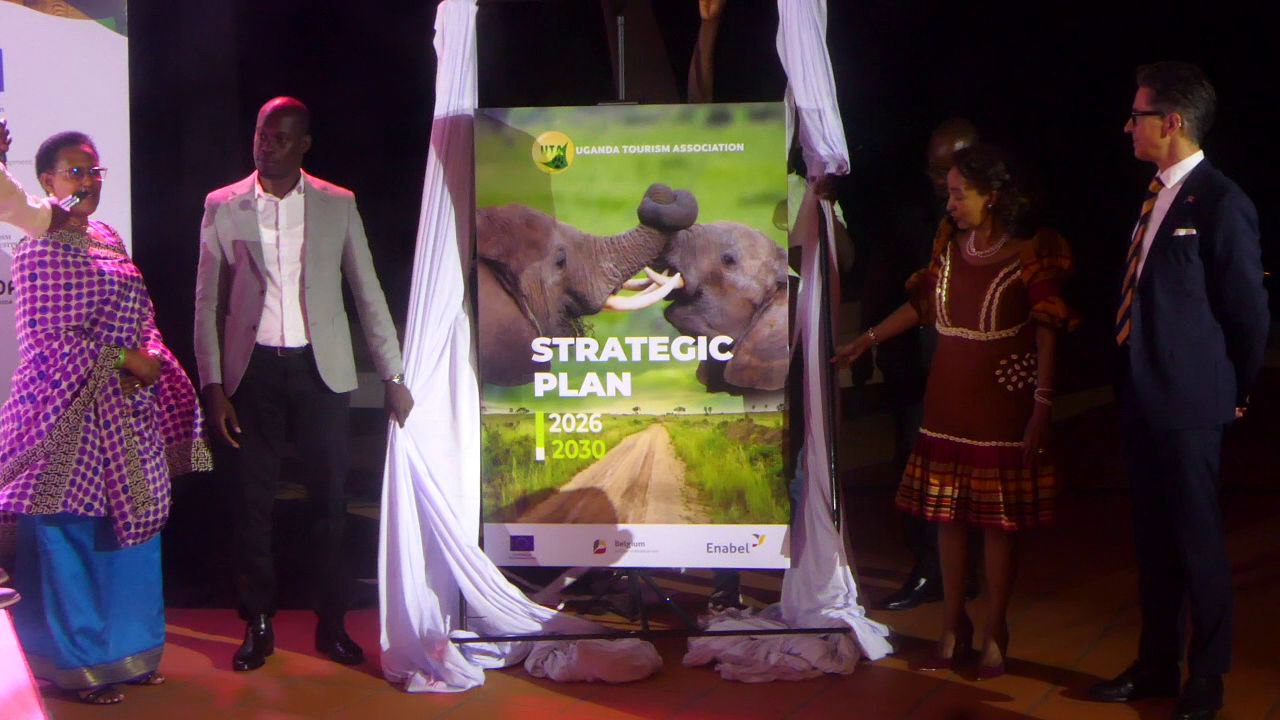
The State Minister for Tourism Martin Mugarra Bahinduka has called on tourism stakeholders to strengthen private sector coordination, promote sustainable tourism practices, and enhance skills development to improve employability across the sector.
Speaking during the launch of the Uganda Tourism Association (UTA) Strategic Plan 2026–2030, the Minister emphasized that the future of Uganda’s tourism industry depends on stronger collaboration between government and the private sector.
“We must work together to strengthen private sector coordination, promote sustainable tourism practices, and invest in skills development to enhance employability. Expanding market access and building strategic partnerships will be critical in unlocking the sector’s full potential,” he said.
The new five-year strategic plan seeks to reposition the industry’s collective voice and unlock its full economic potential. It is built on comprehensive stakeholder consultations, sector diagnostics, and an appreciation of evolving global tourism dynamics.
UTA President Yewagnesh M. Biriggwa, noted that the private sector continues to play a central role in driving tourism growth in Uganda.
“The private sector has made significant investments across the tourism value chain. These investments generate tax revenue, support conservation efforts, and create strong forward and backward linkages within the economy,” Biriggwa said.
She added that in 2024 alone, the private sector received and served over 1.4 million visitors, contributing approximately US$1.3 billion (Shs 4.6 trillion) to the economy and employing more than 800,000 Ugandans.
The Chief Executive Officer of the Uganda Tourism Board, Juliana Kagwa, welcomed the strategic direction, noting that alignment between the Board and the private sector is essential to strengthening Uganda’s competitiveness as a destination.
“This strategic plan comes at a critical time when the industry is recovering and repositioning itself. A coordinated approach will enhance destination marketing, improve standards, and ensure sustainable growth,” she said.
Meanwhile, Nicolas Oebel, Country Director of Enabel, commended UTA for developing a forward-looking and inclusive strategy.
“The emphasis on sustainability, skills development, and diversified resource mobilization demonstrates a mature and strategic approach to sector growth. Strong private sector institutions are essential for long-term resilience and competitiveness,” Oebel said.
The Strategic Plan establishes a diversified resource mobilization strategy, including securing government budget support, lobbying for the implementation of the tourism development levy, designing value-added services, organizing annual revenue-generating events, developing bankable proposals for donor funding, and pursuing long-term commercial investments.
Stakeholders expressed optimism that with stronger coordination and strategic investment, Uganda’s tourism sector will continue to expand its contribution to national development and job creation over the next five years.