
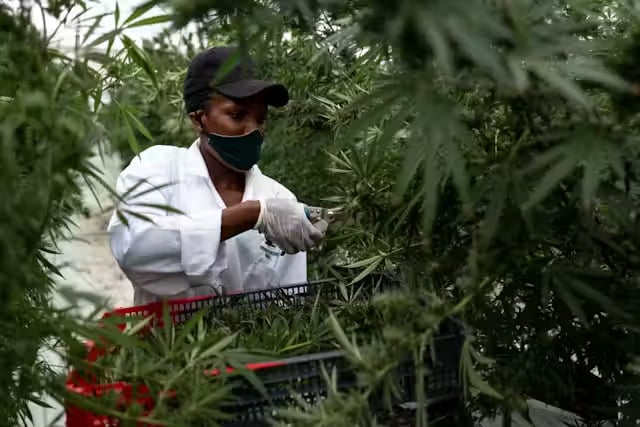
Rwanda’s first medical cannabis production facility is now 83 percent complete, according to the Rwanda Development Board (RDB), placing the country in a leading position among East African states exploring the controversial yet lucrative industry.
The facility, based in Musanze District in Rwanda’s Northern Province, is part of a state-sanctioned initiative to produce cannabis oils strictly for export.
According to RDB’s Chief Financial Officer, Joseph Cedrick Nsengiyumva, the project has so far used more than Rwf1 billion (Shs3.2 billion) of the Rwf2.2 billion allocated in the current financial year.
Remaining works include the installation of double-layered security fencing required to meet international pharmaceutical and safety standards.
RDB, a government agency tasked with promoting investment and economic development, is overseeing the project in partnership with King Kong Organics (KKOG)—a private company licensed to grow, process, and export cannabis for medical purposes.
KKOG says it has already committed $10 million towards machinery, construction, imported seeds, and fees.
Medical cannabis, which is used to treat conditions such as epilepsy, chronic pain, and side effects of cancer treatments, has become a booming global market valued at over $30 billion in 2024.
More than 50 countries allow its use in some form, and African nations such as Lesotho, South Africa, and Zimbabwe have begun tapping into the export economy.
Rwanda, despite having some of the region’s strictest domestic drug laws, is adopting a dual approach: prohibiting personal cannabis use while permitting controlled cultivation for export.
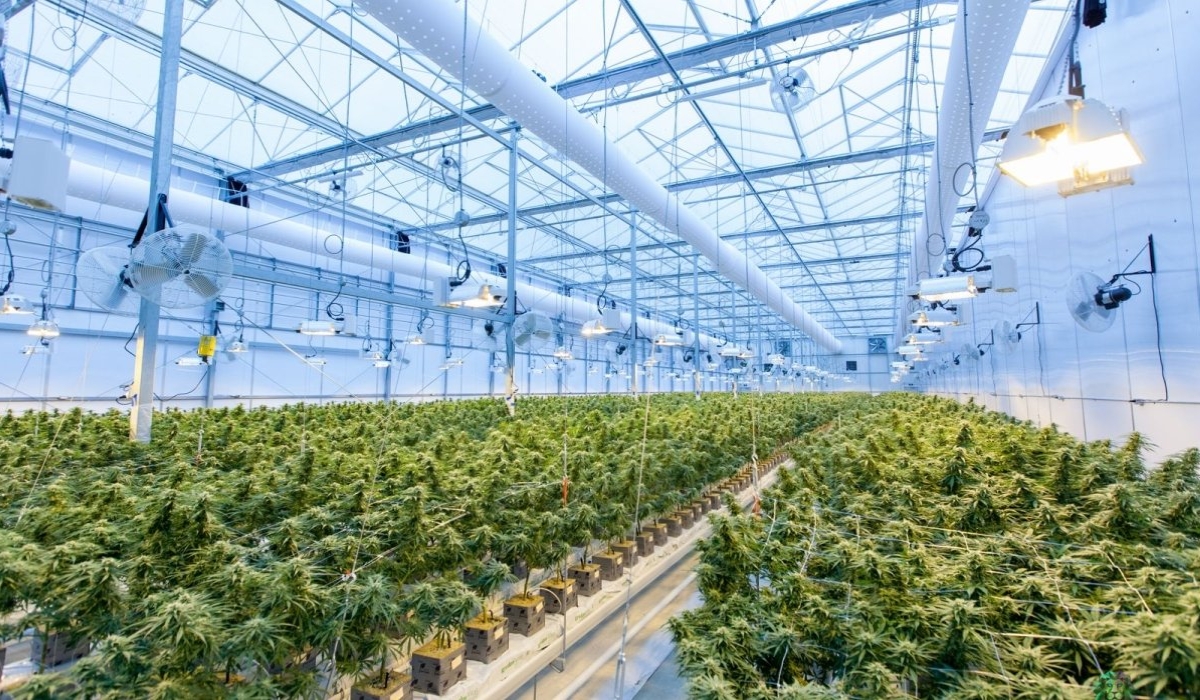
Under Rwandan law, possession and recreational use of cannabis remains a criminal offence punishable by up to two years in prison. However, the government insists none of the medical cannabis produced will be distributed locally.
The facility is expected to produce at least 5,000 kilogrammes of medical-grade cannabis per hectare, with the plants maturing in four to six months.
Rwanda has set aside 134 hectares for cultivation and is targeting markets in Europe, North America, and parts of Asia.
By contrast, other East African nations are treading more cautiously. In Uganda, the recently reinstated Narcotic Drugs and Psychotropic Substances Control Act 2015 bans cannabis cultivation and use but contains vague provisions about medical use, which have never been operationalised.
In Uganda, at least two companies—Industrial Hemp (U) Ltd, in partnership with Israel’s Together Pharma, and Canada’s EXMceuticals Inc.—have received authorisation to cultivate and export medical cannabis.
However, Uganda’s regulatory environment remains unclear and contentious, with government ministries occasionally contradicting each other.
In 2019, confusion arose when the Uganda Investment Authority issued a licence without corresponding health ministry approval, leading to suspensions and delays.
Though over 100 applications have been submitted, the government has been slow to issue further permits, citing the need for clearer regulations.
Kenya, too, prohibits cannabis under its 1994 drug law. Though some entrepreneurs have proposed hemp-based projects, the country has not formally legalised cultivation of cannabis for any purpose.
In both countries, public health and morality debates have stalled policy clarity.
Rwanda’s strategy sets it apart by building tight regulatory control into its cannabis framework from the outset.
The RDB, working with the Ministry of Health and law enforcement, ensures all production complies with international medical standards.
The state also retains oversight of the entire value chain—from cultivation to extraction and export.
While no cannabis-derived medicines are currently available in Rwandan pharmacies, authorities argue that the foreign exchange generated by exports will help strengthen the health sector and open up high-tech agriculture jobs.
KKOG's CEO, Rene Joseph, said in an earlier interview the State-run The New Times that the government’s injection of $3 million into the project helped resolve delays, especially around access roads and infrastructure.
The bigger regional question is whether Rwanda’s model can inspire others to follow suit. With growing international demand and a global push toward legalisation, the pressure is mounting on African governments to shift from prohibition to regulation.
But for now, Rwanda is betting on being a first mover in East Africa—one that courts international markets while keeping a firm grip on domestic use.
