
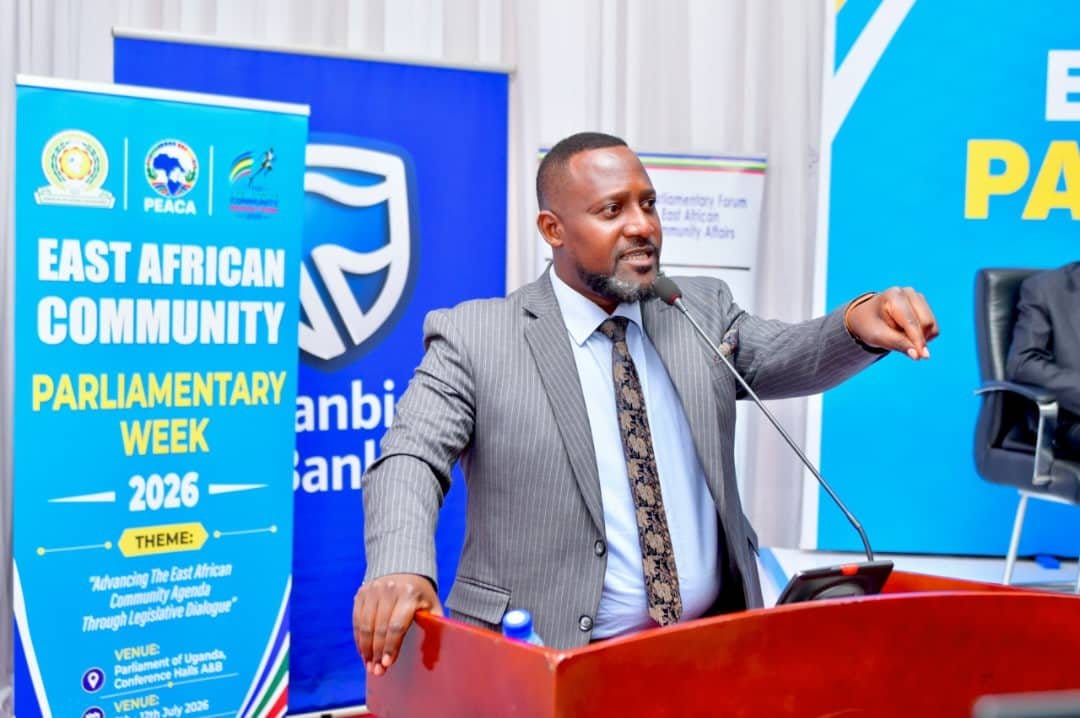
The Parliamentary Committee on East African Affairs has adopted its annual work plan, resolving to prioritise the four pillars of East African Community (EAC) integration as it begins its mandate in the 12th Parliament.
In an exclusive interview, Committee Chairperson Dennis Namara said the committee will focus on ensuring the full implementation of the EAC protocols on the Customs Union, Common Market, Monetary Union and Political Federation.
"As a committee, we have resolved to prioritise the four pillars of integration. That is what will guide our oversight, legislation and engagement during the first year of the 12th Parliament," Namara told Nile Post after a closed-door meeting at which legislators adopted the work plan.
The committee said it will prioritise addressing key bottlenecks to regional trade, beginning with the elimination of non-tariff barriers that continue to frustrate businesses across EAC borders.
"We agreed that we must push for the elimination of non-tariff barriers because they are the biggest hindrance to trade in the region right now," Namara said.
Infrastructure development also featured prominently in the committee's work plan. Members identified the construction of the Standard Gauge Railway (SGR) from Mombasa through Malaba to Kampala as a strategic priority for improving regional connectivity and reducing the cost of doing business.
"The SGR is critical for trade and movement. We will follow up to ensure the project from Mombasa via Malaba to Kampala receives the attention it deserves," he added.
The committee also expressed concern over persistent delays by several EAC partner states in remitting their annual contributions to the regional bloc, warning that funding shortfalls are affecting the operations of key Community institutions.
"Most partner states have delayed in paying their subscriptions. As a committee, we will engage our counterparts in other partner state parliaments to ensure this matter is addressed," Namara noted.
To deepen regional integration, legislators also resolved to strengthen collaboration with regional bodies, including the Common Market for Eastern and Southern Africa (COMESA) and the East African Legislative Assembly (EALA).
"We intend to liaise with regional bodies such as COMESA and EALA to foster integration and harmonise policies that support the free movement of goods, services and people," Namara said.
The approved work plan will now be presented to Parliament for consideration as the committee begins its oversight role during the new parliamentary term.
