
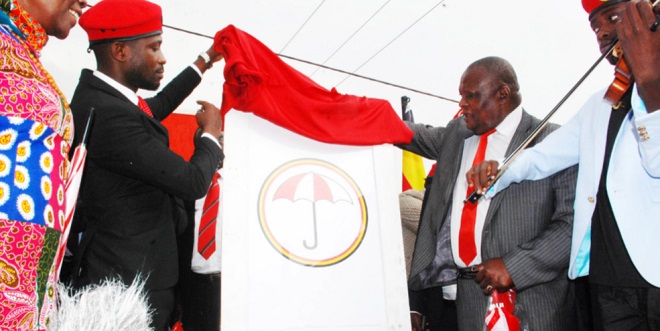
In six years, the National Unity Platform (NUP) has moved from a grassroots political movement into one of Uganda’s most influential opposition parties, reshaping the country’s political landscape through youth mobilisation, digital campaigning and electoral organisation.
The party’s current form dates back to July 2020, when the National Unity, Reconciliation and Development Party (NURDP), founded by Moses Nkonge Kibalama, was rebranded as the National Unity Platform under the leadership of Robert Kyagulanyi Ssentamu, popularly known as Bobi Wine.
The move transformed the People Power movement from a pressure group into a registered political party capable of contesting elections across the country. Its umbrella symbol and message of "People Power" quickly gained popularity, particularly among young voters who felt disconnected from traditional political parties.
The party’s first major electoral test came in the 2021 General Election, where it emerged as Uganda’s leading opposition party in Parliament. NUP won more than 50 parliamentary seats, replacing the Forum for Democratic Change (FDC) as the main opposition force and securing the position of Leader of the Opposition in Parliament.
The party made significant gains in areas that had traditionally been dominated by older opposition parties, particularly in the Central region, where several long-serving politicians lost their seats.
Beyond its parliamentary presence, NUP built a strong grassroots network driven by volunteers and supporters, while using digital platforms to communicate directly with voters and expand its political reach.
Supporters credit the party’s growth to its ability to mobilise young people and maintain public attention beyond election periods. They also point to its resilience amid arrests of leaders, restrictions on activities and disputes over its operations.
Critics, however, have questioned whether the party can transform its strong protest identity into a mature political institution capable of building broader policy alternatives and sustaining internal structures.
Political observers say NUP has gradually evolved from a movement focused mainly on opposition activism into a formal political organisation engaging with issues such as unemployment, inequality and accountability.
As the party enters its seventh year, it faces the challenge of balancing grassroots expectations with the demands of parliamentary politics and national leadership.
Regardless of political affiliation, NUP’s rise represents one of the most significant shifts in Uganda’s opposition politics in recent decades. Its growth demonstrates how digital mobilisation, youth engagement and public dissatisfaction can rapidly reshape a country’s political landscape.
