
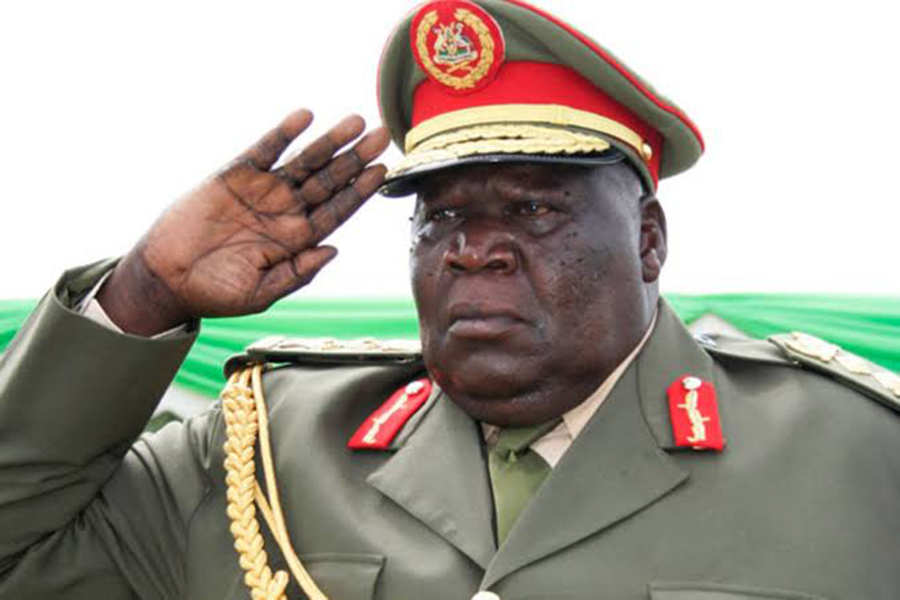
Field Marshal Idi Amin was seething and vibrating like a faulty piston in a tired Tata lorry. The air around the meeting in Kampala in April 1978 reeked of Finance Minister Moses Ali’s political blood.
The man who had risen from the military ranks to become one of Amin’s most influential ministers was suddenly in the line of fire.
Amin accused Ali of disloyalty, arrogance, corruption and incompetence. He accused him of mismanaging the Bank of Uganda, mishandling funds belonging to the Uganda Muslim Supreme Council and ignoring government directives.
In the middle of the meeting, according to accounts of the incident, Amin picked up a trashcan and threw it at his finance minister. For Ali, it was a warning that his time inside Amin’s inner circle was done.
Ali's problem was becoming too powerful, especially in West Nile, the same axis he shared with Amin, and also among the Muslim community, again an axis the two shared. Just that as Finance minister, Ali used his position to organise an Islamic charity.
This garnered him a lot of popular support, but also raised Amin's suspicions, as he feared Ali was attempting to construct a Muslim political base of support. Indeed, Ali gained many followers within the military establishment itself too.
The same man who had helped bring Amin to power in the 1971 coup had now become a target of the regime he served. He understood the danger. He quietly slipped away from Kampala in his private car and headed towards West Nile, his home region.
A group of hitmen lay in wait but he fended them off in a shootout. Ali was convinced that his downfall and the attempted assassination had been organized by the Uganda Army commander Yusuf Gowon, a long-time rival of his.
Amin subsequently stripped him of all of his military honours. However, Amin was still wary of Ali's large following, and only formally fired him from his ministerial portfolio. Six months later, 10 security agents from the dread State Research Bureau attempted to arrest Ali, but were killed.
When Amin's regime collapsed during the Uganda–Tanzania War of 1978–1979, Ali fled into exile in southern Sudan (present day South Sudan), finding refuge in Nimule. Here, he formed the Uganda National Rescue Front to wage an armed rebellion against the government of reinstated President Obote, and became a warlord ruling a fief in southern Sudan.
Using his influence and military powers to his advantage, Ali eventually negotiated a favourable deal with Yoweri Museveni who took power as President at the Bush War's end in 1986. His forces were integrated into Uganda's new national army
Charged with treason
The ghosts of Uganda’s violent past were never far away from Ali. Four years into the NRA government, the man who had survived Amin’s wrath and henchmen found himself facing the full force of another government, again, one he served.
Pockets of insurgents had continued to shake the nascent government. From West Nile to Busoga and Teso to Acholi, the government was confronting it all. Then came unxplained killings in Kampala, especially in the Gayaza Road corridor, in the late 1980s.
“People would be killed and genitals and other body organs like the tongue were removed,” a journalist who worked for The New Argus at the time, recalls.
The journalist, whose identity cannot be revealed, recalled that the killings created fear among residents and raised questions about whether a hidden force was trying to undermine the new government’s ability to protect citizens.
The journalist says that in late 1989, he met a woman who had worked as a secretary and typist for one Habre, a Senegalese businessman behind the popular Habre International fabric that operated from Luwum Street.
The woman, the journalist said, had knowledge of meetings where plans were allegedly discussed. She volunteered information to security operatives but there was no immediate action.
Then came the arrest of Moses Ali.
On April 7, 1990, Brigadier Moses Ali, then Minister of Youth, Culture and Sports in President Yoweri Museveni’s government, was arrested and charged with treason and illegal possession of firearms. He was accused him of plotting to overthrow the NRM government, including allegations that he had trained athletes outside Uganda as guerrillas and organised armed activities against the state.
“Out of the blue, Moses Ali was arrested and charged with treason,” the journalist said.
When the arrest happened, the journalist saw an opportunity.
“I was working for a small newspaper called The New Argus. I saw this as the chance to write what I knew,” he recalled.
The publication triggered a courtroom confrontation. Ali’s lawyer, Henry Kayondo, was furious when he saw the article. He presented the story before court and argued that it amounted to contempt because the matter was sub judice.
But the judge disagreed.
“The trial judge quickly read the story and ruled otherwise,” the journalist said.
Inside court, Ali was convinced the story was connected to internal battles involving former UNRF fighters.
“Moses Ali told Kayondo that he was sure I was pushing the interests of James Kazini, a former fighter with UNRF,” the journalist recalled.
As the treason case continued, prosecutors struggled to build a case.
One of the major setbacks came in May 1992 when proceedings stalled after prison authorities failed to produce Yasin Aminsi, another accused person, in court. Like several other treason cases of the period, the trial suffered delays partly because of difficulties financing prosecutions.
Eventually, the state case against Ali collapsed. But behind the scenes, the journalist says there was pressure to reveal his sources.
“Sam Echaku, the director of CID, reached out to me promising monetary rewards if I gave them access to my sources,” he recalled.
“I declined first because I was simply a journalist doing my job when I wrote the story; it was not my duty to help convict Moses Ali.”
The journalist says he also feared that revealing his sources could put them in danger. But his newspaper faced another dilemma.
The editor feared that if Ali was acquitted, he could sue the publication for libel and defamation. The journalist decided to meet Kayondo, Ali’s lawyer. He explained the pressure from investigators and his refusal to cooperate.
Then he delivered a warning.
“Moses Ali is going to walk, but anytime he feels like he wants the hangman's noose around his neck, let him try to sue The New Argus.”
Kayondo’s response surprised him.
“I don't care whether Moses Ali wins or loses this case. He's the one they will hang, not me.”
The conversation ended there.
Ali walked free in 1992. The treason case that had threatened to end his political career and life instead became another chapter in a life already defined by survival.
He had survived Amin’s anger, assassination attempts, exile, rebellion, and now a treason trial under a government he had helped establish.
For decades, Moses Ali, who died on Saturday, July 18, at the rank of a four-star General, remained one of Uganda’s most enduring political figures — a soldier, rebel commander, minister and survivor of some of the country’s darkest political storms.
