
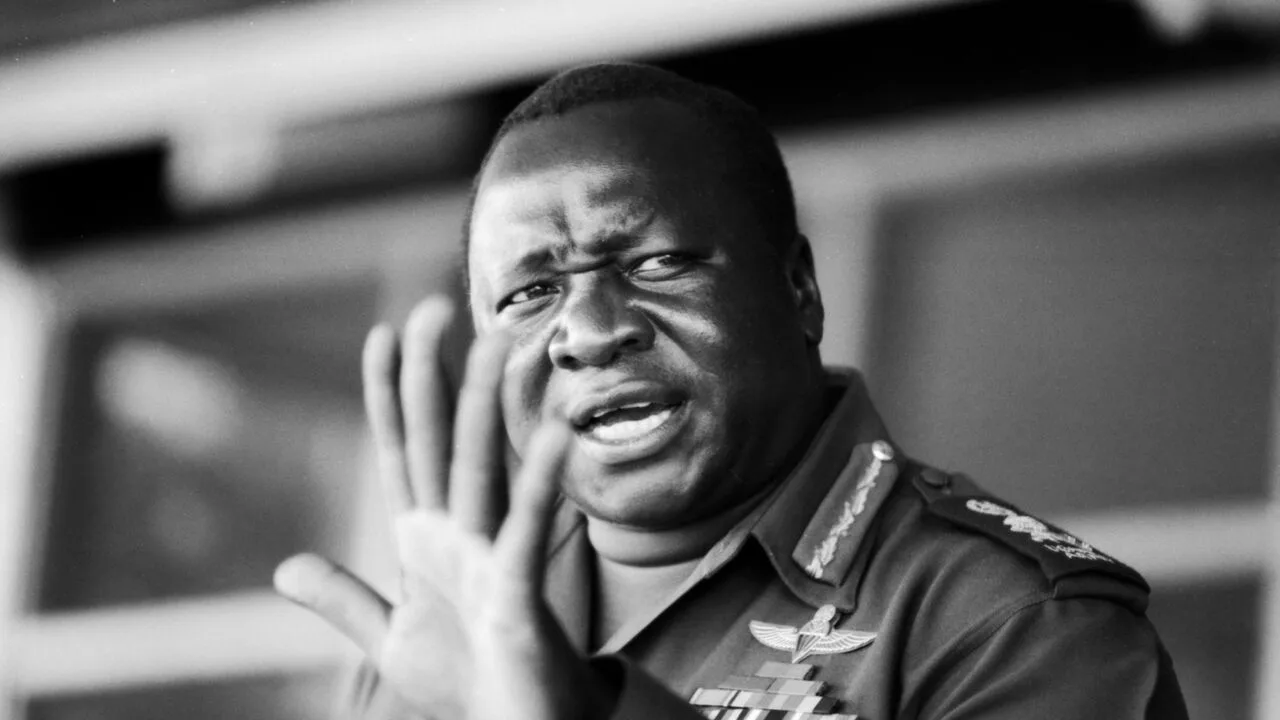
On this day in 1977, a daring coup and assassination attempt known as Operation Mafuta Mingi was launched against President Idi Amin, bringing Uganda closer than ever to an internally driven overthrow of his regime.
Although the operation failed before it could be fully executed, its consequences would reverberate across the country and accelerate the decline of Amin's government.
The operation took its name from the Kiswahili phrase "Mafuta Mingi", meaning "much cooking oil". In the economic chaos of the 1970s, cooking oil had become a scarce and highly prized commodity. The term emerged as a popular nickname for the wealthy military elite and regime loyalists who had enriched themselves through black market trade while ordinary Ugandans struggled with shortages.
For the plotters, the name symbolised their opposition to corruption and privilege within Amin's inner circle.
The conspiracy was organised by a secret network of Uganda Army officers led by Major Patrick Balati Kimumwe. Deeply frustrated by tribal purges, economic collapse and growing international isolation, the dissidents developed an ambitious plan to eliminate Amin through coordinated attacks by air and land.
The strategy called for dissident pilots at Entebbe Air Force Base to launch combat aircraft and strike Amin while he attended an official engagement. At the same time, soldiers loyal to the plot were positioned to ambush the presidential motorcade at Abayita Ababiri along the Entebbe-Kampala road.
The conspirators hoped the simultaneous attacks would decapitate the regime, allowing them to seize key government installations and announce a new administration over national radio.
However, the operation unravelled on June 18 before the attacks could begin. Amin's feared intelligence network, the State Research Bureau, learned of the plot through informants or intercepted communications.
Warned in advance, Amin altered his movements, avoided the planned ambush route and moved quickly to neutralise the threat. The element of surprise vanished and the coup collapsed before the main assault could be carried out.
The aftermath was swift and brutal. Convinced that his own military could no longer be trusted, Amin ordered an extensive crackdown. Security forces arrested officers, soldiers and civilians suspected of involvement or sympathy. Many were detained at the notorious State Research Bureau headquarters in Nakasero or at Nile Mansions, where torture and executions became common.
Among the victims was Captain Isabirye, an Air Force officer who was later abducted, tortured and killed. Numerous other military professionals disappeared during the purge as the regime sought to eliminate any potential opposition within its ranks.
Major Kimumwe was captured but later achieved what many thought impossible. He escaped from State Research Bureau detention and fled into exile, where he would later write about the inner workings of Amin's military and the events surrounding the failed coup.
Amin also used the incident to strengthen his narrative abroad. At an Organisation of African Unity summit shortly after the plot, he accused Western intelligence agencies, particularly the CIA, of backing the attempted overthrow. The allegations formed part of his broader effort to portray himself as the target of foreign interference.
Historically, Operation Mafuta Mingi exposed the fragility of Amin's rule. Despite his powerful security apparatus, discontent within the armed forces had reached dangerous levels.
The failed coup prompted purges that destroyed much of the army's remaining professional leadership. That loss of experienced officers weakened the military considerably and contributed to its inability to withstand the combined assault of Tanzanian forces and Ugandan exiles during the 1978-79 Liberation War, which ultimately brought Amin's eight-year rule to an end.
