
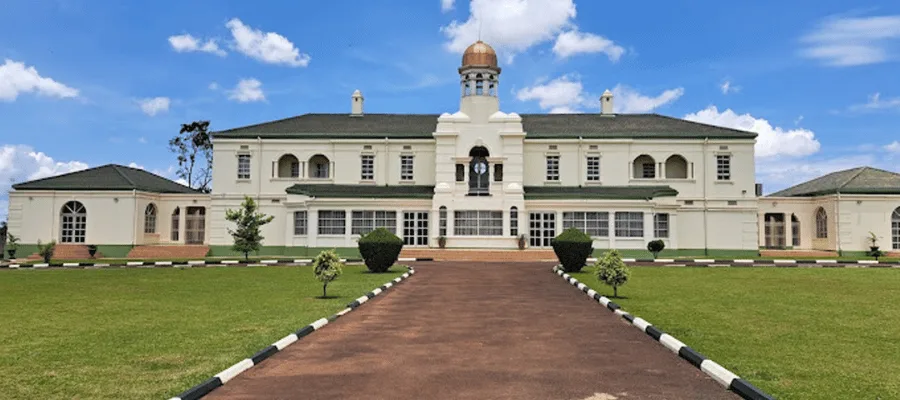
On this day in 1966, Uganda descended into one of the most consequential political confrontations in its history when government troops attacked the Lubiri, the palace of Sir Edward Mutesa II, at Mengo in Kampala.
The assault, ordered by Prime Minister Apollo Milton Obote and led on the ground by Idi Amin, marked the violent collapse of Uganda’s fragile post-independence political settlement.
The roots of the crisis stretched back to the uneasy alliance that brought Uganda to independence in 1962. Obote’s Uganda People’s Congress and the Buganda-backed Kabaka Yekka movement had united to form a government, but mistrust between the two sides deepened rapidly.
By early 1966, Obote faced allegations linked to gold smuggling and unrest within his own administration. In response, he suspended the constitution, arrested several ministers and concentrated executive power in his hands.
Tensions escalated further in April 1966 when Obote introduced a new interim constitution that stripped Buganda of its federal status and elevated himself to executive president. The move enraged Buganda’s establishment. Weeks later, the Buganda Parliament, known as the Lukiiko, ordered the central government to leave Buganda territory by the end of May. Obote interpreted the resolution as rebellion.
Before dawn on May 24, government troops surrounded the Lubiri during a heavy rainstorm. The operation was expected to end quickly, but the palace guards and royalist fighters mounted stiff resistance. Gunfire echoed across Mengo as defenders held off advancing soldiers for hours despite being heavily outnumbered.
As the battle intensified, Amin ordered heavier weaponry to be deployed. Tanks and artillery were brought in to breach the palace compound, and the fighting turned devastating. Buildings inside the Lubiri were shelled as government forces overwhelmed the defenders.
Amid the chaos, Mutesa II escaped. According to historical accounts, the Kabaka fled through the rear of the palace under cover of smoke and rain, scaling a wall before being smuggled through a network of loyalists. He eventually escaped Uganda and went into exile in the United Kingdom.
The exact number of people killed during the assault has never been conclusively established. Official figures from the time reported relatively low casualties, but many Buganda accounts and later historical estimates suggest the death toll may have been far higher, including palace guards, civilians and royal supporters caught in the violence.
The fallout transformed Uganda’s political future. A state of emergency was declared in Buganda, the Lubiri was occupied by the army, and in 1967 Obote abolished all traditional kingdoms under a new constitution, turning Uganda into a unitary republic. The attack also accelerated Amin’s rise within the military establishment, laying groundwork for the coup that would overthrow Obote in 1971.
Mutesa II never returned home alive. He died in exile in London in 1969, three years after fleeing the burning palace at Mengo.
