
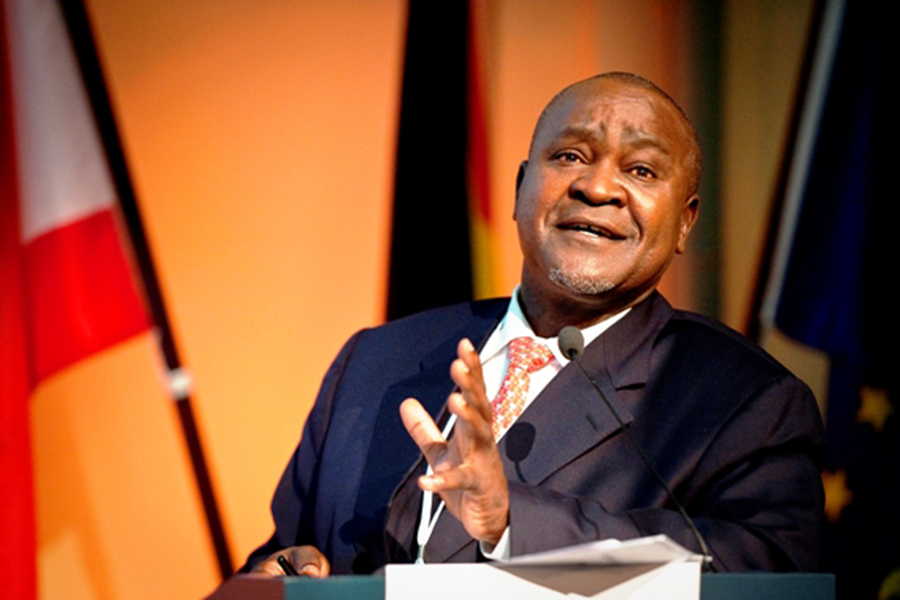
On this day in 2003, Professor Gilbert Bukenya was sworn in as Uganda’s seventh vice-president, beginning an eight-year tenure that would become one of the most dramatic and politically influential periods ever associated with the office.
Bukenya replaced Specioza Wandira Kazibwe and entered the position already deeply embedded within the centre of government after serving as Minister in Charge of the Presidency under Yoweri Museveni. His elevation introduced a bold and highly visible political figure into the country’s top executive leadership at a time when Uganda was entering a major political transition.
Known for his charisma, humour and populist style, Bukenya quickly stood out from many of his contemporaries. Soon after taking office, he aggressively promoted upland rice, particularly the NERICA variety, travelling across rural districts encouraging farmers to adopt the crop as a way to improve food security and household incomes.
The campaign resonated strongly with ordinary Ugandans and helped build his reputation as a hands-on leader closely connected to grassroots communities.
It was during this period that Bukenya famously branded himself “Mahogany”, portraying himself as a strong and deeply rooted political figure capable of surviving any storm. The nickname followed him throughout his time in office and became one of the most memorable political labels in modern Ugandan politics.
His tenure, however, was also marked by controversy and intense political battles. In 2005, Bukenya triggered national debate after alleging that a “mafia clique” within government was working against him because of his rising popularity and perceived presidential ambitions.
Although he later softened his remarks following pressure from within the ruling establishment, the phrase permanently entered Uganda’s political vocabulary and fuelled speculation about internal divisions within the ruling party.
Bukenya also played a major role during one of the country’s most consequential constitutional periods. He served at the centre of government during Uganda’s transition from the Movement political system to multiparty politics in 2005, as well as the removal of presidential term limits ahead of the 2006 elections. His political mobilisation within the ruling National Resistance Movement was considered important in securing support for the constitutional changes.
Beyond formal politics, Bukenya cultivated an image rooted in Buganda culture and traditional identity. He frequently positioned himself as a bridge between the central government and the Buganda Kingdom during periods of tension, while his public association with traditional shrines and practices sparked both criticism and admiration in equal measure.
One of the defining moments of his vice presidency came with the 2007 Commonwealth Heads of Government Meeting in Kampala. As chair of the cabinet subcommittee organising the summit, Bukenya became closely linked to preparations for one of the biggest international events Uganda had hosted in decades.
However, the summit later became a source of political trouble after corruption allegations surrounding procurement deals led to investigations and court proceedings against him following his departure from office in 2011.
Though the charges were eventually dropped, the spectacle of a former Vice President appearing before court marked a dramatic fall for one of Uganda’s most recognisable political figures.
