
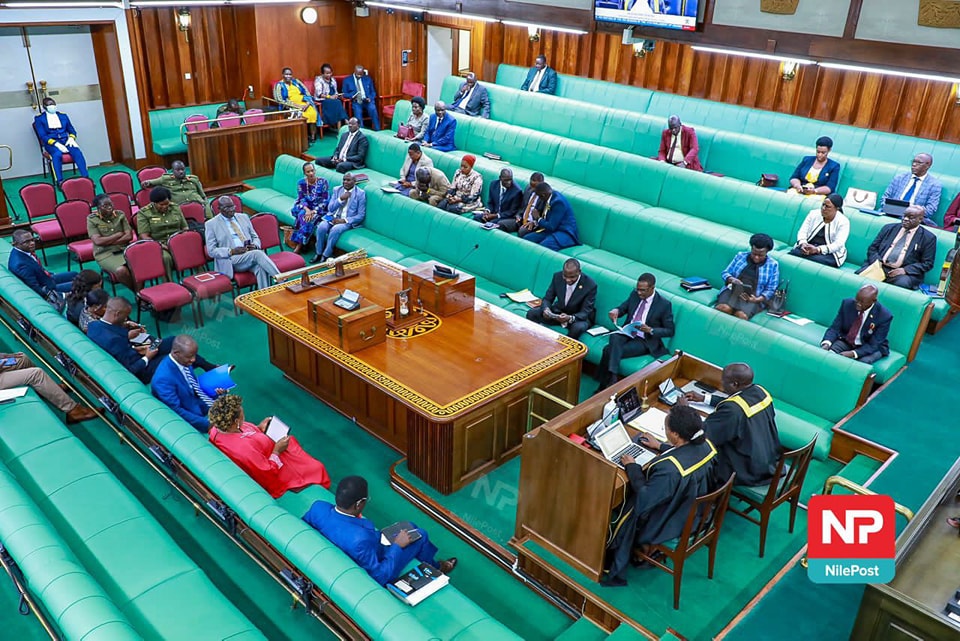
Parliament is scrutinising the Protection of Sovereignty Bill, 2026, a far-reaching proposal tabled on 15 April by State Minister for Internal Affairs Gen David Muhoozi.
Framed by the government as a safeguard against foreign interference, the draft introduces an expansive regulatory system governing foreign funding, civic activity, and digital engagement.
Its breadth, however, has drawn scrutiny over its legal clarity, economic impact, and implications for constitutional freedoms.
What the bill proposes
At its core, the bill establishes a new state-led framework to regulate individuals and entities deemed to be acting on behalf of foreign interests.
It centres on the concept of an “agent of a foreigner”, defined broadly as anyone whose activities are directly or indirectly supervised, directed, controlled, financed, or subsidised by a foreigner.
The definition of “foreigner” is equally wide. It includes non-Ugandans, Ugandan citizens living abroad, foreign governments, diplomatic missions, and international organisations.
Clause 2(2) extends the law to digital platforms, meaning online activity such as advocacy, campaigns, and civic mobilisation could fall within its scope.
Registration, vetting, and oversight
Anyone classified as a foreign agent must register with the department responsible for peace and security under the Ministry of Internal Affairs.
The registration process goes beyond basic identification. Under Clause 16(2), authorities may investigate an applicant’s identity, character, mental and physical health, as well as judicial and banking records. Applicants must also disclose a full list of employees and their roles.
Successful applicants receive a certificate valid for two years, which must be renewed at least three months before expiration.
Financial institutions are drawn directly into enforcement. Banks and money transfer services are required to submit monthly reports detailing all transactions involving foreign agents.
Funding controls and disclosure
The bill introduces strict limits on foreign funding. Clause 22(1) caps foreign financial support at 20,000 currency points, approximately Shs400 million, within 12 months unless the Minister grants written approval.
All recipients of foreign funds must declare the source and purpose of the funding to the Minister. These declarations are then made available for public inspection upon payment of a fee.
In addition, foreign-funded actors would require Cabinet approval to operate in sectors considered sensitive, including education, health, water, and infrastructure.
Offences and penalties
The draft creates several new criminal offences with significant penalties.
Clause 13 introduces the offence of “economic sabotage”, which includes publishing information deemed to weaken or damage the country’s economic system or viability.
It also criminalises attempts by foreign agents to influence government policy or mobilise the public to oppose government policy without prior Cabinet approval.
Penalties are severe. Individuals may face up to 20 years in prison, while organisations can be fined up to 200,000 currency points, approximately Shs4 billion. Authorities may also confiscate funds considered disruptive.
What the bill does not do
The draft stops short of an outright ban on foreign funding. Instead, it establishes a permission-based system.
Under Clause 24, both government and private actors may receive foreign funds beyond the prescribed cap with ministerial approval.
Government entities require clearance from the Ministers of Foreign Affairs and Finance.
The bill also provides exemptions for licensed professionals. Clauses 6(5) and 8(7) state that individuals already authorised under existing regulatory frameworks, such as doctors and engineers, are not restricted when operating within their licensed roles.
Diplomats are not fully exempt. While the Diplomatic Privileges Act still applies, Clause 2(3) makes clear that representatives of embassies and consulates remain subject to aspects of the new law, signalling closer scrutiny of their engagements.
The scope of the bill extends beyond political parties. While it references political financing, it broadly targets civic engagement, including representing foreign interests before government bodies or recruiting individuals in Uganda to advance those interests.
Why is it contested?

Civil society organisations argue the bill could restrict rights to free expression, assembly, and academic inquiry, particularly given its reach into digital activity.
Legal analysts point to vague provisions, especially around “economic sabotage”, which lack clear thresholds and could be open to wide interpretation.
Economists warn that funding caps, disclosure rules, and compliance burdens may deter investment and development financing, with potential knock-on effects on sectors reliant on external support.
What follows
The bill is currently before Parliament’s Committee on Defence and Internal Affairs for detailed scrutiny.
If passed in its current form, it would introduce one of the most extensive foreign-agent regulatory regimes in Africa, reshaping how civic organisations, businesses, and individuals engage with external partners.
The central question now is whether lawmakers will amend the draft to address concerns over scope and safeguards, or proceed with a framework that significantly expands state oversight across Uganda’s civic and economic space.
