
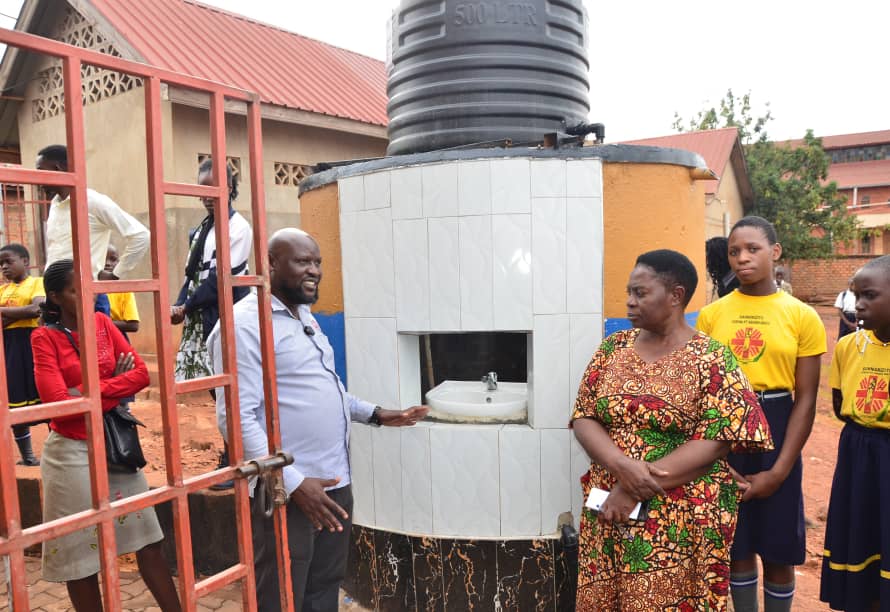
Leaders at St. Joseph Government Primary School in Nansana have expressed renewed hope in tackling hygiene-related challenges following the construction of an incinerator by the Rotary Club of Nansana to safely dispose of used sanitary pads.
The school administration, led by headteacher Margret Nabakooza, said the lack of a proper disposal facility had long been a challenge, forcing both pupils and female teachers to discard used pads in unsafe ways that posed health risks.
“We have struggled for a long time with where to collect and burn used sanitary pads,” Nabakooza said. “Sometimes they were disposed of improperly, which exposed us to health dangers. This incinerator is a big relief.”
She thanked Rotary for the intervention and pledged to strengthen hygiene practices within the school, while also appealing to other well-wishers for additional support.
“We are very grateful for this support, and we promise to ensure proper hygiene is maintained. We also call upon other kind-hearted people to come and support us,” she added.
Nabakooza noted that the incinerator will also benefit surrounding community members who previously disposed of waste irresponsibly, especially during gatherings such as prayers.
Fred Mukasa said the initiative is aimed at improving health standards and ensuring girls remain in school.
“Our goal is to promote better health and keep girls in school. Some girls miss classes or even drop out because they lack proper facilities during their menstrual periods,” Mukasa said, emphasizing the importance of dignity and support for girls’ education.
An education official in Nansana Municipality, Sarah Nakigudde, commended Rotary for the contribution and called for stronger collaboration among stakeholders.
“We appreciate the support given to this school. There is a need to strengthen cooperation with the municipality so that together we can improve the living conditions of our people,” she said.
The new facility is expected to significantly improve sanitation at the school while addressing menstrual hygiene challenges that have long affected girls’ education.
