
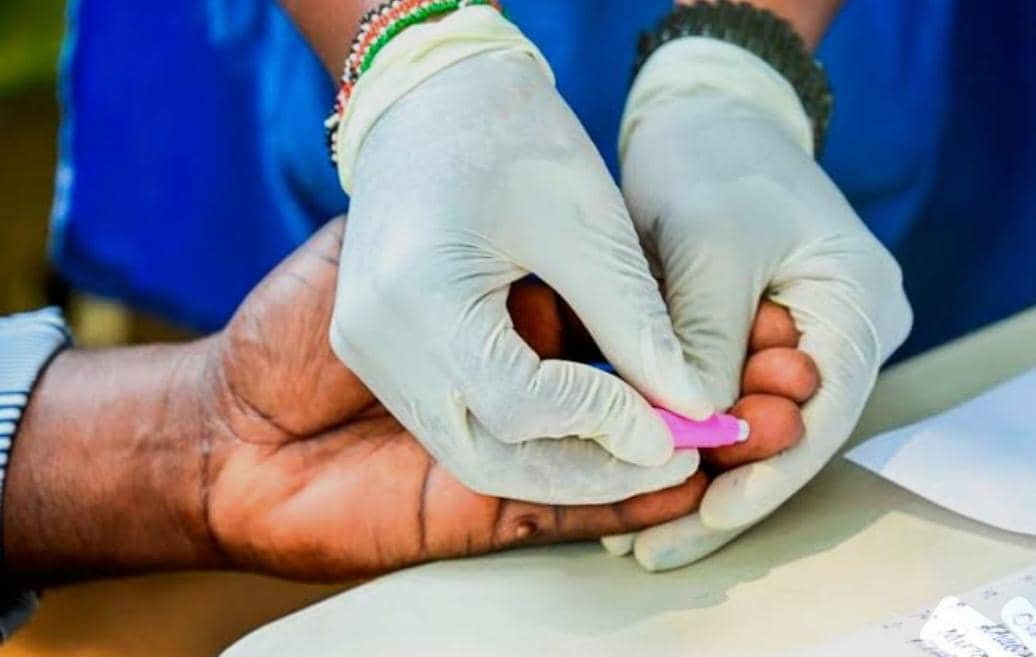
Uganda is intensifying efforts to cut new HIV infections to under 10,000 annually by 2031, officials warned, as experts caution that young people remain the most vulnerable group and could reverse decades of hard-won progress.
Dr Nelson Musoba, Director General of the Uganda Aids Commission, outlined the country’s “three zeros” strategy defining the end of Aids as a public health threat: zero new HIV infections, zero AIDS-related deaths, and zero stigma and discrimination.
“In 2024, Uganda recorded 36,000 new HIV infections. Our target is to reduce this to less than 10,000 by 2031,” Dr Musoba said during a briefing in Kampala. “
“The only way to turn off the tap is to ensure all HIV-positive individuals are on treatment and maintain viral suppression. Even if they are sexually active, they will not transmit HIV. HIV-positive mothers can also have HIV-negative babies if they follow treatment protocols during pregnancy, delivery, and after birth.”
The second zero focuses on Aids-related deaths, which Uganda aims to reduce to below 5,000 annually.
Achieving this milestone would signal epidemic control, where deaths fall below new infections and reflect stable treatment adherence and viral suppression.
“If we achieve zero viral load, it means people are not transmitting HIV,” Dr Musoba said.
However, the third zero eliminating stigma and discrimination remains a major challenge. “Stigma persists even after 40 years of the epidemic. It is a mindset issue, but tackling it is essential to maintain prevention, testing, and treatment uptake,” he added.
Modeling projects suggest that if current interventions are scaled up, Uganda could achieve approximately 9,000 new infections annually by 2031, underscoring the need for continued vigilance, innovation, and community engagement.
Dr Musoba stressed the importance of partnerships across government, the private sector, civil society, and the media to mobilize resources and amplify prevention messaging.
He noted that initiatives such as the Uganda AIDS Marathon will serve as a platform to raise awareness, promote responsible behaviours, and strengthen community involvement.
“Young people are at the heart of this campaign. Their leadership, peer influence, and responsible decision-making are critical to sustaining Uganda’s momentum toward ending AIDS as a public health threat,” he said.
While the national HIV prevalence has dropped to 4.9 percent from over 10 percent in the early 1990s, experts warn that new infections among youth could undo these gains.
Dr Yunus Miya, Head of Programs at The Aids Support Organization (TASO), said adolescents and young adults aged 15 to 29 now account for the majority of new infections, with girls and young women representing nearly 70 percent of cases in this group.
“These statistics show tremendous progress and reflect the coordinated efforts of government, implementing partners, and health facilities across the country,” Dr. Miya said. “But new HIV infections remain a serious threat.
The tap is still open, and if we relax even for a single moment, we risk reversing all the progress we have achieved.”
He highlighted persistent challenges in prevention and treatment. Despite innovations such as HIV self-testing and highly effective antiretroviral therapy (ART), consistent condom use among men remains below 20 percent, while stigma continues to hinder testing and treatment uptake.
“Stigma is learned from our communities, and it continues to victimize those living with HIV. Addressing it is critical if we are to sustain our progress,” Dr Miya said.
Scientific advances, he added, give Uganda unprecedented tools to accelerate the fight against HIV. Long-acting injectable pre-exposure prophylaxis (PrEP), home-based testing, and the U=U principle which demonstrates that people on effective treatment with suppressed viral loads cannot transmit HIV are key to ending the epidemic.
“It is not just a saying. A person who is adherent to treatment and has a suppressed viral load cannot transmit HIV to a negative person. This is a scientific reality that must be communicated,” Dr Miya said.
Both Dr. Musoba and Dr. Miya emphasized that empowering young people is central to achieving national targets.
Youth-led initiatives, peer education, and access to prevention and treatment services are vital to reduce new infections and sustain progress.
“The youth are central to this fight. We must empower them with knowledge, prevention tools, and access to treatment to ensure Uganda stays on track to end HIV by 2030,” Dr Miya said.
Uganda has made remarkable strides in reducing Aids-related deaths, from more than 60,000 annually in the 1990s to fewer than 20,000 deaths recorded in 2025.
These achievements reflect the combined efforts of government programs, community organizations, and health facilities delivering comprehensive HIV services.
However, health authorities warn that continued vigilance is essential. Coordinated action, effective use of modern interventions, and confronting stigma remain critical to preventing a resurgence of infections.
The Uganda Aids Commission continues to work with district health teams, civil society, and international partners to expand access to HIV testing, treatment, and prevention tools, while mobilizing communities to adopt safe behaviours.
“Ending Aids is not just a health issue. It is a social and economic challenge. We must reach the most vulnerable populations and ensure no one is left behind,” Dr Musoba said.
Health experts also note that socio-economic factors including poverty, gender inequality, and limited access to health services continue to drive new infections, particularly among young women.
Targeted interventions, including school-based programs, youth-friendly clinics, and community engagement campaigns, are critical to closing these gaps.
As Uganda approaches the 2030 global target to end Aids as a public health threat, authorities are calling for sustained political will, investment, and innovation to ensure progress is not reversed.
“Uganda has the tools, the science, and the experience. What remains is commitment from all sectors to implement them effectively,” Dr Miya said.
